

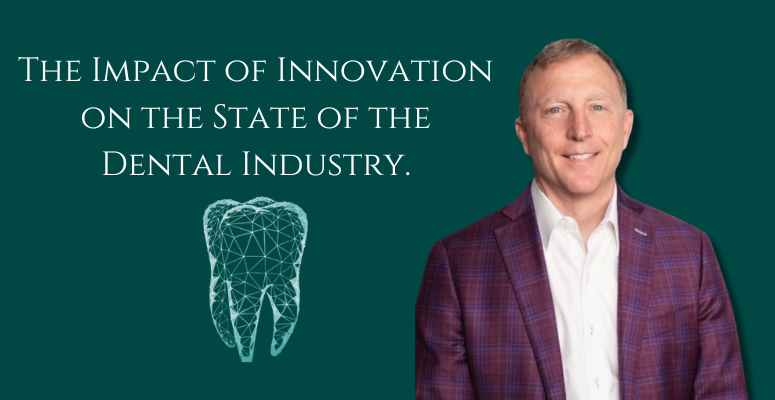
At today’s Dental VIP Summit, Brian Colao, Member & Director of the Dental Service Organizations Industry Group at Dykema, delivered a candid and timely message to a packed room: dentistry has reached a critical inflection point, and technology will determine which organizations thrive and which are left behind. The 30-minute session was entitled, “The Impact of Innovation on the State of the Dental Industry.”
Considered one of the foremost authorities in North America on the DSO space, Colao is a longtime legal and strategic advisor to DSOs and emerging dental technology companies. He framed his presentation around a simple but powerful question he now asks at the start of every engagement: “Does everybody understand why we’re here and what we’re doing?”
In 2026, that question carries new urgency.
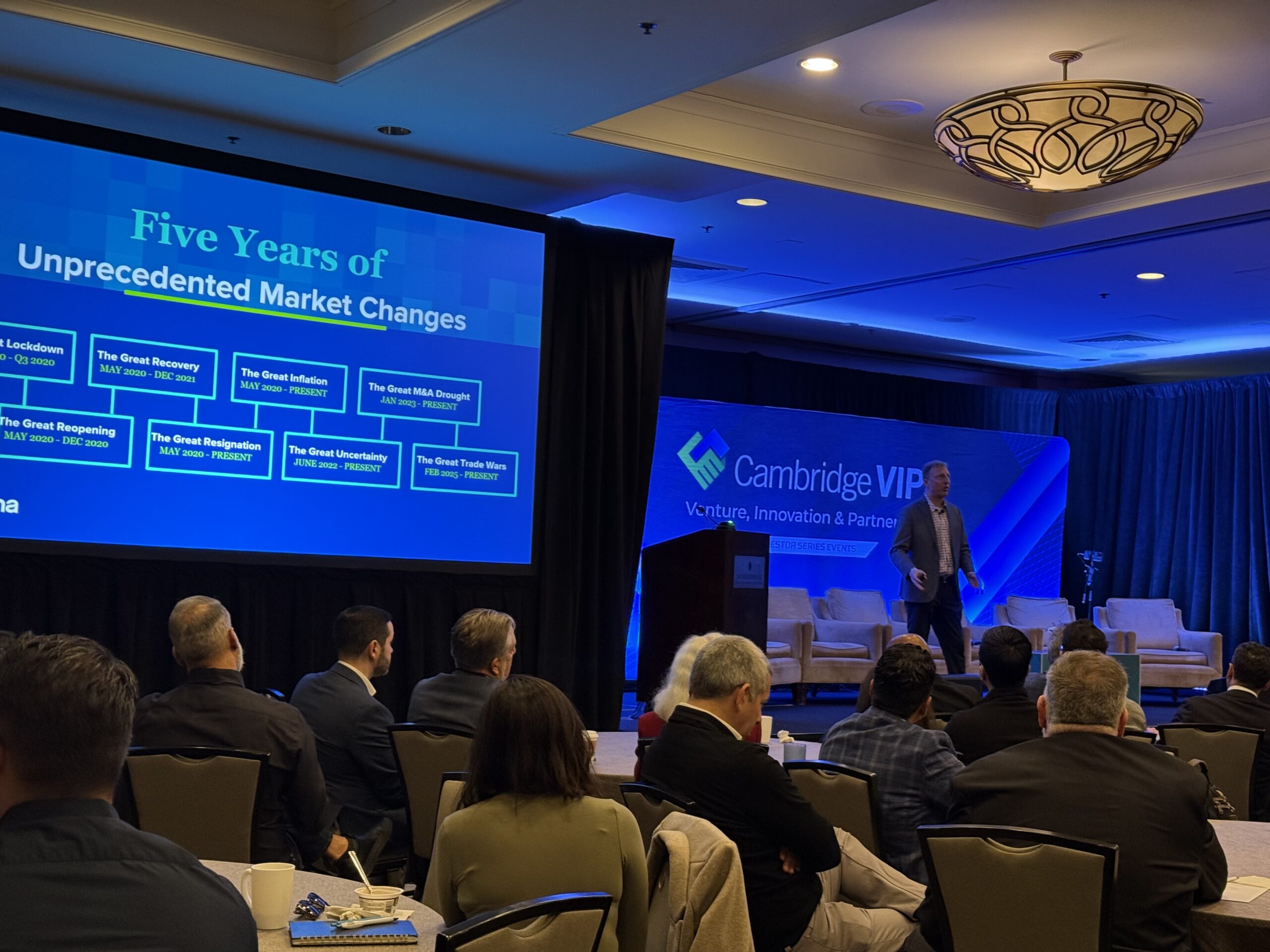
An Industry in an “Unnatural State”
Colao described the last five years as the most disruptive period in modern dental history.
It began with the unprecedented government-mandated shutdowns in March 2020. “For the first time in the history of the dental industry,” he noted, “the government said you cannot go to the dentist.” The subsequent reopening created supply chain chaos and PPE shortages. Then came the Great Resignation, with hygienists, assistants, and back-office staff leaving the workforce in record numbers.
Layered on top of that:
-
Historic inflation
-
Interest rates at levels not seen since the 1970s
-
Tariff-related supply cost pressures
-
A dramatic slowdown in M&A activity
The result, according to Colao, is what he calls an “unnatural state” of dentistry.
In most industries, when costs rise, businesses raise prices. Dentistry does not operate that way. Reimbursement rates remain flat or only slightly increased, even as labor costs, supply costs, and the cost of capital have soared. EBITDA is compressed. Staffing shortages persist.
That imbalance, Colao emphasized, is the core problem that innovation must solve.
“If your technology doesn’t address that unnatural state,” he said, “you risk being a shiny object.”
The M&A Drought and the End of Easy Money
Colao did not shy away from the state of consolidation.
After record-breaking activity in 2019 through 2021, M&A slowed dramatically. He cited 75 large transactions that were abandoned, with only eight ultimately closing. Interest rate hikes stalled recapitalizations, and many organizations that expanded aggressively during the low-rate era are now in what he described as “purgatory.”
These companies can service debt but are not attractive enough to sell. Lower interest rates alone will not revive valuations.
“Money on the sidelines does not have a divine right to flow back into dentistry,” Colao said. “If you don’t build a premium asset, capital can go anywhere.”
The shine has come off the industry, he added. Private equity firms have either been directly burned on dental investments or indirectly impacted through syndicated exposure. Diligence is deeper. Buyers are more selective. Survival of the fittest is no longer a metaphor. It is the operating reality.
Building a Premium Asset in 2026
So what does a premium asset look like in this environment?
Colao outlined a framework applicable to DSOs and multi-site group practices:
-
Deliver the highest quality patient care
-
Foster a strong, sustainable culture
-
Deploy disciplined M&A and de novo strategies
-
Leverage technology and business innovation to drive same-store growth
-
Create new revenue streams
-
Maximize enterprise value in a selective, competitive M&A market
Technology is not optional in this formula. It is essential.
In active transactions he is currently advising, Colao said buyers are scrutinizing how organizations leverage technology, what systems are in place, and what measurable impact those systems have had on revenue, EBITDA, and efficiency. A lack of technological sophistication can directly reduce valuation.
Same-Store Growth: The Real Definition
Colao clarified a term often used loosely in the DSO space: same-store growth.
It boils down to three levers:
-
Bring in new patients
-
Do more dentistry with existing patients
-
Reduce or eliminate unnecessary expenses
Cost cutting alone is not sustainable. The long-term solution lies in driving revenue growth and structurally lowering overhead through operational efficiency.
That is where technology plays a defining role.
What Technology Must Actually Do
Colao outlined specific objectives innovation must meet to gain traction in today’s market:
-
Lower overhead
-
Compensate for clinical and nonclinical staffing shortages
-
Improve patient engagement and meet patients where they are
-
Increase revenue and EBITDA
-
Enhance enterprise value
If a solution does not address at least one of these pressures, adoption will be limited. Sophisticated buyers, he noted, are not interested in novelty. They are interested in measurable impact.
He highlighted several innovation categories reshaping the market:
-
Advanced PMS platforms
-
Diagnostic AI
-
AI-driven patient retention analytics
-
Revenue cycle automation
-
Membership and financing automation
-
Cybersecurity infrastructure
-
Clinical efficiency tools
-
Procurement and lab consolidation platforms
-
Specialty integration models
Diagnostic AI, in particular, he described as one of the most significant technological advancements in the history of dentistry.
The “Failure to Launch” Problem
Despite the explosion of innovation, Colao warned of a widespread implementation gap.
Many promising technologies fail not because the solution lacks merit, but because organizations lack:
-
Education and internal alignment
-
Integration with existing systems
-
A structured implementation plan
-
Organizational standardization
-
Executive sponsorship and clinical buy-in
He was particularly critical of fragmented system architecture. DSOs operating multiple PMS platforms or deploying multiple AI tools across locations create complexity that undermines adoption.
“Standardization of systems is no longer optional,” he said.
Success requires coordinated execution between:
-
The DSO leadership team
-
Dentists
-
Clinical and nonclinical staff
-
Vendor partners
If those groups are not aligned, adaptation stalls and ROI evaporates.
A Pivotal Evolutionary Moment
Colao closed with an analogy drawn from evolutionary biology.
Extinction-level events, he explained, create rapid evolutionary opportunities. Environmental stress forces adaptation. Those that evolve survive. Those that do not disappear.
Dentistry is in that moment now.
For a century, the industry operated within a stable model. The events of the past five years functioned like an asteroid strike, permanently altering the landscape. The question is not whether change will occur. It is whether organizations will adapt quickly enough.
“This is a pivotal moment,” Colao told attendees. “Evolution needs to occur on an expedited basis.”
At the Chicago Midwinter Meeting, the message was clear: innovation is no longer about enhancement. It is about survival, valuation, and long-term relevance.
For DSOs, group practices, and technology developers alike, the mandate for 2026 and beyond is unmistakable.
Understand why you are here.
Solve the real problems.
Build a premium asset.