
Ranked the #1 DSO Podcast!
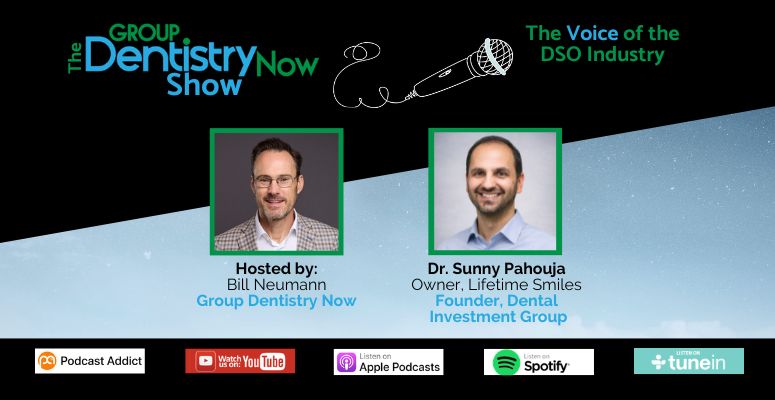
Welcome to The Group Dentistry Now Show: The Voice of the DSO Industry!
Maximizing Clinical Productivity with Dr. Sunny Pahuja and the Isolite System from Zyris.
Dr. Sunny Pahuja, Founder of the Dental Investment Group & Lifetime Smiles shares his knowledge and discusses:
- Investments & Operational Solutions
- Clinical Efficiency Tools like the Isolite System
- Tips for Young Clinicians & Seasoned Doctors
- The Dental Investment Group
To learn more about the Isolite system visit – https://www.zyris.com/isolite-systems/
To join 26K+ dentists in the Dental Investment Group visit – https://www.facebook.com/groups/dentalinvestmentgroup/
Subscribe to our channel for more episodes and stay updated on the latest DSO news, insights, and events!
If you like our podcast, please give us a ⭐⭐⭐⭐⭐ review on iTunes https://apple.co/2Nejsfa and a Thumbs Up on YouTube.
Choose your favorite listening app below and subscribe today so you don’t miss an episode! Full transcript is also provided below. See all of our podcasts HERE.
 |
 |
 |
 |
 |
 |
DSO Podcast Transcript – Maximizing Clinical Productivity with Dr. Sunny Pahuja and the Isolite System from Zyris
Welcome to the Group Dentistry Now Show, the voice of the DSO industry. Join us as we talk with industry leaders about their challenges, successes, and the future of group dentistry. With over 200 episodes and listeners in over 100 countries, we’re proud to be ranked the number one DSO podcast. For the latest DSO news, analysis and events, and to subscribe to our DSO weekly e-newsletter, visit groupdentistrynow.com. We hope you enjoy today’s show.
Zyris (00:38):
In dentistry, every second and every millimeter counts. But how much time do you lose? Fighting moisture and retraction? Meet Zyris, the all- in-one solution for total oral environment control. With continuous hands-free suction and integrated retraction, you get a dry, visible field every single time. Boost your efficiency by up to 30% while providing your patients a safer, more comfortable experience. Better isolation, better dentistry. Visit store.zyrus.com and transform your practice today.
Bill Neumann (01:17):
Hey, everyone. Welcome to the Group Dentistry Now Show. I’m Bill Neumann, and as always, we appreciate you joining us. Always have the best guests on, and I’ve admired what Dr. Sunny Pahuja has been doing from afar, been peeking into the Facebook group that he has on and off for quite a while. He’s built one of the largest Facebook groups out there called the Dental Investment Group. Really kind of an interesting take on things and pretty unique. I’ll let him kind of explain the reason behind founding the group. Yes, he actually is a practicing clinician as well, although I think probably the investment group might even overshadow your day in and day out role running lifetime smiles. But Sunny, it’s really great to have here.
Dr. Sunny Pahuja (02:09):
Yeah, no, thanks for having me. I appreciate that. Yeah. It’s been an interesting journey. I started the group back in 2017 when I was just two years into practice ownership. I just wanted someone to talk to about practice ownership, retirement planning, investing. And I had my undergrad in finance and real estate, and I was just like, “Man, I feel like no one really talks about the investment part of it. No one really talks about how to manage your overhead the best possible way and what kind of things can we be doing to really grow the top line, grow the bottom line, and discuss some of that retirement planning that just … You read about some of this stuff, how many doctors are in their 60s and 70s still working primarily for the reason because they feel like they haven’t saved enough or they haven’t grown their investments enough.” So I was like, “I have to start something that gets the conversation going that really gets people to talk about it and be intentional about it.
(03:09):
” And just from that standpoint, I said, “Hey, I’m going to start this group.” And it grew from a few hundred doctors that I knew at the time to over 26,000 doctors now. So it’s kind of cool to see all that growth and all these people that share their wisdom, all these people that share their knowledge on a daily basis. So it’s pretty cool to see all those interactions that take place.
Bill Neumann (03:35):
So how long have you been running the group?
Dr. Sunny Pahuja (03:40):
I started that in 2017. So what is that? Yeah, about seven- Nine years. Or nine years. Yeah. My math was wrong there. Yeah.
Bill Neumann (03:50):
Yeah, that’s amazing. Yeah, it’s become a really popular group. And again, I think you’re almost picking up where dental school left off because there is that gap that you hear all the time where there’s the bulk, 99% is focused on clinical. And then of course, then you’re supposed to run a business at the same time, but you’re getting maybe 1%. So really the education you get, business education is an undergrad if you happen to have a major like yours, which is finance, but a lot of clinicians don’t have that. They might have a biology major or something that’s not focused on business.
Dr. Sunny Pahuja (04:32):
Yeah. And I think honestly, that’s one of the biggest disservices that happens in dental school is not enough education on the business side of dentistry. One, because I don’t think it only applies to doctors who own their practices, but it also applies to associates. They need to be able to manage their schedule. They need to be able to manage this team that they work with. Even though they’re an associate, I know they don’t write the paycheck, but they have so much control over how their day goes. So I feel like they truly owe to themselves to get out there, try to learn as much as possible, and really run their associateship as if they were running a business. And then when you factor in the business side of dentistry, if you own a practice, I mean, there’s just so many different nuances, so many different things that are happening on the daily that need to be dealt with from the business perspective.
(05:28):
And it really kind of weighs you down because you feel like if you’re not managing your business properly, you can’t do good dentistry. You can’t be a good clinician if you’re not a good business owner because that shows in your stress, that shows in how you manage people, that shows in how you manage those patients and those patients’ expectations.
Bill Neumann (05:47):
And so what you’re doing in that group, it’s not just investment advice or maybe it’s not investment advice, but you’re not providing retirement solutions or ideas in a community, but it’s also about running the business itself. And that translates to the products and clinical solutions that one might use in a practice or a group.
Dr. Sunny Pahuja (06:11):
Yeah. I look at it as a financial roadmap. It doesn’t have to be advice. It doesn’t have to be … It’s a platform to get them started. It’s a platform to help them, motivate them to really do it as soon as you can. You don’t have to wait until you pay off your student loans to start investing. You can do this simultaneously. You don’t have to wait on paying on those student loans until you have money saved up and letting all this interest accrue, especially over the last, what, five, six years now when a lot of that student loan debt was kind of on hold with COVID, a lot of people got used to not paying anything. And now a lot of those payments have restarted and people are trying to figure out, how do I allocate some of my finances towards student loans and people that are graduating now?
(07:03):
So student loans has become such a huge topic in the group because it’s real … Just student tuition has become so expensive over the last five to 10 years. It’s become to the point where people really have to look at it. Doesn’t make sense. If it makes sense for me to go to dental school, how am I going to pay off that student loan? And nowadays, especially in the last one to two years, things have changed even more with the payment plans that are available, with the loan forgiveness that’s available. There’s so many different things that are changing. You have to be on top of it to make sure you handle it the right way, because it’s not just a matter of a few hundred dollars. It’s a matter of several thousand dollars that end up becoming either in your pocket or in the loan process or pocket.
(07:58):
So really have to make sure you’re doing the right thing and getting in touch with the right people. And I feel like my job is to just really help them figure out some of those things. Some of the biggest compliments I get from doctors is that I’m just so happy that I started investing five, six, seven years ago, eight years ago when we first met you, just because I wasn’t even thinking about investing. I wasn’t even thinking about doing some of those things because I was so focused on the practice. I was so focused on managing my student loan debt. So I felt like I always had to wait to start investing. But when you automate that investing, when you take steps to be intentional about it, you just feel like you’re doing the right thing and money compounds. I mean, at some point you’re going to start with very little and 15, 20, 25 years later, you have a nest egg that’s far more than what you could have imagined because you did the right things early on.
(09:00):
And that timing really does count.
Bill Neumann (09:03):
Yeah. We could spend a lot of time on this. It’s such a fun topic. And I have a finance background as well, so I do understand it, but even understanding it, when you’re younger and you talk about then kind of having that debt that I didn’t have, not like it is today, but it’s just a natural reaction to put off investing because, well, I’ve got all the student debt. I mean, I can’t possibly have money to invest. I can’t possibly have any way to set things aside. So I think we’ll kind of sprinkle in some conversation about investing, but I think we’ll kind of look a little bit now at the clinical solution that’s available from Xyres, and thank you, Xyres, for sponsoring this podcast. They have a system called the Isolite System, and it’s been around for quite a long time and is pretty well known to most clinicians, but our audience is pretty vast.
(10:15):
So we’ve got younger clinicians that might not know about the Isolite system. We also have a lot of non-clinicians out there that work either in procurement or in operations. And I think they’re going to want to hear about this solution. So I promise we’re going to tie this into investment and efficiency and all those good things for your group, but can you talk a little bit, maybe start things off from a high level, like what is the Isolate solution? What does it look like and what does it do?
Dr. Sunny Pahuja (10:47):
Yeah, I’m a huge fan of it. From a high level standpoint, we talk about business. I’m a big proponent of efficiency. I’m a huge proponent of making sure you’re really maximizing every minute, every hour that you’re at the practice. So when you think about your assistant, whether he or she is there at the practice or maybe had to call off for whatever reason, you have to do a lot of those things on your own. And the biggest barrier in some of that stuff is that saliva, the water, the spit, all that kind of stuff that has to be suctioned out and keeping the patient’s mouth isolated from saliva, water, all that kind of stuff when you’re placing that restoration. And I think from a clinical standpoint, you really are becoming a more efficient dentist. I think the reason is because first of all, let’s think about the isolate.
(11:48):
It has a built-in light in there, right? And it has a way to keep the tongue out of the way. It has a way to keep your teeth isolated from all that contamination that happens. So for me, I feel like whether I have my system there or not, it’s a no-brainer because when I’m using that, I’m able to practice so much better clinical dentistry. I’m able to provide my patients such a high level experience from a clinical outcome. My preps are cleaner, my buildups are better, my fillings are so much better because I’m able to keep that tongue away. That tongue is just such an enemy to all of that stuff. And when you … Or think about the cheek, the buccal cheek just gets in the way and you’re trying to place a restoration on upper second molars, and sometimes it’s a nightmare, but guess what?
(12:41):
That isolate comes in play and it is such a huge time saver. It is literally going to save you a procedure every day when you have to work on some of those hard teeth that when doctors talk about what are the hard disease to work on, two, 15, 18, and 31. Easily, that’s where the tongue gets in the way, that’s where that buckle cheek gets in the way. And having something like that really allows you to practice the best dentistry you can without contaminating the field and making sure that you can give your patients a good experience. And Isolite is so cool because … Well, there’s two different models. They have a model with the light and then they have a model without a light. My favorite one is with the light because you have your composite filter in there built in, and then you have your regular LED light, super bright.
(13:32):
Here’s a cool thing that comes up a lot in my group. I take a lot of clinical pictures and we actually, I post a lot of clinical pictures. The pictures that I take when I had my isolate in there even come so much better and so much brighter because the way the LED light from the camera reflects on the tooth, it just doesn’t capture it as well. Well, when you have a light that’s lighting up the entire mouth, that picture just comes so much better. And you know why that’s important is because you think about whatever you do, make sure you show your patients that dentistry. Because one, it’s on record with those patients like, “This is what was wrong with your tooth, this is what I did for you, and this is what the expected outcome is. ” And then it’s great for the insurance company because when you’re trying to send those claims, when your front office is trying to bill for those claims, it’s such an easy way for them to take a screenshot of those pictures, send it to the insurance company and get paid on time.
(14:33):
I mean, I see so many doctors complain about not getting paid on time, not getting paid for core buildups, not getting paid for crowns. But guess what? When you take good pictures, good photos, 99% of the time you’re going to get that claim paid. And that’s efficiency, not just on the clinical side, but also on the business side. If you create more work for your front office, if you create more work for your assistant because you’re working slow, that’s money out of your pocket. Your job should be to not just practice efficient clinical dentistry, but also be an efficient leader on the business side. So you’re doing all of those things. And I love saying this, that Zier solves not just the clinical side, but also the business side of your problems.
Bill Neumann (15:25):
So you’ve got tongue-in-cheek retraction going on. You’ve got suction. And then if you’ve got the light, it just increases your visibility. And again, for the non-clinicians out there that are listening, I mean, the importance of a device doing all these things at once, well, it’s really kind of unheard of. So it solves so many problems with one product.
Dr. Sunny Pahuja (15:54):
I had a doctor, actually more than a doctor, a few doctors messaged me and asked me, “Hey, you take these pictures. They come out so clear. They come out so clean. You can see those fracture lines. You can see all that decay to such a deep level what camera is it. ” Well, I tell them it’s the same camera that you have, but the difference is the isolate. The difference is that the mouth that I’m taking pictures on, it’s lit, so whatever we want to call it back lit. So it’s basically capturing every aspect of that tooth, not just where the LED light is hitting the tooth from that camera, but its entire mouth is already brighter now because of that isolate. And that makes such a big difference because I think when you can show patients what you did for them, they will appreciate you more.
(16:45):
They’re going to have higher levels of retention with your practice. They’re going to tell friends and family about it that so- and-so fixed my tooth and that patient has more confidence. I think right now there is this just some patients come in and then they’re just on edge, they’re just not sure, “Do I really need this? ” How many times do we hear that from our patients when the doctor leaves the room, they’re asking the assistant or they’re asking the hygienist or they’re asking the front office person, “Do I really need this? ” So it’s not just even building confidence with your patients, but also with your staff because your staff can then see what is being done for this patient and then they appreciate the outcome because they can see all that decay. Because I think as a hygienist, as a clinician, even if you are … The dental assistant’s probably the closest person to the dentist that can actually see what happens to a tooth when you remove that old composite or amalgam or you remove all that decay.
(17:48):
He or she can see that, but hygienists don’t get to see any of that stuff. I mean, they’re looking at a tooth that has some leaky margins there or some decay, some recurrent caries, and they’re looking at it like, “Okay, well, this tooth needs a new filling or a new crown, whatever that might be. ” I don’t think they really appreciate it until they see some of those pictures later on what happened to that tooth. And I’ve heard this so many times from my hygienist, they bring the patient back for their next week here, maybe three, four, six months later, and they’re kind of going over some of those older pictures with the patient and they’re like, “Oh my God, doctors and you had no idea there was all this happening with this tooth that’s so cool that now that the tooth is restored, it’s got a nice restoration on there and the patient’s happy, the patient’s not in pain or the patient doesn’t have issues with that tooth anymore.” So I think it’s a testament to not just really doing it for your patients, but also helping and educating your staff, helping your team understand the reason behind you do the dentistry you do.
(18:54):
And then like I said, when you get those claims paid on time, no one’s happier than your staff because now they don’t have to work extra to submit more narrative, submit more information because you do things the right way. The first time, you’ll get paid on that claim.
Bill Neumann (19:13):
Yeah. Well, that’s a great point. Let’s talk about infection control. We’ve got some larger groups that are members of group dentistry now and listen to the podcast and they’ve got compliance departments and they’re really heavily focused on infection control. So can you talk a little bit about the benefits with an isolate system when it comes to infection control?
Dr. Sunny Pahuja (19:38):
Yeah. I mean, you have constant suction running. So I feel like from that standpoint, infection control becomes a big issue. And we also hear about some of those issues with, I think it’s called backflow or whatever from the saliva ejector. With the isolate, I mean, you have that constant suction. They’re disposable. Once you’re done using the mouthpiece, you toss it, you put a new one in for every patient. So I feel like from that standpoint, it’s a no-brainer because if you are to get audited, if you are to be able to prove that, hey, you’re being compliant, I mean, it doesn’t really get any easier than that because you’re doing all the right things. That high suction is, I mean, sucking up all that gunk and that’s so much better than some of that stuff that’s flying up in your face. I remember during COVID, a lot of us had those shields on and you would look at that shield after a couple of appointments and it was just, it had stuff on there.
(20:52):
It had a lot of gunk on there. And I was like, “Holy cow, all that stuff was just on our faces.” And then I started using … Isolate shortly after that, I saw such a huge improvement with just gunk and stuff not flying up in the air and getting all sucked up with that. So I was so thankful when I started using that and I started noticing such a huge decrease on that gunk that builds up on that shield, I was like, “You know what? I’m going to be using this for every single procedure because it makes
Bill Neumann (21:31):
Sense.” Yeah. Well, when you can actually see it, I mean, that’s pretty scary.
Dr. Sunny Pahuja (21:36):
Yeah. People spit, little pieces of biofilm, all that kind of stuff on that shield. And I know I hated wearing that stuff because it just fogs up and it’s just hard for you to see things. But at the end of the day, there were a lot of different things we were doing during COVID, and I think some people agreed with it, some people didn’t agree with it, but I don’t wear it anymore just because I feel like it’s just really, really hard to wear a shield. But I use the Isolite and it makes such a huge improvement in visibility. And I think you have to be able to see things. And if you’re wearing the right loops, if you want to perform dentistry at the highest level, you have to be able to see that tooth properly. That is truly the bottom line when it comes to doing good dentistry.
(22:34):
How do you get good margins? How do you get good preps, all that kind of stuff? Well, the answer is you have to be able to see it. And I love the fact that nowadays, I mean, loops are so readily available. Urgo loops are amazing. I have a couple pairs of ergo loops with a nice bright light, but you still can’t see everything. When you’re working on some of those, think about distal of tooth number three. Well, your light’s just not getting there. It’s just not going to get there properly. But when you have your mouth is lit from the inside, well, you have that source of light and then you have your light from the loof. You can truly see the entire tooth. No matter what corner of that tooth it is, you can see it all at that point.
Bill Neumann (23:18):
Let’s switch gears to creating efficiencies. How does isolate help? Of course, we’ve got a lot of groups and they love efficiency and we all do, right? I mean, we all want to do things what’s best for the patient, but we want to do them in an efficient manner. And of course, I think the patients would appreciate that as well, right? Less time in the mouth is good for them.
Dr. Sunny Pahuja (23:42):
Yeah. No patient wants to sit there for hours for a crown. If you think about it from the standpoint of, we just talked about the clinical part about being able to see things properly, being able to truly work faster because your assistant doesn’t have to bring that suction in and out. The buccal cheek is already retracted, the tongue is already out of the way. So there’s so many different things. I know there are some people that you can’t use the isolate on because they have such a big gag. Reflex, you just can’t. I get that part. But at the end of the day, I would say probably a good 95 plus percent of the patients you can use the C isolate on. But I know from experience on those 5% that I can’t use it on, it is a nightmare sometimes because their tongue is stopping you from that drill that’s moving, that suction, they just want to hold that suction in their hands or they want the assistant to move that suction around, this and that.
(24:47):
All those little nuances that are preventing you from doing your best work and also being efficient with that drill, being efficient with that composite, being efficient with the instruments that you have. And when you have that tongue, when you have that cheek in the way, you will slow down. There’s no easy way to say that, but those patients will kind of slow you down. And I think for some people, like myself, I feel like I perform better when I’m working faster. You’re just in the zone, in the mood of just making sure you’re doing the right thing, and I go at it, I don’t stop. And there’s so many times. I remember I cut down my crown prep time by 10 minutes after the first few years in practice, then I cut it by another 10 minutes. Each prep. So think about this. Now I’m saving about 20 minutes per prep, doing still great dentistry in terms of prep, take pictures, take x-rays, everything that needs to be done.
(26:02):
Now what you’re doing is you’re taking that time and if you were doing, let’s say, three crowns a day, that’s an hour that you just saved. You can be doing another procedure that increases production there. You could be adding some emergencies, adding some new patient exams, whatever that you want to do with that hour, or if you want to just leave early, you just want to leave early, leave early and enjoy more time with family. So I think from the efficiency standpoint, it is such a big time saver because it is allowing you to go, go, go, not have to stop because the patient wants you to stop. And also, hey, let’s be real. I like to talk. Some of my patients like to talk, my assistant likes to talk. So when we have that in there, my assistant’s like, “Hey, Dr. Sunny, you’re not going to be able to talk to the patients right now, so we can have the conversation later, but right now you got to work.” So when I get in there, I know I have the isolate in there, I can’t really talk to patients at the time, so I’m just prepping.
(27:03):
Once I’m done, I’ll have a conversation with them. But guess what? If that isolate’s not in there, some people just will stop you, they’ll talk, I’ll talk, and yeah, it just kind of slows you down.
Bill Neumann (27:18):
What about hygienist and assistant productivity? How’s the Isolate helpful for that?
Dr. Sunny Pahuja (27:26):
Yeah. So assistance, I think even from that standpoint, that’s a big time saver because when you have an FDA placing fillings, they’re fighting the same thing. Usually the doctor will have an assistant to work with. My assistant, a lot of times, I’m running oftentimes three columns. I have my main column, then I have this overflow column. My assistant a lot of times is in the overflow column, either taking scans for night guards or iTeros and all those kind of things or diagnostic scans or she’s doing x-rays for new patient exams, photos, all those kind of things. So for me, even if I have an assistant, there are a lot of times my assistant’s not in the room, but it’s even better for my FTA because if she’s placing fillings and she doesn’t have an assistant, you want to make sure that field is not contaminated with saliva.
(28:31):
You want to make sure that field is not contaminated with patient’s tongue. So it’s great because they can put that in there, place the fillings, take it out, trim the excess, check the bite, patient’s done. It’s great from that standpoint. For hygienists, I think it’s great, especially for SRPs. There’s a lot of little stuff in that biofilm that is not pretty. All that calculus flying around when you’re using the cavitron when you’re using the PASO. So you put that in there. Usually if you think about SRPs, you’re doing one side at a time. If you’re on the right side working, place the isolate on the left side and go at it. You’ll get them faster. There’s no doubt. I mean, I’m telling you, when you keep it comfortable for the patient, everything just runs so much smoother because the patient is comfortable, your hygienist is comfortable because all that stuff … And again, the hygienists don’t normally have assistance.
(29:34):
I don’t think I truly know of any practice where they have an assistant standing and suctioning out all of that stuff for the hygienist when they’re doing SRPs or they’re doing a prophy with a lot of buildup and they have to use the Piezos and cavitrons with lots of water. And I think that’s one of the keys with those things is that you do have to use a lot of water because those tips here … It up if you’re not using enough water. So there’s a lot of stuff happens. And if that patient has to stop you every 10 seconds because they have to hold a suction or your hygienist will do the cavitron for 10, 15 seconds and then she’ll stop and then she’ll use the suction. If you have this automatic suction at all times, 100% of the time, then it doesn’t matter.
(30:23):
It’s doing the job for you. It’s an assistant for you right there. And all you have to do is just do what you’re good at.
Bill Neumann (30:31):
Yeah, that’s a great way to look at it, that the isolate is really your second pair of hands or your assistant. And you’re right, I don’t know any practices. Maybe there is one that exists that actually has an assistant work with a hygienist. I’ve never heard of it or ever seen it. So it’s a great solution. All right. Back to the dental investment group, Pat, if you put that on, take off the clinician hat for a second, maybe you’re going to put Google back and forth. As far as we talked about efficiencies and productivity. So if we’re reducing a little bit of procedure time, even if it’s a small amount, do you have an idea of what that translates to dollar wise?
Dr. Sunny Pahuja (31:18):
I like metrics, but I don’t calculate every dollar. And I’ll tell you why. I think for generally speaking, for a very, very efficient doctor, I mean, each hour can translate into over a thousand dollars in treatment. Even on the average side, it’s probably about 600 to $700 per hour that you can produce. So you think about it from a pure business standpoint, if you save, let’s say, an hour a day by using something that makes you more efficient. And again, we’re not even factoring in that your life is so much easier on the front office side because they’re able to get their work done because you are giving them so much more information with better clinical photos for claim submission. But if you think about for the doctor part, I would say a highly efficient doctor can do over a thousand dollars an hour. So it’s very doable.
(32:21):
I know doctors that get up to 1,500 bucks an hour doing quadrant dentistry. And that’s one thing I want to touch on is quadrant dentistry. When you have something, when you have an isolated in the mouth, you can easily do quadrant dentistry because now you’re not sitting there and doing a little bit, the patient’s mouth gets tired and now you’re just moving at such a faster pace. And the patient appreciates it. I mean, I would say if you were to ask a hundred patients, “Hey, you want to try to get this done in five visits or would you rather get it done in two?” A hundred percent of the patient will say two. And of course, take out the finances for a second. I mean, they have to make sure that they have the finances to afford the treatment in two visits. But if that wasn’t the case, they’re going to want to get done in two visits and that’s what the efficiency is.
(33:17):
And think about it from a standpoint of you don’t have to turn over the room five different times, you don’t have to set up the room five different times. And the reality is that if you were bringing that patient back, let’s say for a total of 10 hours over those five visits, you could do two visits that were maybe only three hours each and now six hours of treatment time, right? So now you just save four hours worth of treatment time because you were more efficient. You were able to do more per visit because you’re able to do that quadrant dentistry, because guess what? You only have to numb once. When you start prepping, when you start prepping that adjacent tooth, it doesn’t take you that much longer because you already have that everything running. When the assistant is making a temp for one tooth or she’s making a temporary crown for two teeth side by side, it’s not going to take her or him twice as long.
(34:13):
So those are all the things that I talk about efficiency is that when you start to practice quadrant dentistry because you’re more efficient and your staff is more efficient, you’re able to get more done in less time. So your overall productivity increases so much more than you think because it’s not just one little thing, but it really starts to add up in so many different avenues of that procedure for that patient.
Bill Neumann (34:42):
So as we start to wind down the podcast, let’s talk a little bit more about your dental investment group and we’ll talk about Isolite as well, because I think you do special deals or promotions for your members. And I know you’ve done some things in the past with the Isolite system. So I know that you’re going to offer something or Xyres is going to work with you and offer another deal. So you want to talk a little bit about that?
Dr. Sunny Pahuja (35:14):
Yeah, absolutely. So we’ve done a couple different promotions for group members. They love it. Anytime that happens, doctors like to stock up, they like to just buy as much as they can. The number one seller last two times we did that was the actual Isolate system because it was such a great deal. It was a no-brainer. I mean, you’re getting a bunch of those attachments, you’re getting the light system, and I’m not sure if the old system had the composite filter or not. The new one, the one that I have, I know has a composite filter. It’s nice that it’s got that in there. And the folks at Xyres were so generous. I mean, I spoke with them about the group and next thing you know, we have a deal together. So yeah, it was just one of those things where doctors loved getting into that deal just because they said, “Hey, look, some people were using it.
(36:21):
I get to stock up.” Some people were using it, they had the old system. They’re like, “Hey, this new system is slimmer, easier to place it in the mouth. It’s more comfortable around the corners of the mouth.” So they wanted to upgrade to the new system. And doctors that have never used it, they were blown away by the fact that, well, someone had never heard of it. So they’re like, “I had no idea that something like this even existed. Well, this is pretty cool because now I can try this and get a great deal on it. ” So yeah, it was a great campaign that we did for the members. And now I’ve got so many doctors messaging me and texting me, “Hey, when is that ISOLID deal coming back?” And I said, “You know what? Let me talk to them and we’ll make something happen soon.”
Bill Neumann (37:10):
So soon is the answer. There’ll be something soon there. Yeah.
Dr. Sunny Pahuja (37:13):
And
Bill Neumann (37:14):
If anybody doesn’t, because there are people that have not heard of the Isolate System before, it’s easy enough. You can go to Zyrus.com. It’s Z-Y-R-I-S.com. We’ll put it in the show notes, and you can check it out. And if you haven’t seen it before, and if you have, you can go to Sonny’s group. How does a dentist become involved with your investment group? What’s the process? How
Dr. Sunny Pahuja (37:43):
Do
Bill Neumann (37:43):
They
Dr. Sunny Pahuja (37:43):
Do that? If you have a Facebook account, just type in dental investment group in the search and it’s the first one that shows up, just hit join, put in your credentials, and you’ll become a member. And we do check credentials just because I feel like it is one of those groups that doctors share a lot of private information. They do share a lot of sensitive information. So want to make sure that we’re doing all the right things to protect that privacy, to protect that information as much as possible, and really allow doctors to share some of their numbers, allow them to share their wins, their struggles, whatever’s on their mind. I mean, that’s cool thing about this group is that we talk about anything and everything. People don’t talk a little bit about clinical, we do that. But most of our conversations are about practice management, investing, and even mental health.
(38:38):
I think that’s one of the things that just gets overlooked. When you think about practice management, mental health comes up so much because the burnout in dentistry is real. There are so many doctors that are just working so much and they feel like they just haven’t saved enough because they’re always stressed about the bills, whether it’s personal bills or practice bills. So I feel like mental health has become such a big topic over the last two or three years. And I think more so now than ever because we continue to see these issues with just stagnant insurance reimbursements. We’re just noticing, we’re just not seeing any meaningful increases that keep up with inflation. We’re just not seeing any sort of meaningful changes from these insurance companies. And I’ve seen and really seen a big shift from these doctors who have taken their practices from a heavily PPO practice to heavily fee-for-service practice.
(39:44):
I was one of the ones that dropped Delta Dental last year and that became a big topic in the group and a lot of doctors have done the same thing since then. A lot of doctors had done the same thing before I dropped one of those insurances. So just one of those things where the burnout factor is such a big deal in the group right now. And we want to make sure that there are resources, there are other doctors available to just help each other out as much as possible. That’s the one thing I love about this group is that when people are looking for advice, when people are looking for help, on a single post, sometimes you’ll get a hundred plus comments just offering what they think of the situation, what they think of how to fix some of the problems we’re noticing in the industry, whether it’s from the staffing standpoint or not having the right systems in place.
(40:40):
So it’s just cool to see that you have this crowdsourcing of information that’s going on in the group and we just love sharing that with each other. So like I said, I mean, yeah, if you just go in and type in dental investment group that shows up, put in your credentials and you become a member, or if you don’t have a Facebook account, maybe your spouse does, spouses are allowed to join, so they can do that as well.
Bill Neumann (41:06):
Excellent. Well, we’ll make sure we grab that Facebook URL and we’ll drop that in the show notes so the clinicians that are listening to this can join because yeah, you’re right. I mean, it’s so much more, it’s the dental investment group, but you talk a lot more. It’s not just about investing. That’s a part of it. But you’re right, the mental health side of things. I think the operations side of things, you touched on inflation and operation costs going up at a rate that’s much higher than reimbursement. And so you really have to look at solutions, whether it’s something like the Isolates solution or others that can just really make you as efficient as possible. And you also want to be, you want to enjoy what you’re doing too. So if you can make it easier and better for the patients, it just makes things enjoyable for everyone.
(42:00):
So it was really, really great conversation. It’s appreciate the opportunity to get to know you and the person behind the group, which I’ve heard so much about. So if anybody wants to connect with you, is it the best way to do it is through the group or what’s the best way to connect with you?
Dr. Sunny Pahuja (42:18):
Yeah. No, get in touch with me through the group. I’m on Facebook under my name or where somebody wants to email me, that’s fine. Somebody can email me at behuga12@gmail.com. So yeah, I’m usually on there. I do have a newborn, so I’m a little bit busier than I was nine months ago. So just one of those things. And when we talk about some of this time stuff, right, where you just mentioned that mental health and efficiency, what efficiencies allowed me to do is just be able to get more time for my family because what I wanted to do was I wanted to start working less, but I wanted to … And my main motivation behind that was I wanted just get home earlier, be able to spend more time with my family. So when you think about efficiency, it’s not … For some people, it might be, “Hey, I want to produce more.” For some people, it might be like, “Hey, I want to buy more time.” And time is so precious, nobody knows what the future brings.
(43:23):
Nobody knows what tomorrow looks like, but if you can do things today to really be content and proud of what you’ve done, you’re just going to have such an easier time to justify your decisions. And this really just comes down to all those little decisions that you make in life for your practice, for your personal life, that really starts to add up. And at some point you look at it and you’re like, “You know what? I’m glad I did this. I’m glad I did that. ” Or you have sometimes regrets, “I wish I hadn’t done that. ” So just some of those things that experiences teach you so much stuff. And for me, the reason I’m so passionate about efficiency is because I want to get back some of my time and spend more time with my son. He’s only nine months. And I have friends where some of their kids are eight, nine, 10 years old that graduated with me from dental school and they’re like, “It’s crazy in just a few more years they start high school or a few more years they start driving or a few more years they’re not even going to want to talk to us because they’re too busy with their friends.” So that window of opportunity to spend time with your kids is so little sometimes that you really want to try to maximize everything you can.
(44:43):
So that’s why I’m passionate about just trying to do things, try to plan things, but at the same time, live for today, do the right thing and enjoy what’s in front of you. That’s the biggest advice I have. I think if we were having this podcast five years ago, I would probably have a different outlook on things. I was so hyper focused on work a lot and retire as early as possible kind of thing. And now I’m like, “You know what? I’d rather have the time now and if I have to work a little bit more, a couple more years or whatever, I’m okay with that. ” But the time that you have now, it really doesn’t come back. Once it’s gone, it’s gone.
Bill Neumann (45:25):
Excellent. That’s a great way to finish off the podcast, words of wisdom. Dr. Sunny Pahouja, really appreciate the time and we’ll make sure we drop all that information in the show notes, how to get to your Facebook group. If they want to email you the old fashioned way, they can still do that, but he might not be quite as quick to get back to you now that he has a nine month old, but he’ll still get back to you. But thanks so much and we appreciate Zyrus for sponsoring this podcast and everybody for watching us today. And until next time, this is The Group Dentistry Now Show.
Thank you for joining us today. Don’t forget to subscribe to the podcast to stay up to date on the latest DSO News, insights, and events. Also, subscribe to our DSO weekly e-newsletter at groupdentistrynow.com.