

Sponsored Content
Group practices and Dental Service Organizations (DSOs) are entering a new phase of growth. Historically, expansion focused on acquiring new locations. Today, many organizations are shifting toward a more sustainable strategy: driving same-store organic growth.
Expanding footprint alone no longer guarantees long-term success. Leading organizations are strengthening what already exists by investing in clinicians, equipping teams with the right systems, and introducing services that improve both patient outcomes and practice efficiency. One service increasingly supporting this growth is clear aligner therapy.
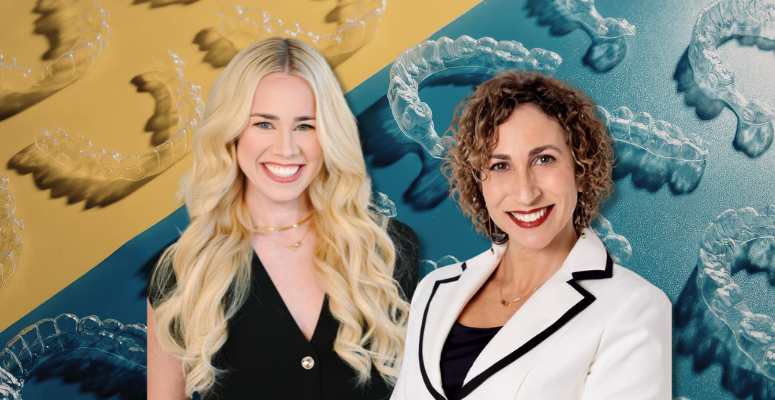
In a recent Group Dentistry Now podcast, Angela Severance, Ivoclar’s Training and Education Manager for DSOs, and Dr. Christina Blacher, founder of Christina Blacher Consulting and a practicing clinician at Ideal Dental and Orthodontics in Frisco, TX, explored why clear aligner therapy is becoming a strategic growth driver for group practices, and what groups must do to implement it successfully across locations. Their discussion highlighted three critical elements for success: standardized workflows, consistent materials, and structured training and education.
“Without standardized trainings and workflows, outcomes tend to vary widely, and patient experience suffers,” Dr. Blacher explained. For group practices seeking predictable results, the key is not simply offering aligner therapy, it’s connecting with the right industry partners and building the right systems that allow it to succeed across every location.
Why Clear Aligner Therapy Matters for Modern Group Practices
Clear aligner therapy is often viewed as cosmetic, but its benefits extend far beyond aesthetics. In addition to improving smiles, aligners can address functional alignment, bite correction, periodontal considerations, and overall oral health. Proper alignment also supports long-term hygiene and dental health.
For group practices, this means aligner therapy can benefit a broader patient population than many clinicians initially expect. Instead of presenting aligners as a standalone service, many practices introduce them as part of a conversation about oral health and preventive care.
Digital scanning technology enhances these discussions. Dr. Blacher explained that her practice scans every hygiene patient as a part of their wellness visit. While scans aren’t solely for orthodontic diagnosis, they often reveal alignment or bite issues that might otherwise go unnoticed.
When patients can see right in front of them what’s happening in their mouths, treatment conversations, including clear aligners, happen naturally. Once patients understand both the health and aesthetic benefits, many choose to move forward. This approach allows aligner therapy to become a natural extension of comprehensive care while creating meaningful growth opportunities for group practices.
The Importance of Standardized Workflows
A major challenge that group practices face is clinical variability. Providers across locations have different experience levels with aligners, which can lead to inconsistent patient experiences.
To alleviate this, group practices need standardized systems guiding clinicians through each step of the treatment process. When diagnosis, scanning, treatment planning, and case delivery follow a consistent structure, patient care is more reliable, and onboarding is easier.
Dr. Blacher emphasizes repeatable workflows are essential for scaling aligner therapy. “When clinicians follow the same clinical roadmap, patients can expect the same level of care regardless of which office they visit.”
Standardized workflows also improve efficiency. Many practices assume aligner therapy requires significant chair time, but with streamlined systems, total doctor chair time can be as little as one hour. “With the right systems in place, the efficiency makes aligner therapy highly profitable,” Dr. Blacher noted.
In addition, standardization is especially important with clinician turnover. Mentorship and structured support systems ensure smooth transitions and maintain doctor and patient confidence. Ultimately, the goal is consistent care, regardless of which clinician or location a patient visits.
Consistent Materials: The Tools Behind Predictable Outcomes
While aligner systems provide the treatment framework, materials play a major role in predictable outcomes. For group practices, a trusted materials partner can make a significant difference.
Variability in materials across locations leads to inconsistent techniques and outcomes. When clinicians use different bonding agents, composites, or tools, training and standardization become harder and patients notice the inconsistencies.
“When DSOs standardize materials across locations, especially with a comprehensive portfolio like Ivoclar’s, they dramatically reduce variability and improve clinical confidence and patient experience,” Dr. Blacher said.
Consistent materials allow clinicians to develop familiarity and repeatability, both of which are key for scaling aligner therapy. Angela Severance notes that predictable materials also support precision and efficiency. Products like Ivoclar’s Adhese® Universal VivaPen create a controlled bonding environment for accurate attachment placement, while Tetric® EvoFlow and Tetric® EvoCeram Aligner further streamline attachment placement, and the OptraGate® 2 lip and cheek retractor improve visibility and access during procedures.
“Predictability matters in clear aligner workflows, and Ivoclar materials give clinicians consistency they can rely on case after case,” Dr. Blacher added.
Reliable materials simplify training, reduce variability, and create a more predictable experience for both clinicians and patients.
Training and Education: The Backbone for Long-Term Success
Even the best workflows and materials require one additional element to succeed: ongoing training and education. Both Severance and Dr. Blacher emphasized that education must be structured and continuous.
Too often, education occurs through isolated events like one-off courses or conferences. While still valuable, these rarely create lasting change in organizations with clinicians at varying experience levels.
For education to truly support group practices, it must be:
- Structured and systematized
- Accessible to clinicians and team members
- Reinforced over time
- Integrated with clinical workflows and materials
Ivoclar’s Learning Pathways Program embodies these principles. It offers a multi-layered curriculum including foundational modules, advanced techniques, and workflow integration strategies. Courses are on demand, allowing clinicians and team members to learn at their own pace while earning continuing education credits.
“Ivoclar doesn’t just provide products. They provide education, workflow integration, and hands-on support that help teams actually implement what they’re learning,” Severance said.
KEY UPDATE FOR GROUP PRACTICES:
Ivoclar has expanded its content to include dedicated clear aligner workflow training, helping group practices implement structured learning aligned with operational goals.
Grow Your Clear Aligner Cases + Earn 1 Hour of Free CE
Access Ivoclar’s Newest On-Demand Learning Pathway:
Clear Aligner Case Selection, Workflows, and Case Acceptance.
Register here.
Turning Clear Aligners into a Strategic Growth Engine
For groups focused on sustainable, same-store growth, clear aligner therapy represents more than a treatment option… it’s a strategic opportunity. Implemented with the right systems, aligner therapy becomes a predictable and efficient service benefiting both patients and practices.
Organizations that succeed will approach implementation by:
- Standardizing workflows
- Selecting consistent materials
- Investing in structured education and training
- Creating mentorship systems for clinician transitions
- Continuously refining processes
When these elements work together, clear aligner therapy becomes scalable and reliable. “When implemented correctly, clear aligners become a strategic growth mechanism, not just a treatment option,” Dr. Blacher said.
For group practices focused on growth in 2026 and beyond, that distinction may make all the difference.
Connect with the Experts
Ivoclar is a global dental company with nearly a century of innovation in restorative materials, adhesives, digital workflows, and clinical education, partnering closely with DSOs to drive standardization, efficiency, and predictable outcomes.
For practices and DSOs seeking deeper guidance on building clear aligner strategy, educational frameworks, and materials workflows, email Angela.Severance@ivoclar.com.