

Sponsored Content
The DSO industry just went through a reckoning. Location counts climbed 37% in two years. Then capital tightened, margins compressed, and the groups that had been running fast discovered they’d been running without a foundation beneath them. Consolidation slowed. Investors shifted their focus. Same-store growth became the scoreboard.
The COOs who are best at this job saw it coming. They think about location 30 before they open location 8 — not just whether they can open it, but whether it will perform.
They want to know what has to be true for a new site to open well — not just open. And they’re building for that answer before the question becomes urgent.
This instinct separates clean growth from growth that requires a two-year recovery.
Growth exposes what you didn’t build.
Most DSOs solve clinical consistency reactively. A location underperforms. Turnover spikes. A regional director notices the rooms run differently here than there. Then the fix begins.
The sharper operators ask the question earlier: what does this location need to run without me in the room?
Every time, the answer is a system. Every operatory set up the same way. Every tub configured for the procedure. Every team member understanding the flow before the first patient sits down.
When Mortenson Dental Partners implemented Color Method at Stonehaven Dental in Draper, UT, chairside interruptions during procedures dropped by 95% in the first ten days. Restocking time fell by 69%.
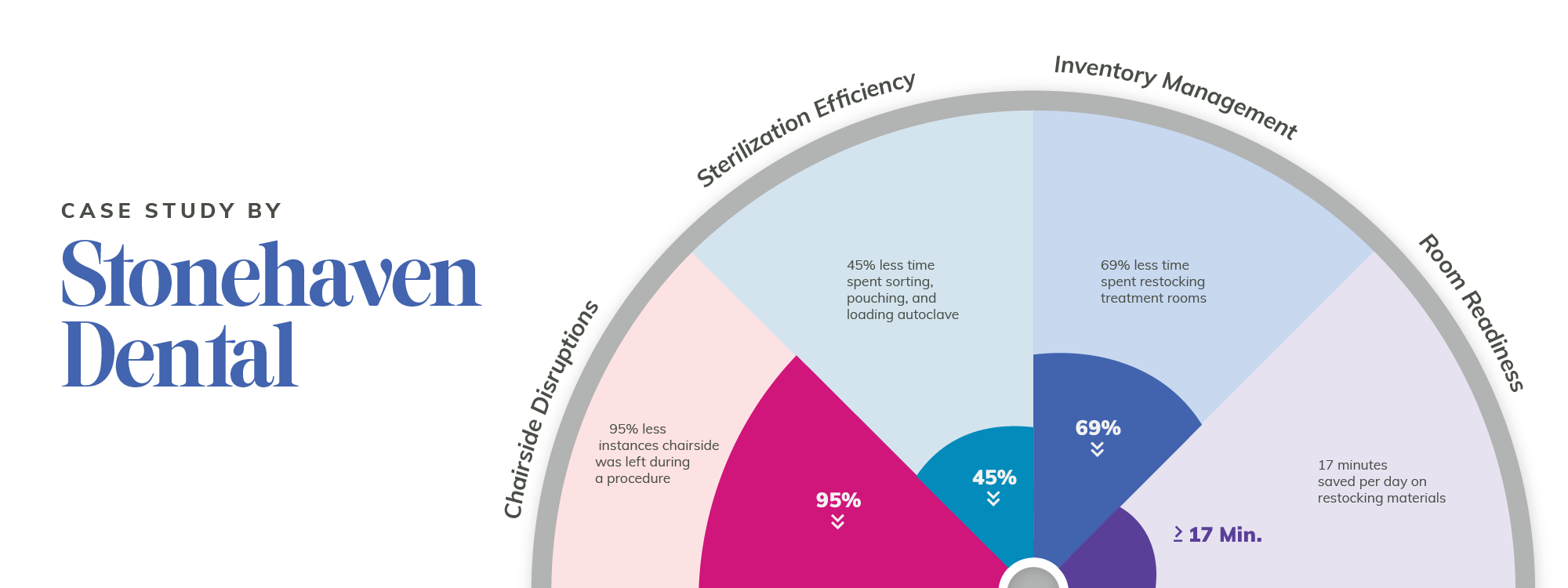
In a 10-day case study at Stonehaven Dental (Mortenson Dental Partners), Color Method reduced time spent sorting, pouching, and loading the autoclave by 45% — and saved 17 minutes per day on restocking alone.
Seventeen minutes back per operatory per day. Across twenty locations, that becomes a same-store growth conversation.
Ian Shriver, DA and Practice Manager at Stonehaven, put it simply: “Just instilling confidence in our team members is probably the biggest advantage I’ve seen with Color Method. It just elevates the whole experience for all team members and patients.”
The clinical environment is the last layer most DSOs standardize.
Operations leaders have already gotten to procurement, billing, scheduling, HR, and technology. The dashboards are clean. The reporting tells a clear story.
And then there’s the clinical floor — where the work actually happens — still running on provider preferences and whatever system the longest-tenured assistant put together years ago.
Getting to this layer is hard. It’s physical. It lives in drawers and supply rooms and deeply held habits. But it’s also where the most durable gains sit. Standardize the clinical environment and everything downstream improves — onboarding speed, float coverage, morale, training time.
Faster room turns. More procedures completed per day. Less downtime per operatory. Smoother onboarding that gets new providers producing sooner. Float staff who can cover any location without losing a step.
These are operating gains. They rarely show up in a tech stack.
The operators who do this early build an advantage that compounds. Every new location inherits the system. Every new hire walks into an environment that shows them how to work.
What Color Method is built for.
Zirc’s Color Method is a lean clinical workflow system — the same process logic behind the world’s most efficient operations, applied specifically to the dental environment.
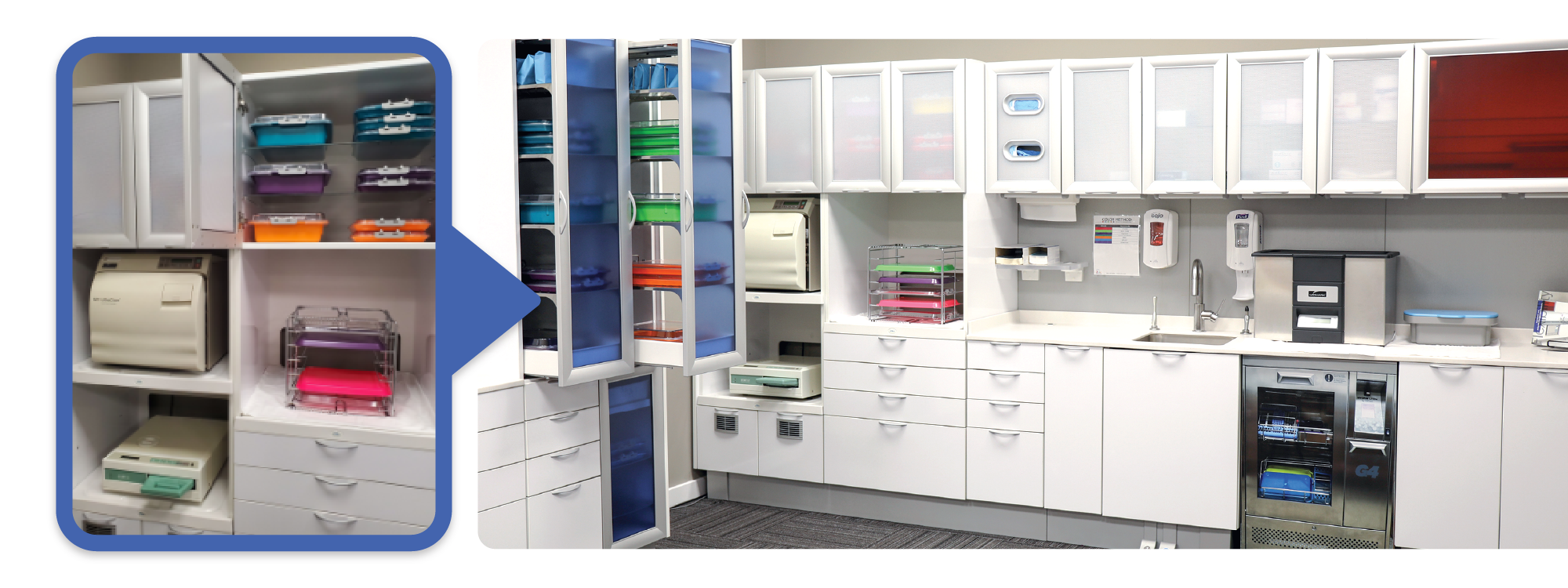
Every room organized identically. Every procedure tub color-coded and configured. Every instrument with a home. Every restocking cycle predictable and fast.
A VP of Clinical Affairs at Advantage Dental+ described it this way: “We’re doing a composite filling. The composite tub is X color. My team looks at the key, they grab the orange tub, they grab the orange tray. They don’t have to know anything else. They can be a contributing team member from day one.”
That consistency is what allows the system to travel.
It also shows up in enterprise value. Investors and acquirers increasingly look at operational maturity — standardized workflows, consistent clinical environments, and reliable execution across locations — as a signal of valuation strength.
A clinical system that proves repeatability strengthens the investment case.
Zirc’s clinical efficiency consultants plan the layout, spec the products, train the team, and stay involved through implementation.
The value shows up in the follow-through.
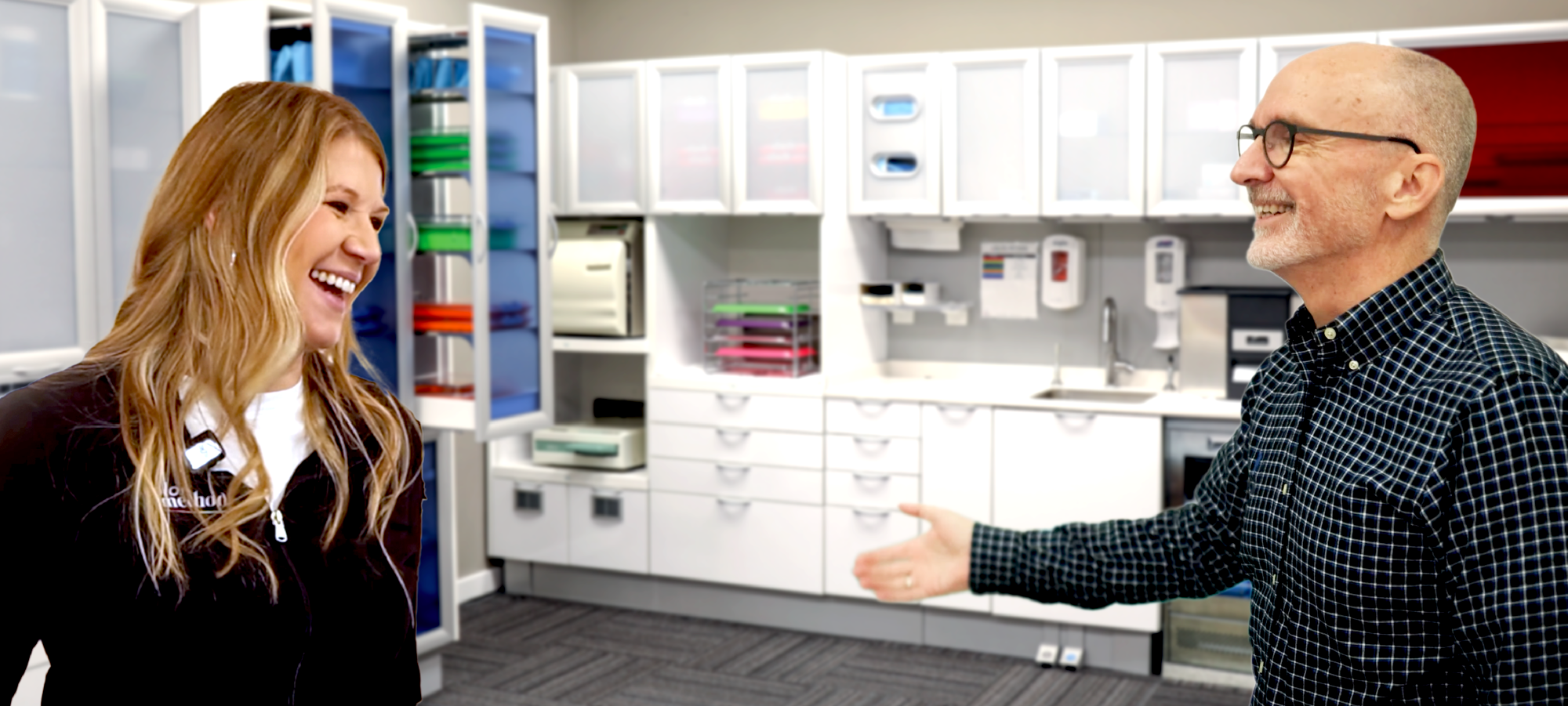
What it looks like when the system travels with you.
Float staff move between locations and get to work.
New hires onboard in days.
Regional directors spend their time on growth instead of untangling variation they didn’t create.
The clinical director who built this foundation has a different relationship with expansion. New openings feel like execution, not exposure.
“When DSOs reach out, they’re often just exploring new ideas,” says Nicolle Campion, President of Zirc Dental Products. “But what we consistently find is that they’re tired of reinventing the wheel at every location. They don’t need more product. They need a clinical system they can actually scale.”
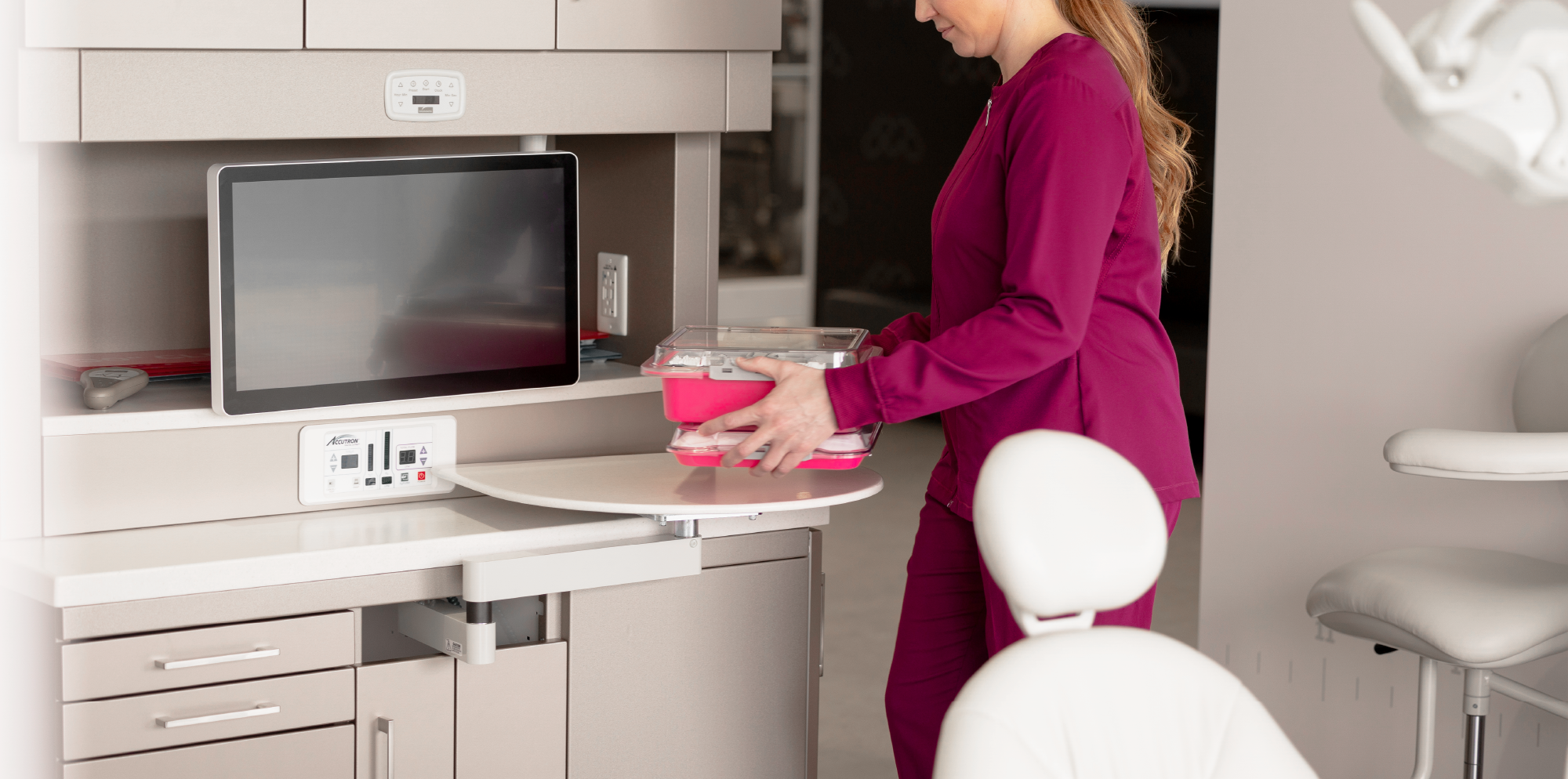
Address the system before the friction shows up. Before the inconsistencies surface in regional reviews. Before a strong clinical team slows down because the environment around them wasn’t built for consistency.
The groups posting same-store growth right now aren’t adding more rooms or headcount. They’re producing more dentistry in the same rooms with the same teams.
The DSOs posting consistent same-store growth built this foundation intentionally. They addressed the clinical environment before growth exposed the gaps.
Zirc’s Color Method gives operators a practical way to do that.
Talk to a Zirc clinical efficiency consultant about what a standardized clinical system could look like across your locations. Start at zirc.com.