

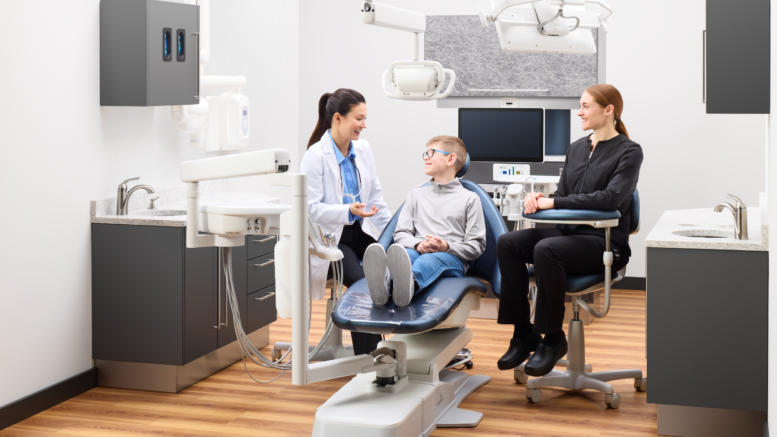
Sponsored Content
When you hear the word “design,” you may think primarily about floorplans, square footage and office aesthetics. Those decisions matter, but another type of design that affects the patient experience just as much is equipment design.
The design of a dental chair, delivery system, light or stool influences how clinicians work, how efficiently teams move through procedures and how consistently care is delivered across locations. Equipment design can also impact patient comfort and perceived time in treatment.
For growing group practices and DSOs, equipment design decisions can have an outsized impact because they are repeated across every operatory, provider and patient interaction.
A design detail that saves seconds, reduces strain or prevents disruption can create value at scale. A detail that creates friction can do the opposite.
That makes the operatory more than a place where treatment happens. It’s a system—one that can either promote consistent efficiency or quietly work against it.
Growth changes the cost of “good enough”
Many dental organizations evaluate operatories based on obvious factors:
- equipment cost
- room layout
- technology
- appearance
- installation timeline
While those factors are important, they do not tell the whole story. The less visible costs often become clearer later.
A chair that does not offer a broad range of motion, for example, may require providers to adjust their posture all day. Controls that are difficult to access may slow down the flow of treatment. A service issue that affects the full delivery system may disrupt the schedule.
In a solo practice, these issues may be absorbed by the team. In a group environment, they can multiply and make a larger impact. What begins as a minor inconvenience in one operatory can influence provider satisfaction, onboarding efficiency, schedule predictability and patient experience across dozens—or hundreds—of treatment rooms.
That’s why DSOs and group practices should look beyond whether equipment simply works and ask a more strategic question: Will this equipment continue to support us as we grow?
Ergonomics is also a workforce issue
Ergonomics is often discussed as a provider comfort issue. It is that, but for growing organizations, it is also a retention, productivity and consistency issue.
Dental professionals perform highly detailed work in physically demanding positions. When equipment forces repeated reaching, twisting or leaning, the body absorbs the strain. Over time, poor ergonomics can contribute to musculoskeletal disorders, which have been associated with lower productivity, increased sick leave and early retirement in the dental profession.
Equipment design can help reduce that burden.
- A dental chair with a broad vertical range of motion can help providers position the patient for better access—whether the clinician is seated or standing.
- A well-designed stool can help maintain balanced posture during long procedures.
- A stable, easy-to-position LED light can help improve visibility without requiring the clinician to constantly compensate with their neck, shoulders or back.
These details may not sound dramatic, but they influence how the team feels at 10 AM, 3 PM, the end of the workweek and over the course of a career.
More than a luxury, ergonomic equipment design is part of building a workplace that supports clinician well-being, retention and long-term career longevity.
Downtime often starts with small design implications
Few things disrupt a dental schedule faster than an operatory that cannot be used.
When equipment goes down, the impact is immediate. Procedures may be delayed. Patients may need to be moved. Team members can lose time, and the front office may have to manage expectations.
To minimize disruption, consider equipment reliability from the start—not just after problems occur. The most resilient equipment is not necessarily equipment that never experiences an issue. It can be equipment designed to help teams isolate and address issues quickly when they occur.
For example, the manifold design and independent handpiece control of Midmark Dental Delivery Systems help isolate certain issues at the handpiece level rather than shutting down the entire unit. So, when a fault occurs, care can often continue—helping minimize disruptions and keep schedules moving.
The advantage is clearest in a multi-site environment where operational resilience depends on limiting the spread of disruption. If a small issue can be addressed without taking a room offline, the schedule is better protected.
The question is not only, “Can this equipment perform?” but also, “How can it help the team recover if something goes wrong?”
Standardization should not mean rigidity
Standardization can simplify training, improve purchasing decisions, promote consistent workflows and help teams move more confidently between multi-site locations.
But standardization only works when the standardized solution is still flexible enough to accomplish real clinical needs.
A repeatable environment should not force every provider into a rigid way of working. It should create a familiar foundation that can adapt to different procedures, preferences and patient needs.
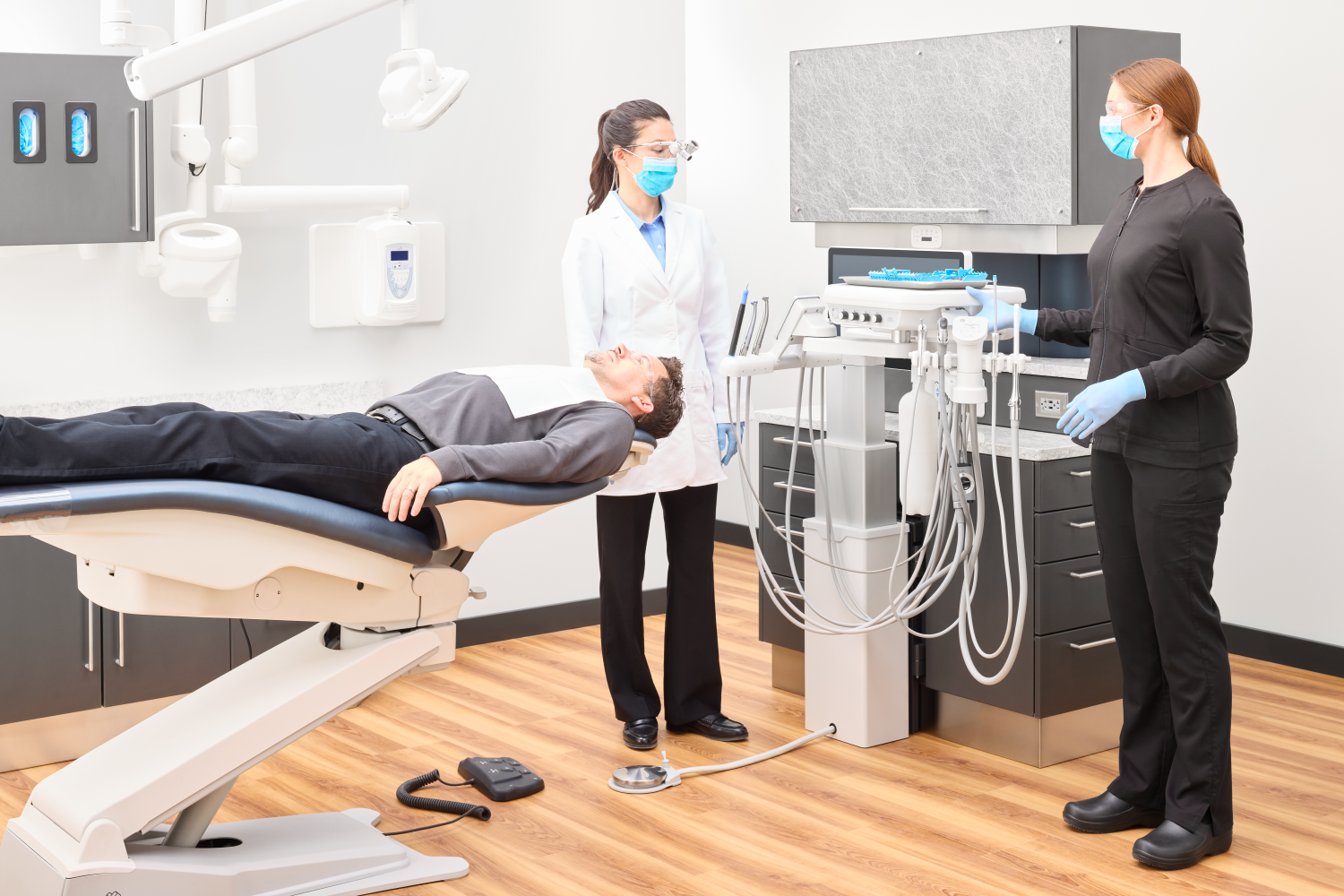

Midmark Operatory Solutions are designed to help create that balance between standardization and flexibility. Equipment is configurable, supporting consistent workflows while adapting to the needs of different clinicians, procedures and patients. For example, dental chairs support multiple positions and a Sit-to-Stand™ dental workflow, column-mounted delivery systems move vertically to accommodate seated or standing clinicians, and LED lights are easy to adjust for each procedure.
Midmark chairs also offer three backrest options to help organizations standardize on a platform without requiring every operatory to function exactly the same way.
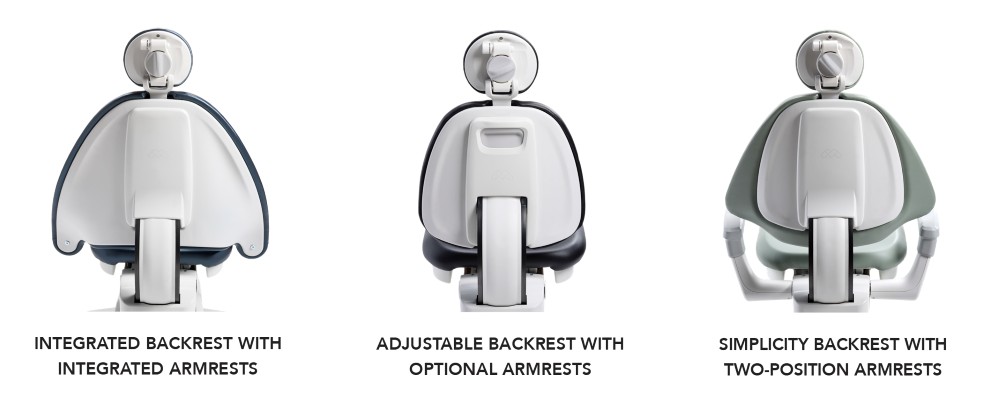
- The Integrated Backrest offers peak patient comfort ideal for longer procedures
- The Adjustable Backrest can accommodate a broad range of patient heights, which is especially helpful among pediatric patients
- The Simplicity Backrest provides a more traditional design with two-position armrests
The result of this balance between standardization and flexibility is a more consistent clinical environment that still gives providers the agility to work comfortably and deliver care based on the needs of the patient in the chair.
For growing organizations, the goal is not to make every operatory identical for the sake of control. The goal is to reduce unnecessary variation so teams can focus on the patient instead of the equipment.
Infection prevention is also a design consideration
Infection prevention is often discussed in terms of protocols, training and compliance. But the design of your operatory equipment can either reinforce those protocols or make them harder to follow consistently.
Cleanability matters. Surface design matters. Waterline safety matters.
Midmark Dental Chairs feature smooth, limited-seams upholstery to support asepsis while maintaining patient comfort. Midmark Dental Delivery System waterlines are engineered to help reduce biofilm buildup and are evaluated using ISO 16954 methods for safer dental unit water quality.
For DSOs and group practices, these details help make infection prevention repeatable. Teams need equipment that helps create consistent workflows across providers and locations.
A protocol is only as strong as the environment that sustains it.
Patient experience is shaped by what the patient never sees
Patients may not notice the engineering behind a dental chair, delivery system or operatory light. But they are likely to notice the experience that engineering creates.
For example, they may notice whether:
- The chair feels comfortable or movement feels smooth
- The team appears organized or rushed
- The room feels clean, calm and professional or cluttered
Patient comfort features, such as optional heat and massage on Midmark Dental Chairs, can help create a more positive experience in an environment where anxiety is common. At the same time, clinical design details—such as smooth actuator-driven patient positioning, accessible equipment controls and waterline systems engineered to maintain safer water quality—help clinicians focus on the procedure rather than compensating for equipment limitations.
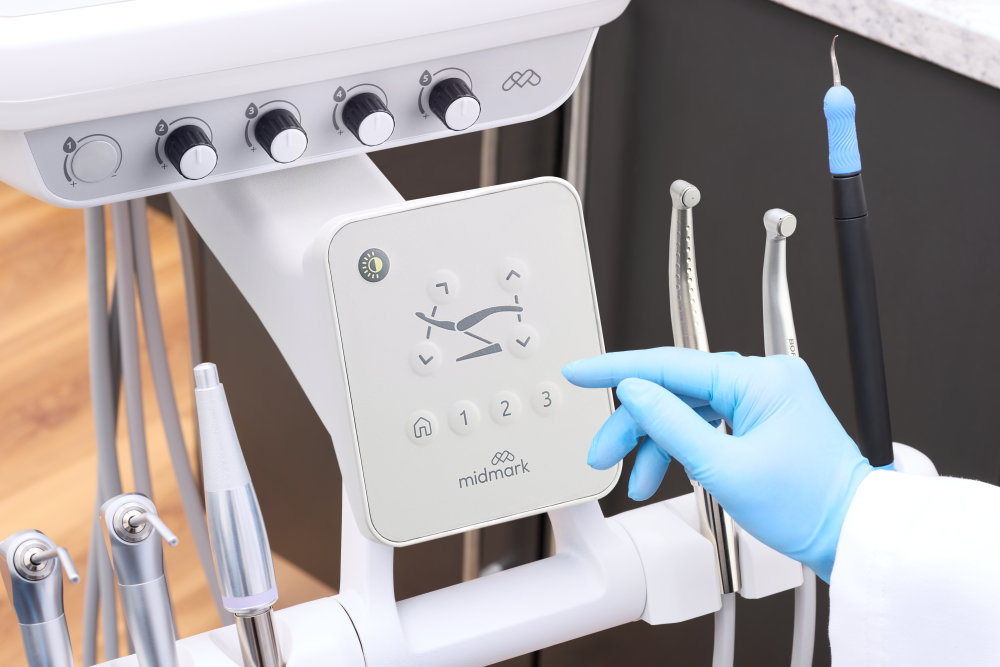
A better patient experience is not built only through amenities. It’s built through an operatory that supports comfort, safety, efficiency and trust.
The better question for group practices and DSOs
For group practices and DSOs, operatory planning should look beyond equipment selection to how design choices affect people, workflows and performance at scale.
Instead of asking only: What does this operatory cost?
Organizations should also ask: What will this operatory multiply?
Will it multiply:
- Musculoskeletal discomfort or healthier posture?
- Downtime or productivity?
- Variation or consistency?
- Workarounds or better workflows?
- Patient anxiety or patient confidence?
These questions create a more strategic way to evaluate the operatory.
For growing DSOs and group practices, equipment decisions are rarely limited to a single room. They influence patient comfort, provider experience, operational consistency and organizational performance across every location where that equipment is deployed.
As dental organizations grow, small details don’t stay small. They scale.
And when clinical equipment is designed well, the benefits can scale too.

More insights from Midmark’s Experience Center: