

A new national survey commissioned by 123Dentist reveals that Canadians overwhelmingly recognize the connection between oral health and overall health, placing dental professionals among their most trusted sources of health care advice.
The findings, published in Canada’s Oral Health Confidence Report, provide compelling evidence that Canadians see oral health as an essential part of overall health and place significant trust in dental professionals. However, the research also identifies gaps in public understanding, financial barriers to treatment, and an expanding role for dental teams in identifying health concerns beyond the mouth.
Conducted by Angus Reid Group on behalf of 123Dentist, the survey gathered responses from 1,509 Canadian adults between September 28 and October 5, 2026.
Canadians Trust Dentists
One of the report’s most significant findings is the exceptionally high level of trust Canadians place in their dental providers.
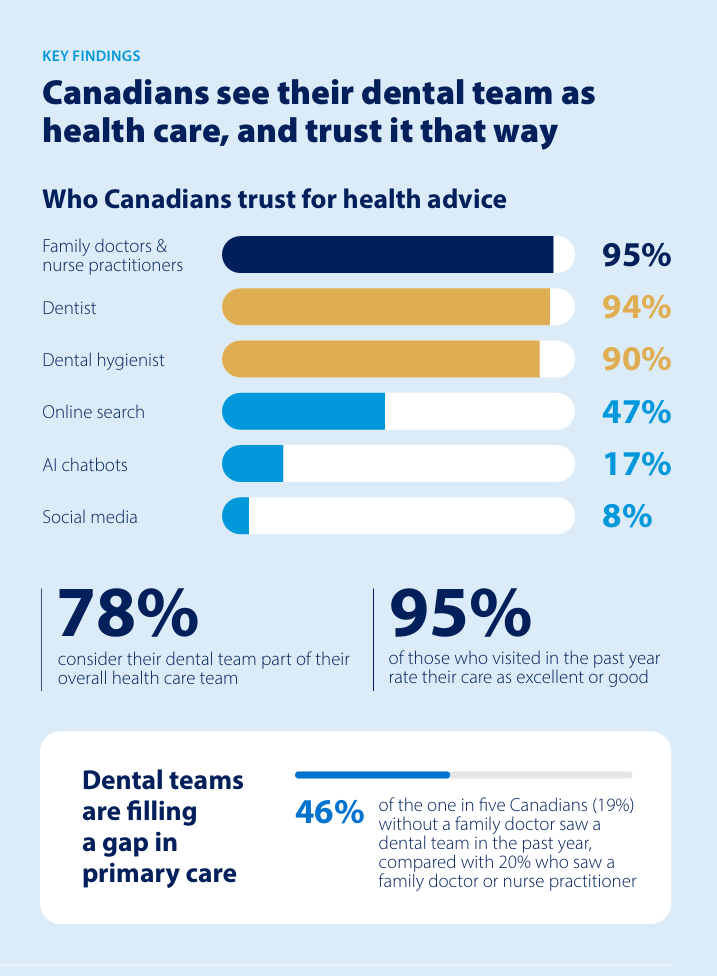
94% of Canadians trust health advice from their dentist, nearly matching the 95% who trust their family doctor or nurse practitioner. Dental hygienists also rank highly, with 90% expressing trust in their health advice.
By comparison, 47% trust online searches for health advice, while just 17% trust AI chatbots and 8% trust social media.
The survey also found that 94% of Canadians believe oral health is connected to overall health, and nearly four in five (78%) consider their dental team part of their overall health care team.
Patient satisfaction is similarly strong, with 95% of Canadians who visited a dental professional in the past year rating their care as excellent or good.
Together, these findings demonstrate that the public increasingly views dentistry as an integral component of health care rather than an isolated service focused exclusively on teeth and gums.
Dental Professionals Are Helping Fill Gaps in Primary Care
The report also highlights the role dental professionals play for Canadians without consistent access to primary medical care.
Nearly one in five Canadians (19%) reported not having a regular family doctor or nurse practitioner. Among this population, dental professionals were the most common source of health care or advice during the past year, ahead of pharmacists and walk-in clinics.
Nearly half (46%) of Canadians without a regular primary care provider visited a dental team in the previous year, compared with 20% who saw a family doctor or nurse practitioner.
The findings suggest that dental offices can serve as important points of contact within the broader health care system, particularly for patients who may otherwise have limited interaction with medical professionals.
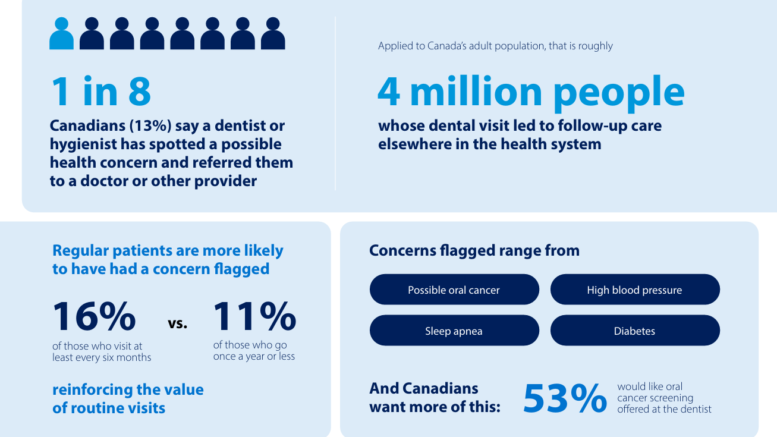
The survey further revealed that 13% of Canadians reported having a dentist or dental hygienist identify a potential health concern and refer them to another health care provider.
These concerns included possible oral cancer, high blood pressure, sleep apnea, and diabetes.
According to the report, this represents approximately four million Canadian adults whose dental visits have led to follow-up care elsewhere in the health care system.
The findings also suggest a potential benefit associated with more frequent dental visits. Among patients visiting at least every six months, 16% reported having a health concern identified, compared with 11% among those visiting annually or less frequently.
Additionally, 53% of respondents indicated they would like oral cancer screening offered at their dental office.
Awareness of the Oral-Systemic Health Connection Remains Limited
Although nearly all Canadians recognize that oral health affects overall health, many are less familiar with specific connections between oral conditions and systemic diseases.
The report found that only:
- 43% had heard of a connection between oral health and heart disease.
- 40% recognized a potential connection with certain cancers.
- 19% were aware of a connection with diabetes.
- 15% had heard of a connection with dementia.
More than one-quarter of Canadians (28%) could not identify a single specific connection between oral health and another health condition.
At the same time, 65% said they want their dentist or dental hygienist to discuss how oral health affects the rest of their body.
This disconnect between general awareness and specific knowledge points to an opportunity for dental practices to expand patient education and reinforce the importance of preventive oral health care.
For dental groups and DSOs, consistent patient communication and clinical education across locations could help address these knowledge gaps while supporting a more comprehensive approach to patient care.
 Financial Barriers Continue to Prevent Canadians From Seeking Dental Care
 Financial Barriers Continue to Prevent Canadians From Seeking Dental Care
Despite widespread trust in dental professionals, access to care remains a significant challenge.
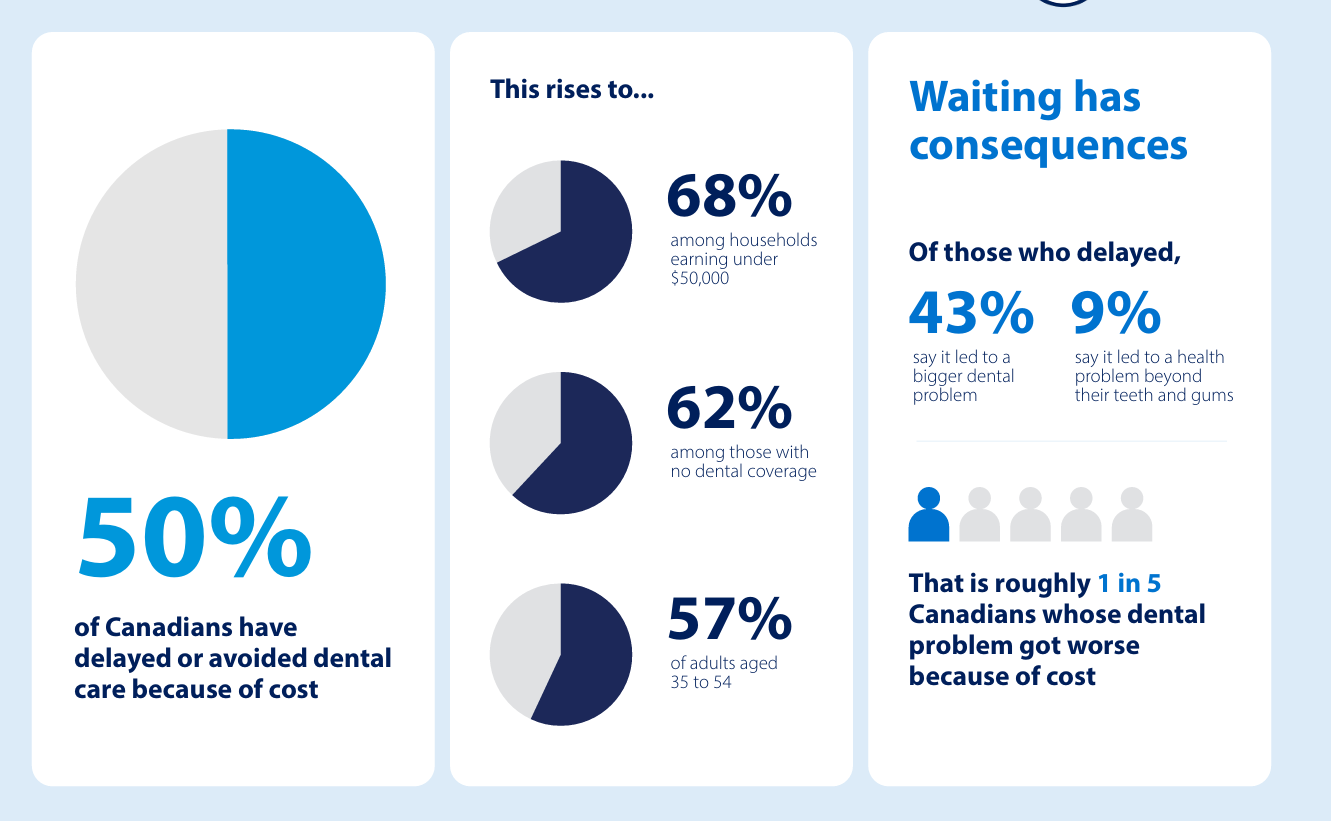
Half of Canadians surveyed reported delaying or avoiding dental treatment because of cost. That figure increased to 62% among those without dental coverage and 68% among households earning less than $50,000 annually.
Delaying treatment also had consequences.
Among respondents who postponed care, 43% reported that the delay resulted in a more serious dental problem, while 9% experienced a health issue extending beyond their teeth and gums.
The report estimates that approximately one in five Canadians experienced worsening dental problems because of cost-related delays.
The findings underscore the relationship between affordability, preventive care, and the potential consequences of leaving dental conditions untreated.
Strong Support for Canada’s Dental Care Plan
The survey also examined public attitudes toward the Canadian Dental Care Plan (CDCP), which aims to improve access to oral health services for eligible Canadians.
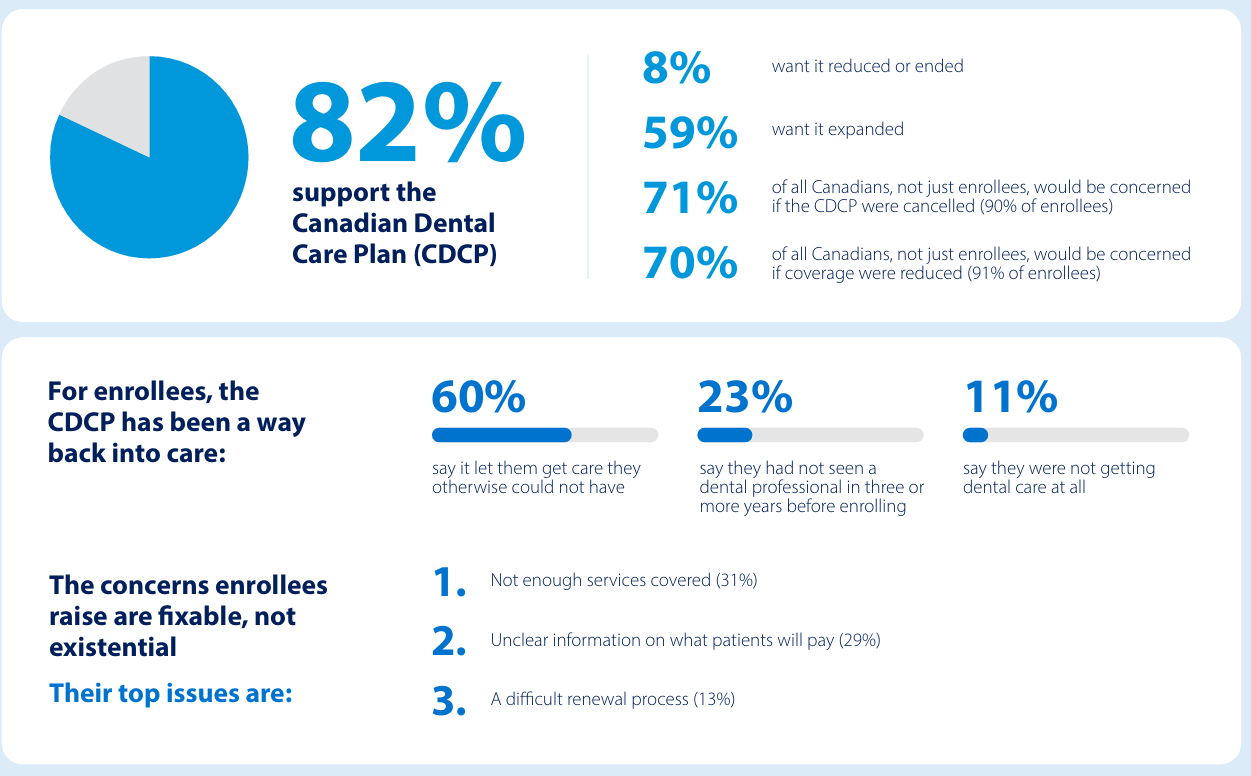
Support for the program remains high, with 82% of respondents expressing approval and 59% favoring its expansion.
Among CDCP enrollees, 60% reported that the program allowed them to obtain dental care they otherwise could not have accessed.
Additionally, 23% of enrollees had not visited a dental professional in three or more years before joining the program, while 11% reported receiving no dental care at all before enrollment.
Although the program has helped expand access, respondents identified areas for improvement, including insufficient coverage of services, unclear information about out-of-pocket costs, and difficulties with renewal.
The Implications for Dental Groups and DSOs
For dental groups and DSOs, the findings highlight both the responsibility and opportunity associated with patients’ growing recognition of dentistry as an essential health care service.
The high level of trust in dentists and dental hygienists reinforces the importance of supporting clinical teams with the education, resources, and systems necessary to identify potential health concerns, communicate effectively with patients, and facilitate appropriate referrals.
The research also points to opportunities for dental organizations to strengthen relationships with medical providers, standardize preventive screening protocols, and improve patient understanding of the oral-systemic health connection.
While the survey reflects the experiences and perceptions of Canadians, its findings raise broader questions about how dental organizations can support more integrated, accessible, and preventive models of care.
Ultimately, the research reinforces an important distinction. Patients do not simply trust dental professionals to care for their teeth. They increasingly recognize them as essential members of their overall health care team.
Source: 123Dentist, Canada’s Oral Health Confidence Report, October 2026. Research conducted by Angus Reid Group among 1,509 Canadian adults.