

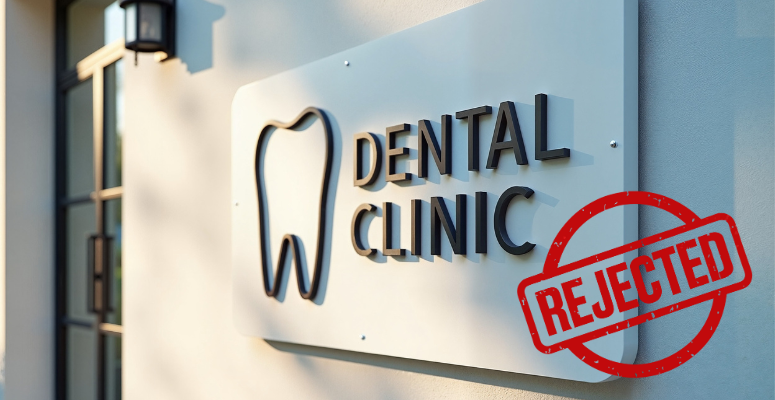
By Dr. Kartik Antani, DMD
When I first started looking at dental practices to buy, a mentor told me three things I’ll never forget:
1. Learn to walk away.
2. Look at a lot of practices before choosing one.
3. Find the flaws first – then decide whether they’re worth fixing.
At the time, I didn’t realize how important those three rules would become. But once you start evaluating real practices, you understand quickly:
Most deals fall apart long before you ever step inside the building. They die in the numbers.
So let me walk you through the biggest financial red flags I’ve seen – the same ones that made me close the folder, thank the broker, and move on.
Think of this as the conversation I wish someone had with me earlier.
1. The Price Didn’t Match Reality
Here’s something no one tells you: Sellers often price their practice based on emotion, not economics.
Many are thinking about retirement, their legacy, or “what the practice used to produce.” But as a buyer, you’re thinking about one thing:
Can this practice support me?
I’ve walked away when I saw:
- A $900K asking price on a practice making $200K in true profit
- Brokers stacking “adjusted EBITDA” with unrealistic add-backs
- Valuations based on the seller’s best year, not the average reality
If I had to convince myself the price might make sense, I already knew it didn’t.
2. The Profit Looked Good on Paper… but Not in Real Life
A practice can collect $1M and still be a terrible buy.
I’ve passed because:
- Overhead was 72–78% and the seller insisted “that’s normal”
- Staff costs were so high I’d basically work for free the first year
- Marketing spend was inconsistent – $10K one month, $500 the next
- Add-backs were more imaginative than factual
If profitability required “optimism,” I moved on.
3. Collections Were Declining or Unpredictable
Consistency is everything in acquisitions.
When I see numbers bouncing up and down, here’s what I think:
If the seller can’t stabilize the practice they know best, how am I supposed to?
I walked away when:
- Revenue declined for three years straight
- Hygiene shrank with no explanation
- Adjustments ballooned suddenly (“We wrote off some old stuff…”)
- Monthly swings of 20–30% made the practice feel chaotic
If the seller couldn’t explain why the numbers looked the way they did, I didn’t spend more time on it.
4. PPO Write-Offs Were Quietly Killing the Dental Practice
This one is sneaky.
Some practices look busy until you calculate the collection percentage.
I’ve said no when:
- Collection rate was under 60%
- They were in-network with 15+ PPOs
- Fee schedules were so low I’d lose money doing crowns
- The seller shrugged and said, “We’ve always done it this way”
If working harder meant earning less, it wasn’t a deal worth pursuing.
5. The Financials Were Too Messy to Trust
Messy books are a flashing red warning sign.
Here’s what made me walk:
- Missing months in the P&L
- Payroll numbers that simply didn’t add up
- Personal expenses hidden in business categories
- Production reports that didn’t match bank deposits
- Sellers saying, “My CPA will explain it”
If I needed forensic accounting to understand the financials, I wasn’t buying it.
6. The Owner’s Production Was Impossible to Replace
This one catches a lot of buyers off guard.
A practice might look great but only because the owner is working at an unsustainable pace.
I’ve passed when:
- The doctor worked 5–6 days a week
- They performed specialized procedures I wasn’t going to replicate
- Their production mimicked two full-time associates
- Hygiene underperformed but the doctor overproduced to compensate
If the practice would shrink the moment I stepped in with a normal schedule, the risk wasn’t worth it.
The Bottom Line I Learned After Evaluating Dozens of Dental Practices
The practices worth buying – the ones that sell fast and at strong valuations all share three things:
✔ Clean, believable financials
✔ Consistent profit year over year
✔ Replaceable production that doesn’t require superhuman output
Everything else is negotiable.
These three are not.
 Written by Dr. Kartik Antani. Dr. Antani is a practice owner in New Mexico. His goal is to initiate and sustain a meaningful dialogue about the growth from small practices to small groups, addressing both clinical and administrative perspectives. He can be further reached at kantani@gmail.com or 848.
Read Kartik’s other articles:
- Expanding Your Dental Business from One Location to Two or Three is Easy, Until it Isn’t.
- Why Scaling Down May Lead to Greater Growth for Emerging Dental Groups
- Emerging Dental Groups to Watch in 2023
- Watch him on the Group Dentistry Now podcast: The Group Dentistry Now Show: The Voice Of The DSO Industry – Episode 98