

DSO Spotlight
Motor City Dental Partners is taking a deliberate approach to dental group growth. Rather than acquiring practices first and building support capabilities later, the organization invested early in the people, systems and infrastructure it believed would be necessary to operate at scale.
That foundation has helped the Michigan-based, doctor-owned DSO grow from 12 practices in 2021 to 58 locations across Michigan, Indiana and Ohio. The organization remains predominantly focused on orthodontics, while expanding its pediatric dentistry platform and adding complementary services in select locations.
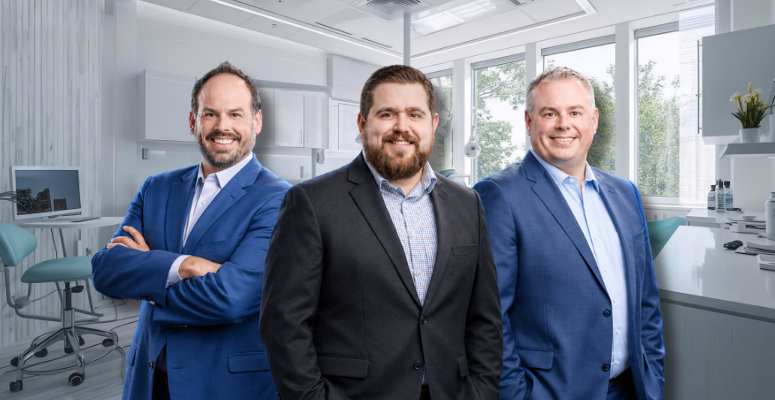
Group Dentistry Now recently spoke with Motor City Dental Partners CEO Dr. Aaron Havens, COO Dr. David Havens and CFO Mike Towle about the company’s origins, operating model and strategy for sustainable growth. Their story offers practical lessons for emerging dental groups that are trying to balance expansion with operational discipline, clinical autonomy and meaningful support for doctors.
Growth Born from Necessity
Motor City Dental Partners’ roots stretch back to the Havens brothers’ early years as orthodontists. Dr. David Havens began acquiring practices after completing his training, and Dr. Aaron Havens later joined him. In 2012, the brothers owned their first Havens Orthodontics practices.
The economic environment in the Detroit area shaped their early growth. Large, established practices that could support two orthodontists were difficult to find, so the brothers built a multi-location model out of necessity. Each stage of expansion forced them to develop stronger systems, centralize more functions and become more intentional about how the practices operated.
Those early lessons eventually became the foundation for Motor City Dental Partners. In 2021, the brothers brought their existing practices together under the platform and began building a broader organization around a clear goal: create a sustainable dental group without allowing rapid expansion to outpace operational support.
The brothers’ complementary leadership styles helped define their roles. Aaron, an entrepreneurial and creative thinker, moved naturally into the CEO position. David, who is highly focused on organization, systems and process development, became COO. Towle joined the organization in 2021 and brought experience in finance, private equity and preparing growing businesses for the next stage of development.
“From the beginning, we did not build Motor City Dental Partners as an exit strategy. We built it to be a sustainable company. Our goal is to become an industry leader while maintaining a doctor-led culture and continuing to innovate in the way we approach group practice. We want to keep improving the platform, keep our partners engaged and create an organization that appeals not only to doctors planning a transition, but also to younger doctors who see group practice as part of the future of dentistry.” Dr. Aaron Havens, CEO, Motor City Dental Partners
Building the Platform Before It Was Needed
Many emerging DSOs add corporate resources only after growth exposes a weakness. Motor City Dental Partners chose a different sequence. Its leaders invested in finance, human resources, marketing and other centralized functions before the organization had fully reached the scale that would normally justify them.
The decision required patience and a willingness to carry infrastructure ahead of revenue. It also meant accepting that there was no established playbook for building the exact organization the founders envisioned. However, the team believed it was better to prepare for growth than to acquire practices and then scramble to fulfill promises made during the partnership process.
That philosophy continues to influence the company’s approach. Before Motor City Dental Partners tells a prospective partner that it can provide a particular service, its leaders want the people and systems in place to deliver it. The organization still encounters new challenges as it reaches different levels of scale, but its support-first mindset provides a framework for addressing them.
For emerging groups, the lesson is significant. Acquisitions may increase revenue and geographic reach, but those gains can create instability if the support organization is not prepared. Motor City Dental Partners treats infrastructure as a prerequisite for responsible growth, not simply a cost to add later.
Integration as a Form of Support
Motor City Dental Partners also distinguishes between owning a collection of practices and operating a fully integrated dental platform. The company aims to move new partner practices onto its core systems within approximately 90 to 120 days.
That process includes practice management software, procurement, finance, check writing, reconciliations, revenue cycle management, marketing and other essential functions. Leadership acknowledges that changing systems can create short-term discomfort. Yet without shared systems and reliable data, the support team would have limited visibility into practice performance and fewer ways to help when staffing, financial or operational problems arise.
The transition begins before closing with information gathering and proactive planning. Motor City Dental Partners then uses a five-stage integration process, starting with human resources and employee onboarding before moving through procurement, finance and other departments. Each function enters the process at a planned point, supported by information sessions and opportunities for questions.
The objective is to bring a practice fully onto the platform in roughly 90 days while minimizing disruption for doctors and team members.
“As we grew from one office to three and then continued expanding, we learned that you have to become a different organization at every stage. Scalability and centralization require you to think ahead. If you know where you want to be in one, three or five years, you have to ask what the business, systems and support structure need to look like before you get there. The more integrated the organization becomes, the more effectively we can manage the business, streamline operations and support our doctors and teams.” Dr. David Havens, COO, Motor City Dental Partners
Standardizing Systems Without Erasing Local Culture
Motor City Dental Partners’ integration strategy does not mean stripping practices of the identities that made them successful. The organization standardizes the operational backbone while seeking to preserve local culture.
That distinction is central to the model. Partner practices receive shared tools, data and administrative resources, but they are not expected to discard the relationships and team dynamics they have built in their communities. Leadership views local culture as an asset rather than an obstacle to corporate uniformity.
This balance can be difficult to achieve. A DSO needs enough standardization to create visibility, consistency and scale. At the same time, excessive standardization can alienate teams and weaken the qualities that patients and employees value. Motor City Dental Partners’ approach is to centralize the functions that benefit from consistency while supporting practices in continuing to do what made them successful.
That philosophy begins with partner selection. The company does not evaluate a potential affiliation solely through revenue, EBITDA or practice size. Leadership places considerable weight on alignment, asking whether the doctor shares the organization’s vision and can become a constructive long-term partner.
Not every successful practice is the right fit. By being selective, Motor City Dental Partners seeks to reduce cultural friction and build a network of doctors who can serve as ambassadors for the organization.
Doctor Ownership and Financial Discipline
Motor City Dental Partners was built during a period when private equity interest in dental and orthodontic platforms was especially strong. The Havens brothers received interest from established groups, but chose to retain control and continue developing their own platform.
That decision did not reflect a belief that private equity is inherently unsuitable for dental groups. Instead, the founders wanted time to establish their operating model, protect clinical decision-making and embed their values before considering any structure that could introduce different financial priorities or a defined exit timeline.
The organization describes itself as privately held and non-PE-backed, with doctors and partners serving as its investors. That ownership model places added importance on disciplined growth, sound cash flow, healthy margins and careful leverage management.
Debt capital has helped the company pursue that strategy. As Group Dentistry Now reported in its October 2025 DSO Deal Roundup, Brightwood Capital Advisors provided financing to Motor City Dental Partners to refinance existing debt, support acquisitions and strengthen the company’s balance sheet. Raymond James & Associates advised Motor City Dental Partners on the financing.
For Towle, financial discipline is not simply about protecting the balance sheet. It is part of the organization’s obligation to its doctor investors. Avoiding excessive leverage and remaining selective about transactions allow the company to pursue creative opportunities without compromising the sustainability of the platform.
“Our responsibility is to the doctors and partners who have invested in this organization. That requires discipline. We do not want to over-leverage the business or complete deals that do not make sense simply for the sake of growth. We want to maintain a sustainable model, preserve the principles Aaron and David established and make sure the support platform can deliver what we promise. If we do that well, we can continue growing while remaining accountable to the people who built their practices and trusted us with their future.” Mike Towle, CFO, Motor City Dental Partners
Turning Data into Practical Support
Motor City Dental Partners’ definition of support includes many of the functions that commonly burden independent practice owners. Revenue cycle management helps address insurance billing and patient accounts receivable. Centralized human resources and payroll systems assist with recruiting, training and workforce administration. Doctors also gain access to peers who can share clinical best practices and ideas for improving team engagement.
Technology connects many of those functions. The organization uses a procurement platform that follows an order through receipt, invoice matching and entry into the accounting system. The goal is not technology for its own sake. Each solution must create simplicity, reduce administrative work or give practices better information.
A centralized data warehouse and real-time dashboards provide doctors with visibility into production, overhead, overtime, human resources measures and other key performance indicators. Motor City Dental Partners closes its books within 15 days after the end of the month, allowing practice leaders and the support team to identify issues much sooner than they could if they waited months for a traditional profit-and-loss statement.
This visibility gives support teams a chance to intervene while a problem can still be corrected. It also gives doctors a clearer understanding of their practice performance without requiring them to assemble reports manually.
Although artificial intelligence continues to attract attention throughout dentistry, Motor City Dental Partners is taking a practical approach. The team expects AI to play a larger role in its data environment over time, but its immediate priority is making sure current systems are safe, simple and genuinely helpful to practices.
A Concentrated Midwest Growth Strategy
Motor City Dental Partners has resisted pressure to pursue a national footprint simply for the sake of appearing larger. Instead, it is focused on geographic density in Michigan, Indiana and Ohio.
That regional strategy reflects the founders’ roots and the organization’s operating philosophy. The Havens brothers grew up in Romeo, Michigan, and describe Motor City Dental Partners as an organization shaped by Midwestern values. They believe the same values resonate with doctors who are deeply connected to their communities across the region.
Concentration also supports execution. A geographically scattered acquisition strategy can create significant challenges when a group lacks the local leadership and infrastructure required to support its practices. By building density in contiguous markets, Motor City Dental Partners can extend its support model while maintaining closer operational relationships.
The company’s current 58-location footprint reflects substantial growth from its starting point, but leadership is not pursuing acquisitions indiscriminately. Orthodontic affiliations remain the primary engine, while pediatric dentistry provides an additional avenue for growth. The group has added pediatric services to orthodontic locations and orthodontic services to pediatric practices. It also sees potential for pediatric de novo development in underserved communities, even as its broader structure remains partner and acquisition based.
What Comes Next
Motor City Dental Partners’ five-year vision is ambitious but consistent with the principles that guided its early development. The organization wants to deepen its presence in Ohio and Indiana, build on its density in Michigan and eventually stand alongside larger, nationally recognized DSOs and OSOs as an industry leader.
Leadership believes the next stage of growth could be significant. The company expanded from roughly a dozen practices to nearly 60 in five years, and its support infrastructure may allow it to grow more efficiently during the next five. Still, the stated goal is not growth at any cost. It is to scale without abandoning doctor leadership, regional focus, partner alignment or operational integration.
The organization also wants to broaden the idea of who can benefit from partnership. A DSO affiliation does not have to be only an exit option for a doctor nearing retirement. A well-designed platform can appeal to younger clinicians who want ownership, collaboration and support without carrying every administrative responsibility alone.
Motor City Dental Partners’ experience shows that sustainable growth depends on more than access to capital or a strong acquisition pipeline. It requires leaders who are willing to invest ahead of demand, complete the difficult work of integration, preserve what makes individual practices successful and build systems that turn scale into meaningful support.
For emerging groups, that may be the most transferable part of the company’s blueprint: build the organization that future partners will need before asking them to trust it.
Watch the full interview here: