

Sponsored Content
A thought leadership piece from Alphaeon Patient Finanacing, drawn from the webinar in Partnership with Misty Mattingly “Beyond the Cleaning: Connecting Hygiene, Patient Care, and Practice Growth.”
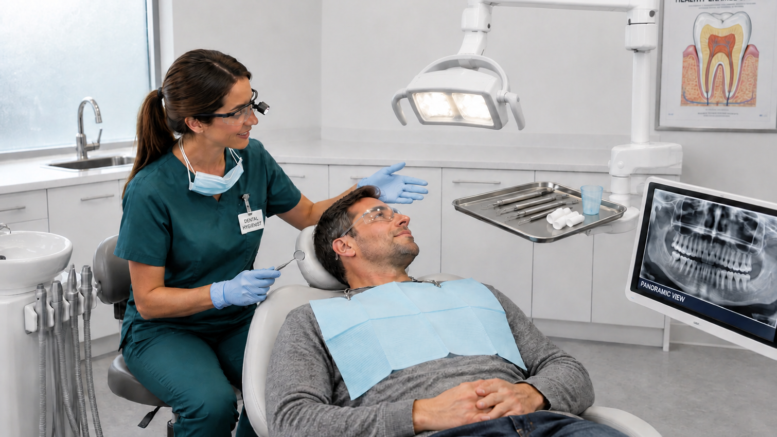
Every recall appointment holds two different meetings in the same chair.
The patient thinks they’ve booked a cleaning: 30 to 60 minutes, in and out, covered by insurance. The clinician has a chance to do something far more valuable: a full medical and risk assessment, periodontal diagnosis and staging, and an oral cancer screening.
The distance between those two expectations is where treatment acceptance is won or lost. The hygiene room is also where most treatment plans fail. Not because the dentistry is wrong, but because the patient never came to see the appointment the way the clinical team does.
Closing that gap doesn’t require new hires or new equipment. It requires a change in how hygiene teams talk, show, schedule and hand off care. Done well, that change improves patient health and the practice’s financial performance at the same time.
The most valuable hour in the practice
Hygiene is the only department that sees nearly every patient on a repeating schedule. That makes it the most important hour in the practice:
- Hygienists spend more time with patients than anyone else on the team.
- Every recall patient passes through hygiene.
- Most of the treatment a practice diagnoses originates in the hygiene chair.
- Doctors often move in and out of the room; hygienists have the time to talk.
Yet many practices still describe this hour as “just a cleaning.” That word sets the patient’s expectations before they arrive, through the website, the reminder text and the confirmation call. If the patient believes they’re coming in for a quick polish, any diagnosis feels like an unwelcome surprise.
High-performing hygiene teams use different language. They call the visit a periodontal assessment and therapy, a therapeutic appointment designed to move the patient toward health and maintain their natural teeth. The point is not semantics. Patients value the appointment exactly as much as the practice has taught them to.
There is clinical urgency behind this, too. Only about a quarter of dental practices routinely screen for oral cancer, even though it sits squarely within the hygienist’s scope. And research continues to link oral health to diabetes, adverse birth outcomes, Alzheimer’s disease and other systemic conditions. There is no overall health without oral health.
Where cases are lost
Treatment moves through a simple funnel: diagnosed, presented, accepted, scheduled, completed. Every practice should map its own funnel before changing anything, because the fix depends on where the leak is.
The biggest drop is almost never at completion. It happens between presented and accepted, the moment when the patient decides whether the problem is real and whether treatment is possible.
The questions to ask are specific:
- Are we diagnosing enough? If clinicians aren’t probing, disease goes undetected and never enters the funnel.
- Are we presenting clearly? If one team member calls it a “deep cleaning” and another calls it “scaling and root planing,” the patient hears two different stories.
- Are we losing accepted cases in scheduling? This is rarer, but it happens when patients agree in the chair and leave without an appointment.
The answer differs by practice, and often by provider. That’s why it pays to look at the funnel for each hygienist and treatment coordinator, not just for the office as a whole.
Three reasons patients decline, and only one is money
When a patient says no, teams tend to assume cost is the reason. In practice, there are three distinct objections, usually in this order:
- “I don’t believe I have a problem.” Nothing hurts. Periodontal disease rarely causes pain until it’s advanced, and decay often doesn’t hurt until a tooth is badly damaged. Many serious conditions go unfelt until they’re far along.
- “I don’t understand what happens if I wait.” Patients don’t see the consequences of delay, and it’s the clinician’s job to explain them.
- “I don’t see how I can pay for it right now.” This is the money objection, and it’s real.
Most practices spend the bulk of their training on the third objection. But the first two are where most cases are actually lost. A patient who doesn’t believe they’re sick won’t be persuaded by a payment plan. A patient who understands their disease and its consequences, and is then offered an affordable path, usually wants to move forward.
That’s why the order matters. Build belief first, then urgency, then make the treatment affordable.
Co-diagnosis: let the patient see it for themselves
People don’t argue with their own conclusions. Telling a patient they have periodontal disease and need scaling and root planing in all four quadrants makes them a spectator. The diagnosis is something that happened to them. Co-diagnosis makes them a participant.
The techniques are simple and repeatable:
- Probe out loud. Before charting, explain that one to three millimeters is healthy. Then ask the patient to count on their fingers every reading of four or more, and every bleeding site. At the end, they tell you the totals.
- Hand them a mirror. Let patients watch the probe so they understand bleeding isn’t caused by pressure. Ask, “What do you notice about the gum line on this tooth compared to this one?”
- Take a photo of every finding. Intraoral images turn an abstract diagnosis into something the patient can see.
- Make it tangible. Some clinicians remove a piece of calculus and place it in the patient’s fingers to show exactly what needs to come out from under the gums and why it’s causing bone loss.
- Frame the risk. Missed appointments, diabetes and difficulty with home care all raise the odds of losing ground. Build a plan that meets the patient where they are, not one that simply says “floss more.”
The payoff shows up at the next visit. Co-diagnosed patients bring in their home-care tools, remember how many bleeding sites they had last time, and ask what more they can do. They take ownership of their own oral health.
Words that change outcomes
Small shifts in language change how patients hear a recommendation. The most effective teams use a consistent script across every operatory: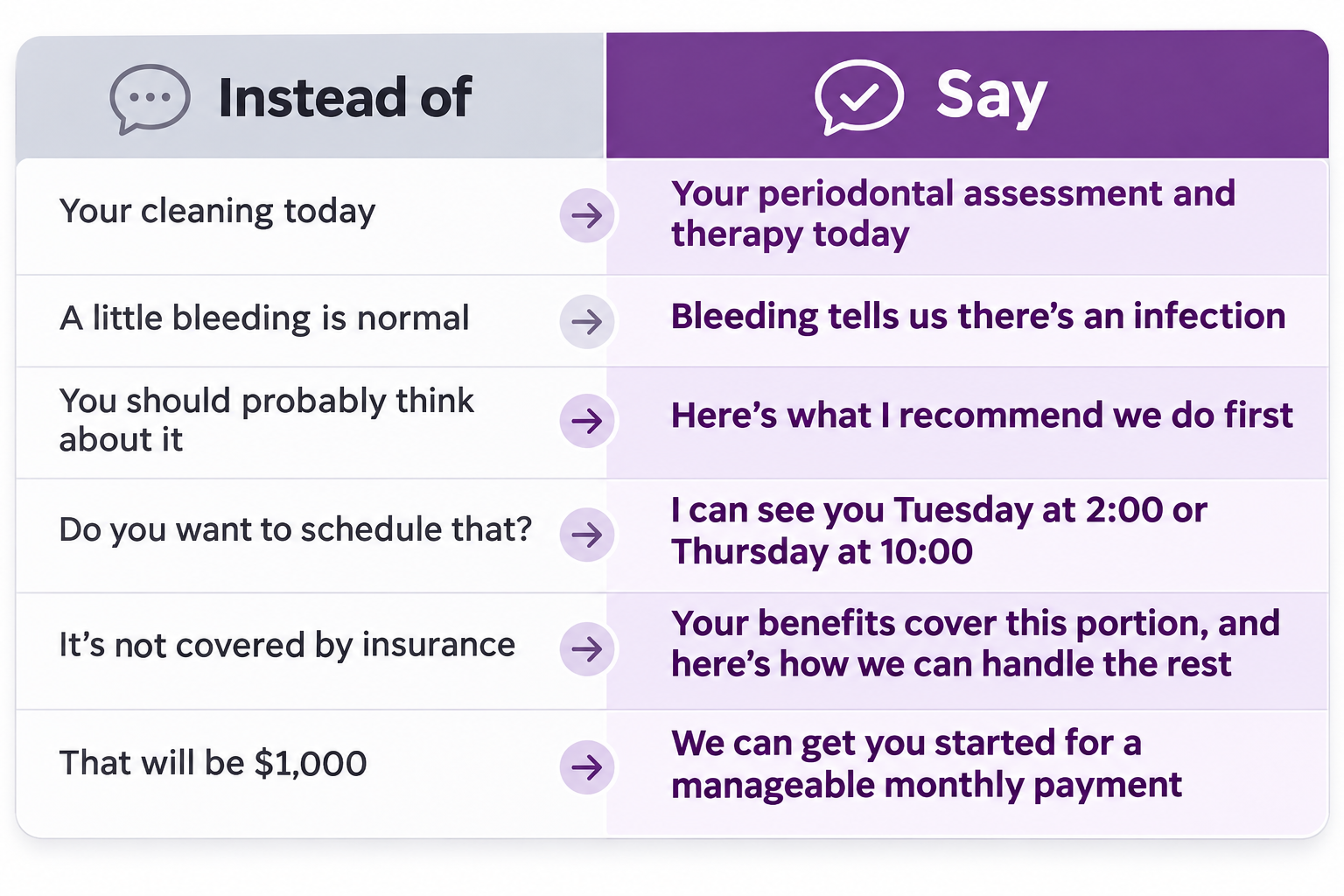 Analogies help, too. Would a patient worry if their scalp bled every time they brushed their hair? For a patient who works with cars, therapy can be framed as a tune-up followed by regular oil changes. Watch for jargon as well: when hygienists say “pockets,” patients may think of the ones their wallet comes out of.
Above all, slow down. Clinicians explain these conditions all day long; patients are hearing them for the first time, often while anxious. A specific, unhurried recommendation tailored to the patient lands far better than a rushed one.
Financing is a clinical access tool
“Not right now” is usually a timing answer, not a value answer. “Let me think about it,” “I need to talk to my spouse” and “maybe after the first of the year” often mean the patient believes you and is quietly doing the math. Patients rarely share the private pressures behind that math.
That’s why financing belongs in the care conversation, not the sales conversation. Untreated periodontal disease doesn’t pause while a patient saves up. Bone doesn’t grow back. Care should follow the clinical timeline, not the patient’s cash flow, and a monthly payment makes that possible.
Raise it before they have to
- Present financing to everyone, not only to patients you assume need it. Offering it every time removes any judgment about buying power.
- Introduce it with the plan, not after an objection. “Don’t worry, we have great options for you” belongs in the same breath as the recommendation.
- Lead with a monthly figure, not a total. A monthly amount close to the price of a dinner out feels manageable in a way $1,000 does not.
- Know your averages. Every clinician should know the typical monthly payment for common plans: four quadrants of scaling and root planing, periodontal maintenance, a crown.
The handoff is a transfer of trust
The biggest missed opportunity is often a silent handoff: the hygienist writes the plan on a routing slip and walks the patient up front. Instead, the clinician who owns the diagnosis should say it out loud, in front of the patient: “This is Ms. Smith. We’re doing scaling and root planing, she’s scheduled, and she’s interested in a payment plan.” The coordinator repeats it back and takes over.
The patient hears the plan twice, in the same language, and knows the team is working for them. The trust built in the chair carries straight through to the financial conversation.
How you’ll know it’s working
Track results by provider, not just by office. One strong hygienist can mask another who needs coaching. These indicators tell the story:
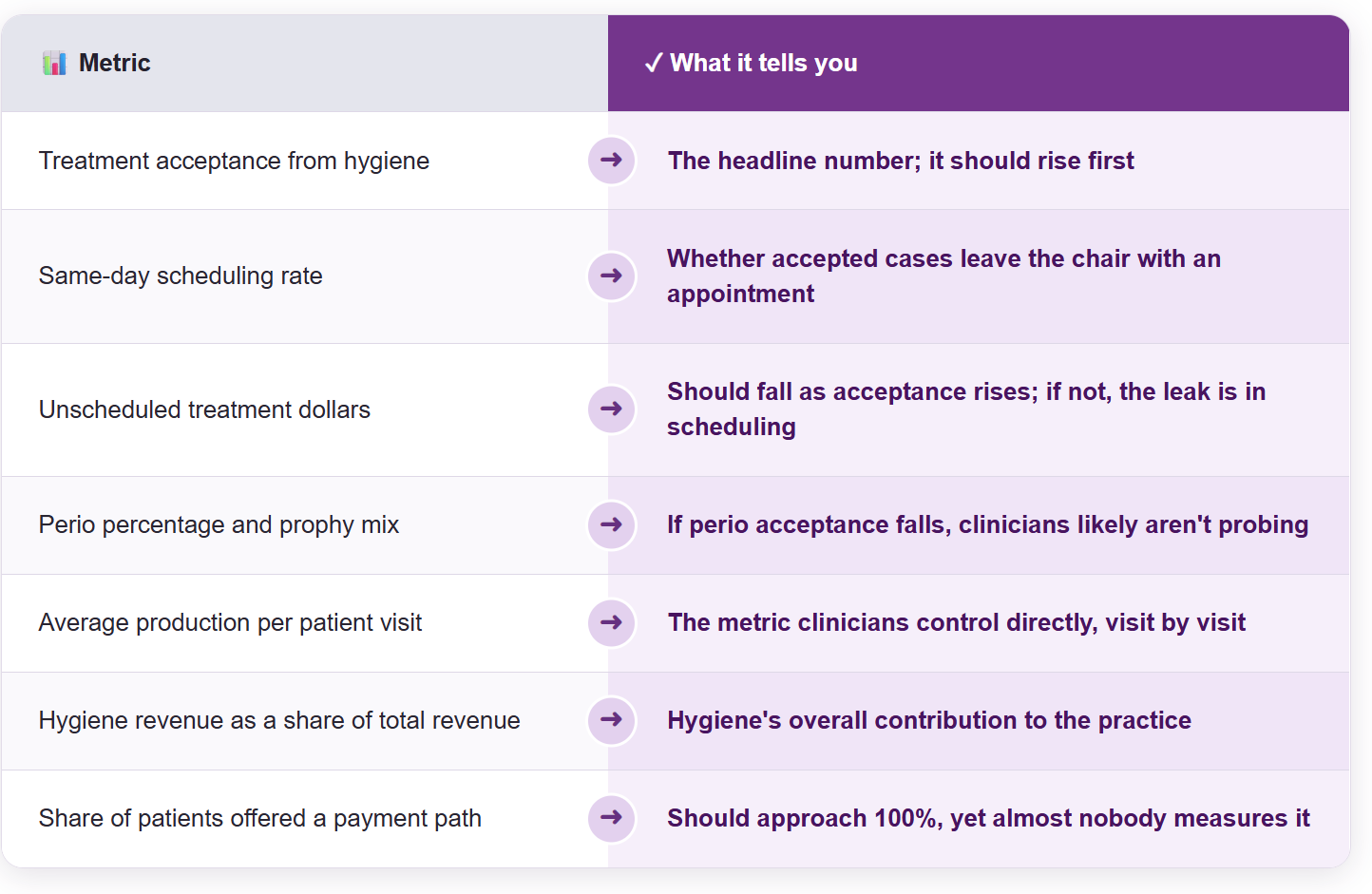
The last metric deserves special attention. Clinicians who routinely discuss payment plans tend to see meaningfully higher production per visit. Across a full year of hygiene visits, even a modest increase per patient adds up to a significant gain for the practice. Patient count is an operations problem. What happens to the patient already in the chair is the clinician’s to own.
Growth follows care
The usual growth conversation has it backwards. Change what happens in the hour, and the growth follows.
What separates an exceptional clinician from an average one is the ability to help patients say yes to the care they need. That takes clear language, visible evidence, a confident recommendation, a clean handoff and an affordable path forward, offered every time.
At Alphaeon, that last piece is where we focus. Patient financing with promotional and extended-term options helps practices turn “not right now” into “let’s get started today,” regardless of a patient’s credit profile. Because when patients understand their health and can afford to protect it, they choose care. And smiles change lives.

Alphaeon provides patient financing that helps dental practices offer flexible payment options, so more patients can say yes to the care they need. Financing is subject to credit approval; terms vary.