

DSO Spotlight
One year after publicly introducing a new dentist compensation structure, Tend is reporting significant increases in dentist recruitment interest and earnings among its highest-performing clinicians.
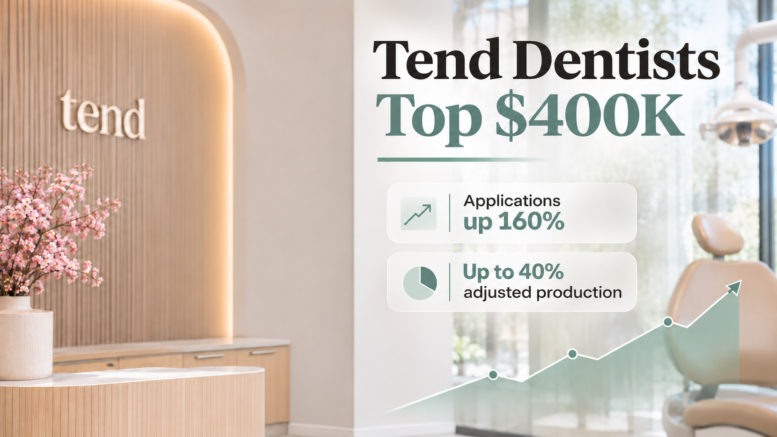
The dental group, which operates 33 studios across six markets, announced on November 10, 2026, that dentist applications have increased 160% since introducing its transparent, production-based compensation model. Additionally, 86% of candidates receiving employment offers are accepting them.
According to the company, the top-performing 9% of Tend dentists are now earning more than $400,000 annually, while the top 27% earn more than $300,000.
The results offer an interesting look at how compensation transparency, clinical autonomy and professional development may influence dentist recruitment and retention in an increasingly competitive DSO market.
A New Approach to Dentist Compensation
Tend’s compensation model allows general dentists to earn up to 40% of adjusted production, without a cap on earning potential. The company publicly shares its compensation formula, production tiers and individual studio performance metrics, enabling dentists to better understand how their earnings are calculated.
Group Dentistry Now reported on the compensation overhaul in October 2025, highlighting Tend’s combination of increased earning potential, equity opportunities, structured mentorship, continuing education and comprehensive employee benefits. The program included a $2,000 annual continuing education stipend after one year, along with access to mentorship from clinical leaders.
The latest announcement provides a first look at how the compensation changes are performing approximately one year later.
A notable feature of the model involves clear aligner treatment. Tend credits aligner revenue to the treating dentist at the bonding appointment rather than distributing compensation across the treatment period. This allows dentists to receive production credit earlier while encouraging comprehensive care within the practice.
The group also retained its existing paid time off, benefits and scheduling practices.
Dr. Chris Salierno, Tend’s Chief Dental Officer, believes the industry’s traditional approach to compensation has contributed to uncertainty among dentists evaluating employment opportunities.
“Dentists are being asked to carry more debt into a career where real earnings have gone down for 15 years,” said Salierno.
Tend’s strategy is to make potential earnings more transparent before a dentist joins the organization.
Dr. Chris Salierno’s Vision for Tend
Group Dentistry Now has followed Tend’s development and Dr. Chris Salierno’s leadership for several years. Salierno, who previously owned a private practice on Long Island, has more than two decades of experience spanning clinical dentistry, dental publishing, education and practice management. As Tend’s Chief Dental Officer, he oversees clinical strategy, provider experience and clinical development across the organization.
In June 2025, Group Dentistry Now featured Tend in its DSO Spotlight, examining how the company was combining advanced technology, clinical efficiency and hospitality to differentiate itself from traditional dental practices.
During that feature, Salierno discussed the importance of creating an environment where patients genuinely look forward to visiting the dentist. He also emphasized that building a positive practice culture requires consistent leadership, thoughtful management and an intentional approach to both the patient and employee experience.
That philosophy extends to how Tend recruits and supports its clinicians.
Rather than focusing exclusively on higher production, the company is positioning competitive compensation as one component of a broader strategy intended to improve professional satisfaction, expand clinical opportunities and create sustainable careers.
Compensation Is Only One Piece of the Recruitment Puzzle
In a January 2023 article written for Group Dentistry Now, Salierno addressed the dental industry’s ongoing staffing challenges. He argued that simply raising wages was not enough to solve recruitment and retention problems.
Instead, he encouraged dental organizations to build a stronger employer value proposition through competitive benefits, career advancement opportunities, employee feedback, effective onboarding and workplace cultures that encourage employees to stay.
Salierno also emphasized the importance of peer-to-peer recruitment and empowering employees to serve as ambassadors for their organizations.
Tend’s latest recruitment results suggest the company is putting several of those principles into practice.
In addition to publicizing compensation, Tend has redesigned its dentist hiring process around transparency and the candidate experience.
Candidates participate in structured interviews, discuss clinical cases with dental leaders and visit the studios where they could potentially work.
Before receiving an offer, candidates are also shown actual studio production data and modeled earnings projections to help them understand their financial opportunities.
“Candidates should not have to decode an offer letter,” said Salierno.
The approach appears to be resonating with applicants, although Tend has not disclosed the total number of applications or offers underlying its reported increases.
Technology, Clinical Autonomy and Professional Growth
During Episode 209 of The Group Dentistry Now Show in May 2025, Salierno joined Bill Neumann to discuss Tend’s distinctive dental care model, technology integration, strategic partnerships and growth plans.
A key discussion involved the advantages of building de novo dental studios with standardized clinical workflows rather than attempting to integrate numerous legacy systems. Salierno explained how seemingly minor workflow inefficiencies can create unnecessary friction for dental teams and affect productivity.
That focus on operational efficiency is particularly relevant to Tend’s production-based compensation model.
For dentists to maximize their earning potential, they need more than a favorable compensation percentage. They also need productive schedules, appropriate staffing, efficient technology, clinical support and opportunities to perform a broad range of procedures.
Tend says its dentists can deliver comprehensive care that includes restorative dentistry, cosmetic treatments, clear aligners and dental sleep medicine.
The company also continues to invest in clinician education and expanded treatment capabilities.
Dr. Adetunji Sijuwade, Tend’s DMV Market Lead Dentist, pointed to the combination of transparent compensation and expanded clinical opportunities as important factors in professional development.
According to Sijuwade, the organization has evolved from a quarterly bonus structure to a more transparent production-based model that gives clinicians greater control over their earning potential.
What Tend’s Results Mean for the DSO Industry
The announcement comes as dental organizations continue to navigate recruitment challenges, rising educational debt and pressure to provide competitive compensation packages.
Tend cited American Dental Association Health Policy Institute data showing that average net income for general dentists in private practice was $215,320 in 2025, compared with inflation-adjusted earnings of $274,198 in 2010.
Although private practice net income and employed dentist compensation are not directly comparable, the broader figures illustrate the financial pressures facing today’s dental professionals.
Tend’s results also raise important questions for other DSOs evaluating their compensation and recruitment strategies.
A 160% increase in applications suggests that publishing compensation details may help generate greater interest among prospective dentists. However, the company’s announcement does not establish how much of that increase can be attributed specifically to the new pay model, as opposed to other recruitment initiatives or changes in the business.
Similarly, while the highest-performing dentists are earning substantial incomes, the company has not disclosed median dentist earnings or retention data demonstrating the model’s longer-term impact.
Those additional measures will be important for understanding whether increased applicant interest ultimately translates into stronger workforce stability.
For dental groups competing for clinical talent, the takeaway may extend beyond the compensation percentage itself.
Transparency, professional development, clinical autonomy and operational support are increasingly important components of an organization’s value proposition.
As Salierno has previously emphasized in his contributions to Group Dentistry Now, creating a desirable workplace requires more than competitive pay. It requires a culture where clinicians feel supported, have opportunities to grow and can build fulfilling long-term careers.
With dentist applications climbing and its highest earners surpassing $400,000, Tend is making the case that a more transparent approach to compensation can be an effective recruitment tool.
The longer-term test will be whether that interest translates into sustained retention, clinical satisfaction and profitable growth across its expanding network.