


How cybercriminals are weaponizing artificial intelligence to manipulate employees, exploit technical vulnerabilities, and launch increasingly sophisticated attacks against dental support organizations.
The cybersecurity threat landscape is undergoing a fundamental transformation. Artificial intelligence is giving cybercriminals capabilities that previously required significant technical expertise, financial resources, and time. For DSOs, this evolution presents a particularly concerning challenge.
DSOs manage extensive networks of dental practices, thousands of patient records, interconnected technology systems, and relationships with numerous third party vendors. These characteristics make them attractive targets for financially motivated cybercriminals.
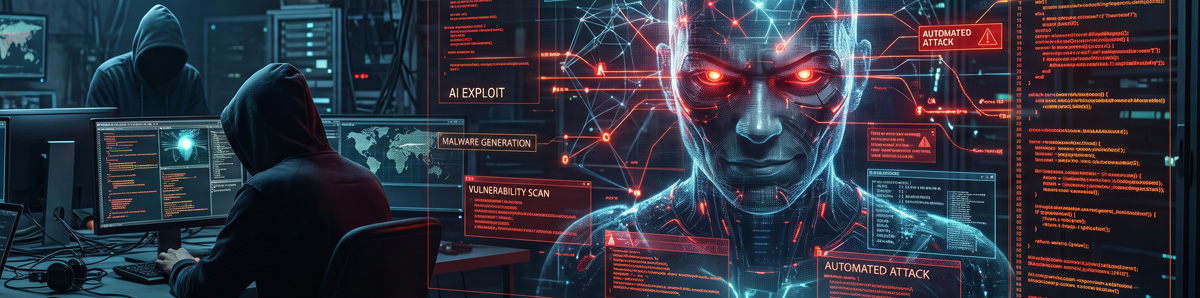
What makes today’s threat environment different isn’t simply that hackers are using AI. It’s that AI is helping criminals launch more convincing social engineering attacks, accelerate vulnerability exploitation, and operate at a scale that traditional cybersecurity defenses were never designed to address.
For DSO executives, understanding these emerging threats is essential to protecting their organizations, patients, and financial stability.
AI Is Making Social Engineering Attacks More Convincing Than Ever
Historically, phishing emails were relatively easy to identify. Poor grammar, suspicious links, and unusual requests frequently exposed fraudulent communications. Generative AI has dramatically changed that equation.
Cybercriminals can now create highly personalized emails that appear to originate from trusted colleagues, executives, dental suppliers, insurance companies, or referring practices. AI can analyze publicly available information, including LinkedIn profiles, corporate websites, and social media activity, to develop convincing messages tailored to specific individuals.
Consider a DSO operating 75 dental practices. An attacker researches the organization’s leadership team and identifies its Chief Financial Officer. Using AI, the criminal creates an email impersonating the CFO and instructs an accounts payable employee to update banking information for a legitimate vendor. The email references actual executives, uses professional language, and creates a sense of urgency. If the employee complies, thousands of dollars could be transferred directly to a criminal controlled account.
This is business email compromise (BEC), and AI is making these attacks increasingly difficult to recognize.
AI-powered voice impersonation and deepfakes
Email is only one component of the threat. AI generated voice cloning allows criminals to impersonate executives, IT personnel, and trusted business partners during telephone conversations. Imagine a regional manager receiving a call that sounds remarkably similar to the DSO’s CEO. The caller urgently requests a financial transaction or instructs the manager to provide a one time authentication code. Because the voice sounds familiar, the employee may be more inclined to comply.

Criminals can also combine AI generated emails, voice calls, and text messages into coordinated attacks that appear legitimate across multiple communication channels. The fundamental problem is that employees can no longer rely solely on what they read, hear, or see to determine whether a communication is trustworthy.
AI Is Helping Hackers Develop Exploit Kits in Just 24–48 Hours
Perhaps even more concerning than AI powered social engineering is the accelerating development of tools designed to exploit technical vulnerabilities. Traditionally, developing reliable exploit code required specialized programming knowledge, extensive research, and considerable testing. AI is dramatically reducing these barriers.
Today, cybercriminals can use AI assisted programming tools to analyze newly disclosed software vulnerabilities, generate attack scripts, troubleshoot unsuccessful attempts, and accelerate the development of exploit kits. In certain circumstances, attackers can move from vulnerability disclosure to functional exploitation within 24–48 hours, although not every vulnerability can be weaponized this quickly.
Australia’s Cyber Security Centre reported in October 2026 that some vulnerabilities have been successfully exploited within 48 hours of patch guidance becoming available. It also warned that AI is further compressing the time required to develop attacks.
Google’s Threat Intelligence Group reported in May 2026 that cybercriminals had used AI to help discover and weaponize a previously unknown vulnerability capable of bypassing two-factor authentication in a web based administration tool.
What does this mean for a DSO?
- Consider a DSO operating 100 locations, each utilizing network firewalls, practice management software, imaging systems, and remote access technologies.
- A critical vulnerability is discovered in a widely deployed firewall.
- Cybercriminals use AI to accelerate analysis of the vulnerability, adapt exploit code, and identify organizations exposing the affected technology to the internet.
- Within days, or potentially hours, the attackers begin targeting vulnerable systems.
- If the DSO hasn’t identified and remediated the vulnerability, attackers could gain unauthorized network access, steal sensitive information, or deploy ransomware.
- The traditional approach of performing quarterly vulnerability scans and addressing weaknesses over several weeks is increasingly inadequate.
- The speed of cyberattacks is beginning to exceed the speed at which many organizations identify and remediate vulnerabilities.
AI Is Lowering the Barrier to Entry for Cybercriminals
Another troubling development is that AI allows less technically sophisticated criminals to perform tasks that previously required experienced hackers. AI assisted tools can help criminals write malicious scripts, modify malware, research security weaknesses, and automate portions of an attack. Google’s Threat Intelligence Group has documented malware that experiments with AI generated code and techniques designed to evade detection.
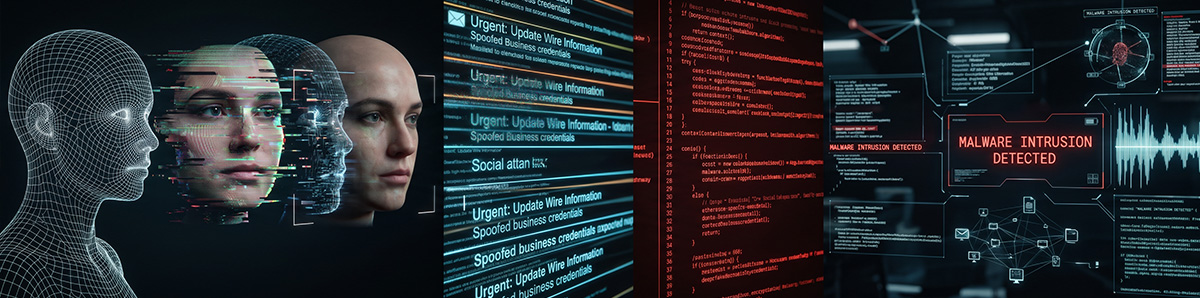
For DSOs, this means the potential pool of attackers is expanding. An organization no longer needs to attract the attention of an elite hacking group to experience a sophisticated cyberattack. Less experienced criminals may be able to assemble increasingly capable attack tools using AI.
How DSOs Can Protect Themselves
Although AI is making cybercriminals more capable, DSOs are not defenseless. Organizations that modernize their cybersecurity strategies can significantly reduce their exposure.
Implement Continuous Threat Exposure Management (CTEM). This should be a priority for every DSO organization. Move beyond periodic vulnerability assessments. Continuously identify internet facing assets, prioritize exploitable weaknesses, and remediate critical vulnerabilities before criminals can exploit them.
Implement Autonomous Vulnerability Remediation where appropriate. The quick and constant identification of exploitable vulnerabilities matters little without a solution to quickly remediate these identified “Open Doors and Windows”. Automating validated remediation activities can dramatically reduce the time between identifying a vulnerability and correcting it. High risk changes should still follow appropriate testing and approval procedures.
Strengthen Email Security and Employee Awareness. Deploy advanced email protection capable of detecting impersonation, malicious links, and suspicious communications. Supplement traditional security awareness training with realistic, simulated phishing campaigns and continuous behavioral reinforcement.
Establish Verification Procedures. Require employees to independently verify unusual financial requests, banking changes, credential requests, and sensitive information transfers through trusted communication channels. Voice recognition alone should never establish someone’s identity.
Deploy Advanced Managed Detection and Response. Use modern endpoint security with managed detection and response capabilities to identify suspicious activity, contain compromised systems, and respond rapidly to emerging threats. There is no such thing as a “Set It and Forget It” effective security tool. The combination of a tier 1 tool backed by trained security professionals who quickly respond to all serious alerts is the most effective strategy.
Strengthen Executive Oversight and Accountability. Cybersecurity cannot remain exclusively an IT responsibility. DSO leadership should establish a documented cybersecurity framework, define organizational risk appetite, assign accountability, and regularly review measurable security performance.
The Future Belongs to Proactive Organizations
Artificial intelligence is changing the economics of cybercrime. Attacks that once required substantial time and expertise can increasingly be developed, customized, and launched with far fewer resources. For DSOs, the greatest danger is continuing to rely on cybersecurity strategies designed for a slower threat environment.

The good news is that organizations don’t need to eliminate every vulnerability or prevent every phishing attempt to become cyber resilient. By combining continuous threat exposure management, advanced email protection, employee education, rapid remediation, and executive accountability, DSOs can substantially reduce their likelihood of experiencing a damaging cyberattack.
Cybercriminals are using AI to become faster, more efficient, and more sophisticated. The question for DSO leadership is whether their cybersecurity defenses are evolving just as quickly.
If you’re unsure whether your organization has all the necessary protections in place to defend against these emerging threats, contact Black Talon Security. Our team can help identify potential security gaps and ensure your organization is taking the right steps to stay protected.

🚨 Recent notable healthcare cyber incidents:
Family and Implant Dentistry, a multispecialty dental practice in Nebraska, has reported a data breach that potentially exposed sensitive information. According to a November 6, 2026 report submitted to the Vermont Attorney General’s Office, the Family and Implant Dentistry data breach affected Social Security numbers and health records. At the time this post was made, no additional information was available about the nature or timeline of the Family and Implant Dentistry data breach.
Hood River Dental, an Oregon dental practice with two locations in Hood River, has recently reported two data security incidents to the HHS’ Office for Civil Rights, one involving unauthorized access to the protected health information of 16,609 individuals, and a second incident affecting 14,677 individuals. The first incident was identified by the practice on or around October 22, 2025. Steps were taken to contain the incident and ensure the security of its systems; then, on or around January 15, 2026, a second security incident occurred. Each incident was investigated, and it was confirmed on September 8, 2026, that in both incidents, patient data had been exposed.
Santa Barbara Endodontics, an endodontics-focused dental practice in California, has notified patients that it recently fell victim to a ransomware attack in which patient records were likely stolen. According to its November 7, 2026, data breach notice, the intrusion was identified on October 8, 2026, when the practice received a ransom note. The practice confirmed that patient records had been encrypted, and an investigation into the attack is ongoing. At present, the practice has not determined the extent to which patient data was involved, nor when the ransomware group first accessed its network.
Dental Cyber Watch is sponsored by Black Talon Security, the recognized cybersecurity leader in the dental/DSO industry and a proud partner of Group Dentistry Now. With deep roots within the dental and dental specialty segments, Black Talon understands the unique needs that DSOs and dental groups have when it comes to securing patient and other sensitive data from hackers. Black Talon’s mission is to protect all businesses from the devastating effects caused by cyberattacks—and that begins with a robust cyber risk mitigation strategy. To evaluate your group’s current security posture visit www.blacktalonsecurity.com.