More Litigation Could Follow as a Result of the Supreme Court’s Ruling
BY ED SILVERSTEIN
FEBRUARY 26, 2015
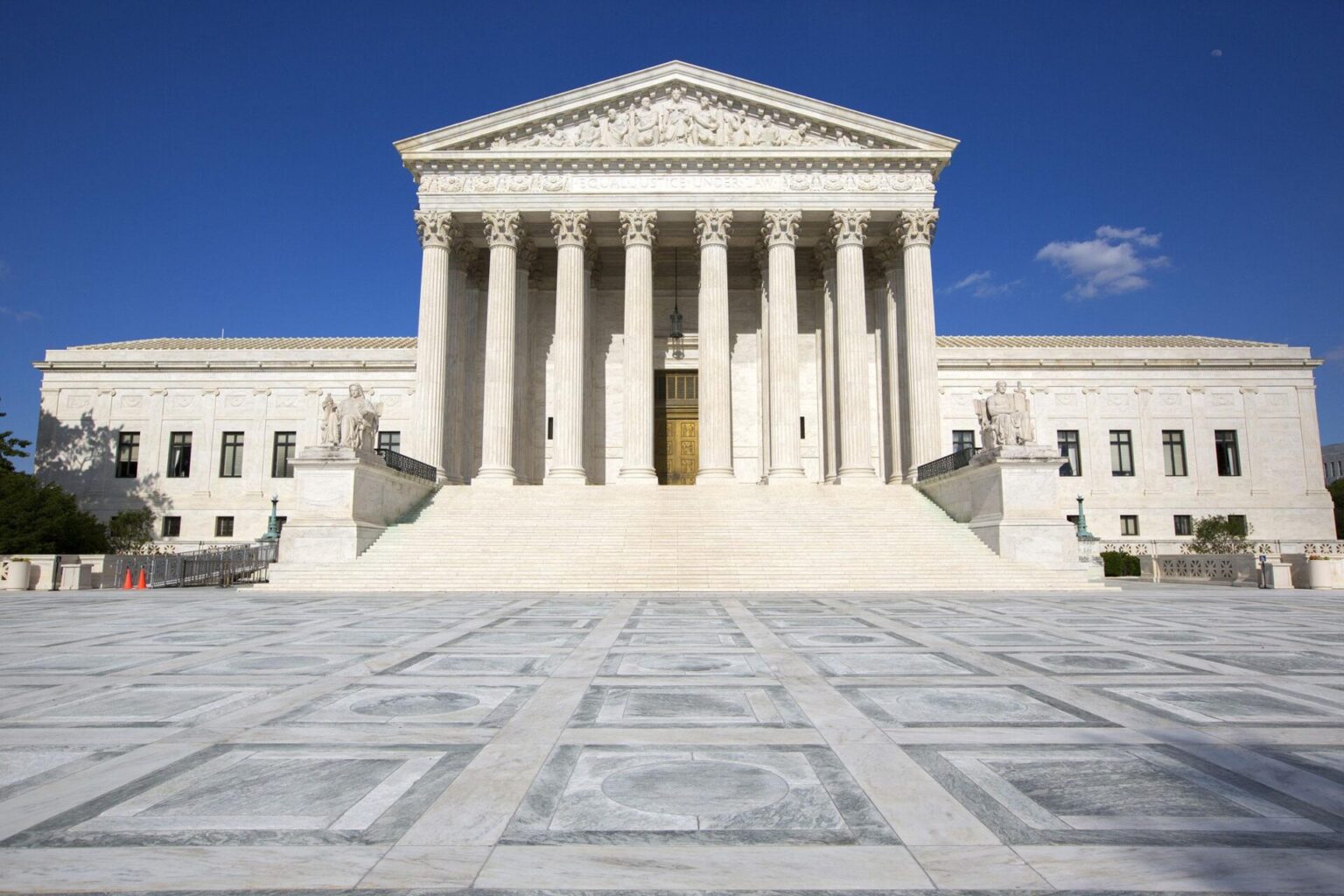
A new Supreme Court decision is seen as a victory for increasing competition in healthcare, but for many dental practices it was similar to a kick in the teeth.
In an opinion written by Justice Anthony Kennedy, six of the nine justices on the Supreme Court sided with the Federal Trade Commission (FTC) in North Carolina State Board of Dental Examiners v. Federal Trade Commission regarding the regulation of teeth whitening providers.
The board had sent out at least 47 cease and desist letters to non-dentists or product manufacturers who were associated with teeth whitening procedures in North Carolina. The non-dentists were charging less than the dentists for the whitening services.
The board said it was authorized to regulate dentistry in North Carolina. The board also claimed the law was on its side because of the argument of state immunity from federal antitrust law and another principle known as the “state action doctrine.”

But the FTC countered the board did not have such immunity. It was not supervised by state officials. In addition, the dentists on the board had self-interest to limit competition from non-dentists. Six of the eight members on the state board “must be licensed, practicing dentists,” according to state regulations. The other two members include a dental hygienist and a “consumer.”
“The Sherman Act protects competition while also respecting federalism. It does not authorize the States to abandon markets to the unsupervised control of active market participants, whether trade associations or hybrid agencies. If a State wants to rely on active market participants as regulators, it must provide active supervision if state-action immunity … is to be invoked,” according to the high court’s decision.
“They can’t protect their own,” agrees Deborah Gersh, who is co-chair of Ropes & Gray’s healthcare practice group, and who submitted an amicus brief in the case for the Association of Dental Support Organizations. She told InsideCounsel, “Generally, competition is good, overall.”
“Our client’s goal is to improve competition in the dental market, to provide greater access to services,” Gersh added. “We’re very pleased with the ruling.”
More litigation could follow as a result of the Supreme Court’s ruling.
“It potentially opens avenues to challenge regulations that keep out competitors,” Sean Gates, an attorney at Morrison & Foerster who formerly worked as a deputy assistant director at the FTC. But he added that the decision by the Supreme Court “didn’t give a whole lot of guidance,” and state officials will likely need to respond to the ruling.
State attorneys general will likely review the composition of state professional boards to see if current practices need to be updated based on the Supreme Court ruling. It is possible that some boards will need to report to state officials and be “actively supervised” by the state, Gates said. The membership of these boards could change, too. For instance, a consumer advocate or non-practicing dentists may be added to the boards.
In addition, there could be lawsuits from alternative providers of services, such as those in teeth whitening. They may challenge the role of state boards. Such litigation may involve other professions beyond those related to dental care.
If lawsuits are likely, Gates predicts that state professional boards probably will “give up ground” and dentists, for instance, may choose to focus on providing core dental services.
The North Carolina case is one of a series of cases brought by the FTC since 2003 regarding professional boards at the state level, which the commission said limited competition, Gates said. For instance, another case related to a state law in Missouri that limited the sale of caskets only by licensed funeral directors.
It is also interesting that in the minority opinion in the North Carolina case, Justice Samuel Alito wrote that, “The only question in this case is whether the North Carolina Board of Dental Examiners is really a state agency, and the answer to that question is clearly yes.”
“As a result of today’s decision, States may find it necessary to change the composition of medical, dental, and other boards, but it is not clear what sort of changes are needed to satisfy the test that the Court now adopts,” Alito added.
Meanwhile, most dentists probably are not happy with the ruling by the Supreme Court. Last year, the American Medical Association (AMA) warned in a statement that the “federal government is interfering with the ability of state regulatory boards to protect public health and safety.”
Before the North Carolina dental case was heard by the Supreme Court, the AMA claimed that the FTC which has “no particular knowledge of medicine or dentistry” was taking “authority away from experts who are charged by a state legislature to shield patients from unlawful practice.”
In a statement released on Thursday, the American Dental Association said, “The American Dental Association believes the decision constitutes a dramatic departure from the Supreme Court’s established law, and throws into question the regulatory, licensing, and disciplinary authority of thousands of professional boards across the country.”
“The well-established, 70-year old precedent announced in Parker v. Brown, 317 U.S. 341, should have been applied in the North Carolina case, where the board is unquestionably a state agency created by the sovereign state of North Carolina. The ruling creates a quandary for professional boards across the country, with no explanation as to what level of ‘active supervision’ is necessary to invoke immunity for each board. The ADA will be working with other organizations to provide some kind of guidance for the boards in view of today’s outcome,” it added.
CONTRIBUTING AUTHOR
Ed Silverstein is a veteran writer and editor for magazines, websites and newspapers. A graduate of Harvard’s Kennedy School of Government, he has won several awards for his published articles.