

Sponsored Content
Dr. Marc Faber explains how standardization, clinician development and carefully selected technology help Edge Dental Management transform overlooked practices into stronger, patient-centered businesses.
At a time when many dental groups are pursuing larger, cash-flow-positive acquisitions, Dr. Marc Faber has built Edge Dental Management around a decidedly different strategy: finding smaller, underperforming practices and developing their untapped potential.
Faber purchased his first dental practice in 2012. Today, Edge Dental Management operates eight locations in New York’s Hudson Valley, with more than 20 doctors and approximately 180 employees. The offices are generally located within 25 minutes of one another, creating a compact regional footprint that supports shared training, consistent clinical protocols and easier movement of team members between locations.
The organization is not looking for polished practices that have already reached their potential. It is looking for opportunities to build.
“We don’t buy big. We buy small.” — Dr. Marc Faber
Buying Potential Instead of Cash Flow
Edge typically acquires practices from dentists who are approaching retirement or are otherwise ready to step away. Once an acquisition is complete, the organization evaluates both what the practice has been doing and what may have been missing from its clinical model.
That review can reveal gaps in radiography, periodontal diagnosis and therapy, endodontics, extractions, bone grafting, implant dentistry and other services. Edge then brings in clinicians who have been trained within its system and expands the practice’s capabilities around the needs already present in its patient base.
For Faber, a practice producing $500,000 annually may not be an undesirable asset. It may be an office with the underlying patient demand to produce considerably more—but without the clinical systems, provider skill sets or diagnostic protocols needed to reach that potential.
That distinction is important. Edge is not simply attempting to increase production by accelerating the schedule or selling more dentistry. Its model is based on improving clinical consistency, identifying previously unaddressed needs and giving providers the skills and tools to deliver a broader range of care.
Many larger groups, Faber noted, prefer to acquire existing cash flow. Edge is willing to do the operational and clinical work required to create it.
Standardization as an Operating System
The transformation begins with the physical and clinical environment.
Edge works to make every operatory feel familiar, regardless of the practice. Materials are standardized. Supplies are kept in consistent locations. Practice management systems, equipment and workflows are aligned across the organization.
The goal is straightforward: A doctor or assistant moving from one Edge location to another should not have to relearn the room before treating a patient.
That consistency extends to the organization’s technology stack. Edge uses intraoral imaging from MouthWatch and has placed a strong emphasis on CEREC scanning and milling. Each practice has access to a mill, while design functions can be centralized to create additional efficiency and consistency.
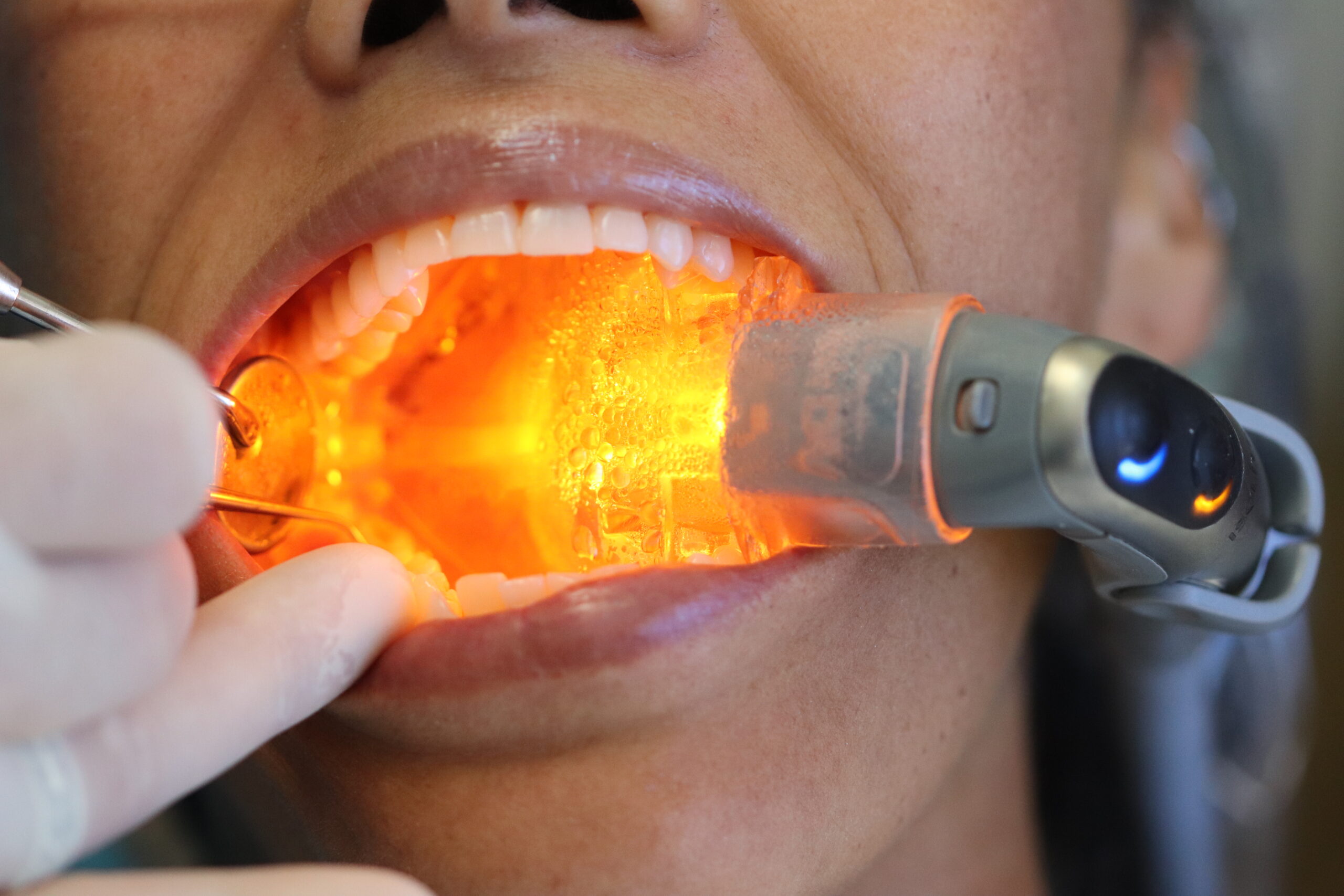
Another standardized component is the Zyris Isolite system, which Faber said is installed at every chair and used throughout the organization.
For Edge, the system is not treated as a stand-alone gadget. It is incorporated into the clinical workflow to improve visibility, isolation, suction and moisture control while helping protect the tongue and reducing the possibility of a patient swallowing an instrument or material. It can also support quadrant dentistry, digital scanning and procedures that require a consistently dry field.
Because the system provides retraction and continuous suction, an assistant can devote more attention to the patient, prepare for the next stage of the procedure or support another part of the workflow rather than remaining fully occupied with retraction and evacuation.
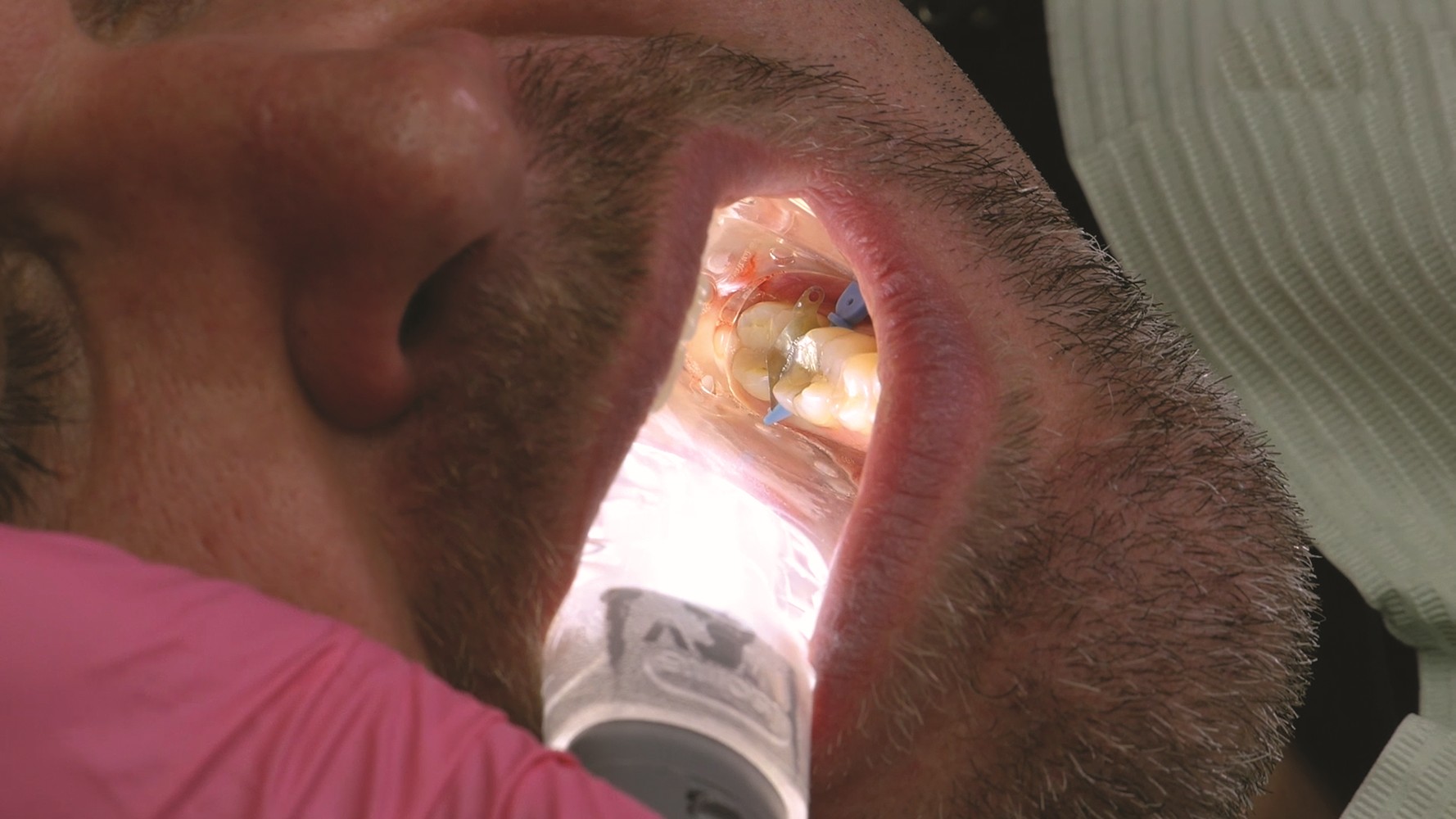
A clinical vignette opening the podcast illustrated the practical benefit. While treating a fractured distolingual cusp on tooth No. 18—an area known for difficult access—Dr. Elaine Bilas described how Isolite helped manage the tongue and cheek while providing suction and illumination in the posterior oral cavity.
The technology’s value, however, is determined by more than its feature set. Faber evaluates potential solutions from the inside out, beginning with the patient rather than the purchase price.
“If you do the right thing for your patients, everything else kind of works out afterward.” — Dr. Marc Faber
Only after determining whether a product can improve safety, care quality or the clinical experience does Edge evaluate its operational and financial impact.
Efficiency Without Compromising Care
Clinical efficiency can sometimes be misunderstood as simply asking providers to work faster. Faber sees it differently.
True efficiency removes unnecessary steps, reduces repeat visits and allows clinicians to devote their time to the portions of care that require their expertise.
Same-day crowns are one example. In a conventional workflow, a clinician prepares the tooth, takes an impression, fabricates a temporary restoration and sends the case to a laboratory. The patient then returns for another appointment, during which the temporary must be removed, residual cement cleaned away and the final crown seated.
Between appointments, a temporary may become dislodged, creating another unplanned visit.
By scanning, designing and milling the restoration in the office, Edge can eliminate much of that process. Faber estimates that the digital workflow can save approximately 25 minutes of chair time per crown, in addition to reducing the likelihood of temporary-related emergencies and eliminating a separate delivery appointment.
When multiplied across the number of crowns completed by a group each year, that time becomes meaningful capacity. It can be used to see additional patients, accommodate emergencies, reduce schedule pressure or give providers and team members more flexibility.
Adding effective isolation to the digital workflow can produce further gains by keeping the field dry and improving scanning conditions.
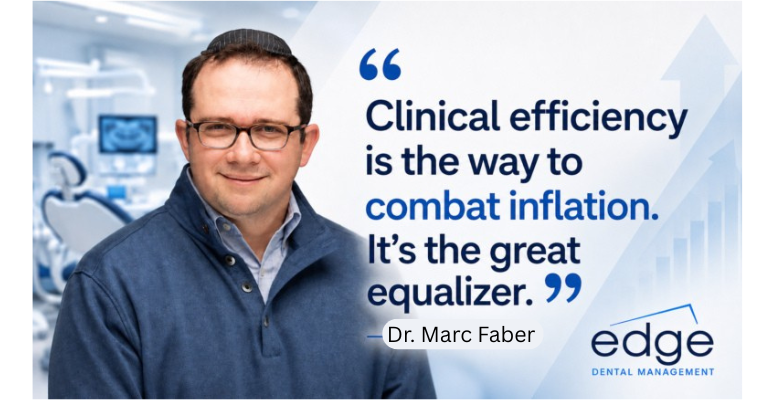
“Clinical efficiency is the way to combat inflation. It’s the great equalizer.” — Dr. Marc Faber
Edge has tested this philosophy in its Medicaid-focused training practice, where reimbursement levels make operational discipline particularly important. According to Faber, combining strong clinical care with efficient systems allows the practice to serve more patients while maintaining a sustainable model.
The patient also benefits. Fewer appointments, less time in the chair and fewer complications between visits can create a better experience—not simply a more productive schedule.
Training Clinicians—and the Entire Team
Technology alone does not turn around a practice. Edge’s model depends heavily on training.
The organization’s headquarters includes a 13-chair clinical environment that serves as a training center. Multiple doctors work there at the same time, allowing Edge’s leaders to observe providers, coach them and reinforce the organization’s clinical techniques.
Because the practices are located close together, that training can be transferred across the group without requiring a dispersed national infrastructure.
Clinical education is only one part of the process. Faber also emphasizes communication and patient education.
When Edge enters a practice where a patient may have received care for decades, the new clinical team must be able to explain why a previously undiscussed condition now requires attention. Full-mouth radiographs, intraoral photography and chairside monitors help patients see what the clinician sees.
Rather than criticizing a former provider, the team can focus on what is known today: the current condition of the tooth, the presence of cracks or failing restorations, and the available treatment options.
Doctors, hygienists and assistants all participate. When the provider leaves the operatory, patients frequently ask another team member whether the proposed treatment is truly necessary or whether the doctor can be trusted. That means case acceptance cannot rest entirely on the dentist’s presentation. The whole team must understand the diagnosis and communicate consistently.
Faber believes this training also contributes to workforce stability. Edge invests in modern facilities, offers employees opportunities to grow and gives team members meaningful roles in workflows such as same-day restorative dentistry. Technologies that reduce constant retraction or suction demands can also allow assistants to spend more time supporting the patient and participating in higher-value clinical activities.
While Faber acknowledged that Edge is not immune to staffing challenges, the organization has experienced fewer difficulties recruiting doctors, hygienists and other team members than many groups in the market.
His commitment to education now extends beyond Edge Dental Management. Faber serves as the founding advisory board chair of Yeshiva University College of Dental Medicine, described during the podcast as New York City’s first new dental school in a century.
The school launched with an inaugural class of 156 students and a three-year dental curriculum. Its location at 34th Street and Broadway provides access for students, faculty and patients, while the accelerated model can reduce one year of tuition, accrued interest and lost professional income.
Faber sees New York’s required postgraduate residency year as an important continuation of that education. In his experience, the concentrated clinical exposure of residency can be among the most formative periods in a dentist’s development.


Deliberate Growth Over a Land Grab
As Edge Dental Management moves forward, Faber does not anticipate abandoning the strategy that built the organization.
The group may further centralize certain functions or add specialty capabilities, but it is not planning to acquire 10 practices at once or pursue growth simply for the sake of adding locations. Edge intends to continue identifying individual practices where its training, technology and clinical systems can produce measurable improvement.
Faber also values the organization’s independence. Edge is not currently backed by private equity, giving its leadership the ability to determine its own pace and acquisition criteria.
That measured approach may run counter to an industry frequently focused on transaction volume, but Edge’s experience offers a broader lesson for dental groups: Sustainable growth is not created by acquisitions alone.
It comes from aligning the operatory, the technology, the provider, the assistant and the patient experience around a repeatable clinical model. Solutions such as CEREC, intraoral imaging and Zyris Isolite can strengthen that model, but only when they are supported by training, standardization and a clear understanding of how they improve care.
For Edge Dental Management, the objective is not merely to make small practices bigger. It is to build better clinical organizations—one practice, one provider and one patient at a time.
Discover how much time your practice could be saving.
Schedule a complimentary 15-minute Efficiency Assessment with one of our specialists. In just a few minutes, we’ll estimate your potential chair time savings, increased production opportunities, and workflow improvements.
See what 15 minutes could mean for your
schedule, your team, and your bottom line.
Watch Dr. Faber on the Group Dentistry Now podcast: