

Clinician’s Corner – Educational Content for Clinical Directors,
Chief Dental Officers, Clinical Boards and the Entire Clinical Team.
Sponsored by Ivoclar
For DSOs and emerging dental groups, the challenge is no longer simply growth. It is growth with consistency. Growth with clinical confidence. Growth without sacrificing the doctor autonomy, patient experience, and practice culture that made a group worth building in the first place.
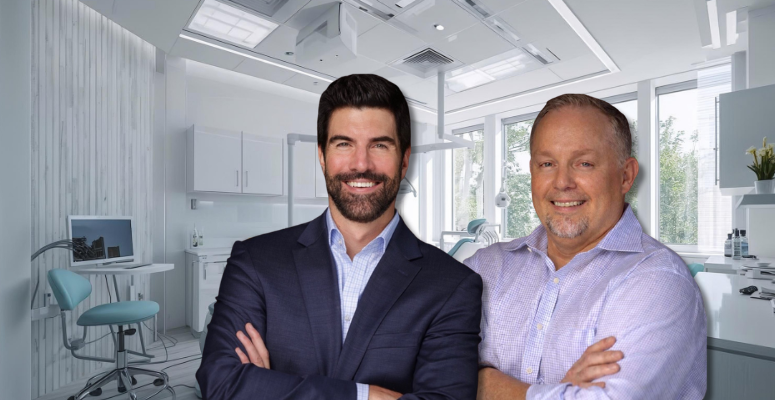
That tension sits at the center of a recent conversation on the Group Dentistry Now Show with Pearl Street Dental Partners’ co-founders, David Meece, CEO, and Dr. Robby Jennings, Chief Clinical Officer. Pearl Street’s official positioning mirrors much of the discussion: it describes a partnership model built to preserve clinical independence while providing business support, and a network of practices united by quality care and patient experience.
Pearl Street’s story began long before the current DSO growth cycle. According to the interview, the organization traces its roots back to 1999, became known as Pearl Street in 2019, and has grown from six locations at that time to more than 50 locations today.
That growth has not been driven by a desire to turn practices into identical locations. In fact, Meece and Jennings repeatedly emphasized the opposite. Pearl Street’s approach is built around clinical autonomy, cultural alignment, and giving doctors resources they can choose to use—not mandates they must follow.
“Profitability is an outcome, not a pursuit.” — David Meece, CEO
A DSO Model Built Around Clinical Autonomy
Dr. Jennings’ early career experience helped shape Pearl Street’s philosophy. In the interview, he described getting a taste of corporate dentistry in the late 1990s and seeing “the muddying of the clinical waters” when the focus shifted heavily toward cost and away from why he entered healthcare in the first place.
The solution he and Meece pursued was not to reject scale. It was to build a model that could capture some of the benefits of scale while protecting the clinical decision-making that dentists value.
Jennings summarized it clearly: Pearl Street wanted to “thread this needle” by allowing doctors to benefit from being part of a group while still maintaining the clinical autonomy needed to care for patients in a way they could feel good about at the end of the day.
That distinction matters for industry partners as well. In a top-down organization, a manufacturer or vendor may be evaluated primarily by price, product features, and procurement terms. In Pearl Street’s model, the conversation is broader. Does the partner help doctors make confident decisions? Does it support training? Does it respect the fact that each practice is different? Does it add value without disrupting the culture of the office?
Pearl Street’s own website reinforces that “every practice is different” and that support is adjusted around each practice’s staff, goals, and vision.
Why Education Has Become a Strategic Priority
For Pearl Street, clinical education is not an add-on. It is a major part of how the organization recruits, retains, and develops doctors.
In the podcast, Jennings explained that post-COVID, many newer dentists were entering the profession with less hands-on experience than prior classes. These were smart, talented, confident doctors, he said, but many still needed more support as they transitioned from school into practice. Pearl Street responded by building its Doctor Academy program, particularly for new graduates and younger clinicians.
Pearl Street’s careers page describes the Dr. Academy as a program for emerging dentists that includes hands-on training, mentorship, and a comprehensive two-year curriculum designed to help participants become confident, capable clinicians.
In the interview, Jennings described the program as a mix of hands-on training sessions, mentorship, travel, and relationship building. Pearl Street’s young doctors also participate in a mission trip to Mexico, helping build connection among clinicians who may have graduated from different schools but now need a new peer network inside the organization.
“They immediately feel like they have classmates again.” — Dr. Robby Jennings, Chief Clinical Officer
That sense of belonging is not accidental. Pearl Street’s leaders repeatedly used the word “family” throughout the conversation, and the company’s website uses similar language to describe its partners and practices.
Where Ivoclar Fits: Materials, Education, and Adoption Support
This is where Ivoclar’s role becomes especially relevant.
When Bill Neumann asked how Ivoclar supports Pearl Street as a partner in educating and training clinicians, Jennings pointed first to Ivoclar’s long-standing clinical reputation and then to its willingness to become actively involved in the Doctor Academy.
According to Jennings, Ivoclar “stepped up” during discussions about what the Doctor Academy should look like, offering to sponsor, host, and participate in the program. Pearl Street’s young doctors traveled to Ivoclar’s Buffalo, New York-area headquarters for a full day of CE, where they were exposed to Ivoclar materials and techniques. Jennings said the doctors became connected with the Ivoclar team and “love their materials” because of the people, products, and techniques they experienced.
“They really stepped up.” — Dr. Robby Jennings on Ivoclar
That comment is important. For a DSO like Pearl Street, the Ivoclar relationship is not framed as simply ordering materials. It is framed as an education and implementation partnership. Materials matter, but so does the way clinicians are trained, supported, and given confidence in how to use them.
Ivoclar’s broader DSO platform aligns with that approach. The company states that DSO partners gain access to products, knowledge, and expertise, along with clinically proven solutions designed to reduce risk and deliver reliable results. Its DSO page also highlights training through Ivoclar Academy, including in-person training, virtual education, and support from a dedicated DSO Education specialist who can help create customized programs tailored to practice needs.
Ivoclar Academy also describes itself as a one-stop education resource center offering in-person learning and virtual education for clinicians, hygienists, and technicians across experience levels.
For Pearl Street, that combination fits a core need: helping clinicians grow while preserving their ability to choose what is best for their patients and practices.
Consistency Without Mandates
One of the most distinctive parts of the Pearl Street model is how the group approaches clinical initiatives. Meece described Pearl Street’s centralized support as a “pull function,” meaning the organization provides resources where doctors need and want help, while staying out of areas where doctors prefer autonomy.
Jennings echoed that same idea. Pearl Street does the homework on technologies, materials, and initiatives, then brings information back to doctors. But at the end of the day, he said, doctors decide whether something is a fit for them and their practice.
“We offer solutions.” — Dr. Robby Jennings
That is a powerful framework for product adoption in group dentistry. Instead of forcing uniformity, Pearl Street seeks consistency through education, clinician engagement, and trust. That is exactly where a partner like Ivoclar can provide value: by bringing materials knowledge, CE, hands-on exposure, and clinical support into an environment where doctors still feel ownership over the decision.
Ivoclar’s Learning Pathways program also reinforces this model. The podcast sponsorship message describes Learning Pathways as a complimentary on-demand webinar series within Ivoclar’s Advantage program, designed to deliver practical, CE-accredited education for group practices and help clinicians make confident decisions across practices.
For multi-location groups, that kind of support helps bridge a common gap. A product may be clinically strong, but if doctors do not understand how it fits into their workflow, if teams do not feel trained, or if adoption is not reinforced after the first introduction, consistency can suffer.
Pearl Street’s interview makes clear that Ivoclar’s value is not limited to what is in the operatory. It extends to the infrastructure around the product: the CE, the training day, the speakers, the exposure to techniques, the relationship with doctors, and the cultural fit.
The Family Gathering: Culture Meets Clinical Education
Pearl Street’s annual “family gathering” is another example of how the group blends culture and clinical development. Jennings shared that Ivoclar sponsored Pearl Street’s family gathering in Dallas and was one of the primary sponsors of the event. He said Ivoclar also provides CE speakers and educational elements that support Pearl Street’s doctors, employees, and overall mission.
This is more than an event sponsorship. For Pearl Street, the family gathering is part of how the organization maintains relationships across a growing network. For Ivoclar, it creates another opportunity to support clinical learning in the environment where Pearl Street’s doctors already come together.
That is especially important in a non-branded or “invisible DSO” model, where each practice retains its own identity. Meece explained that Pearl Street is made up of diverse practice types, demographics, and procedure mixes, so culture is not about making every office look the same. It is about shared values: people first, patient care, and concern for team members.
Ivoclar’s fit, according to Jennings, is both clinical and cultural.
“They align with us culturally. They’re just a perfect fit.” — Dr. Robby Jennings
A Lesson for Emerging Groups
The Pearl Street-Ivoclar relationship offers a useful lesson for emerging dental groups and established DSOs alike: the right partner does not simply sell into the organization. The right partner helps the organization educate, align, and support its clinicians.
That is particularly relevant as more groups shift their focus from pure acquisition growth to organic growth inside existing practices. Pearl Street has invested in infrastructure, clinical leadership, mentorship, and education so that growth is supported from within. Meece said Pearl Street is “not just an M&A machine” and emphasized the importance of healthier practices and real organic growth inside the four walls.
For doctor partners, that matters. For younger clinicians, it matters even more. Jennings said Pearl Street’s education strategy “definitely moves the needle” in recruiting conversations with young doctors, because they want to know how the organization will help them grow after graduation.
Industry partners can either reinforce that strategy or work against it. Ivoclar appears to be reinforcing it by providing exposure to materials, hands-on CE, speakers, on-demand education, and support that can be integrated into Pearl Street’s broader clinical development model.
Products Perform Best When People Are Prepared
In dentistry, materials are only as effective as the systems around them. Doctors need confidence. Teams need clarity. Groups need repeatable education. Leaders need partners who understand that adoption is not a single event.
That is why the Pearl Street-Ivoclar relationship is instructive. Ivoclar’s products and materials are part of the story, but Pearl Street’s interview shows that education is what gives those materials traction. The Doctor Academy visit to Ivoclar, the full day of CE, the family gathering support, and the ongoing relationship all help connect product performance with clinician confidence.
For Pearl Street, that aligns with a broader belief: the best dental groups of the future will be clinically led. Meece said he believes groups that develop clinical leadership and stay focused on patient care will be the ones that thrive as the industry continues to consolidate.
That clinical focus is also why partners matter. A DSO can buy products from many places. But a true partner helps clinicians understand the “why,” supports the “how,” and stays engaged after the initial introduction.
Pearl Street has built its model around preserving private practice culture while giving doctors the resources and support of a larger group. Ivoclar’s role in that model shows how product companies can become strategic partners when they bring education, materials expertise, and cultural alignment to the table.
For DSOs trying to scale without losing what makes their practices special, that may be the real takeaway: consistency does not have to come from control. It can come from confidence. And confidence is built through the right combination of products, training, people, and partnership.
Connect with the Experts
Ivoclar partners with dental groups to build smarter, more consistent, and more connected organizations. Backed by over a century of clinical expertise, scalable systems, and trusted solutions, we help groups drive standardization, improve efficiency, and deliver predictable clinical excellence across every practice.
Interested in learning how Ivoclar partners through education?
Get in touch with our dedicated Group Practice education expert:
Angela Severance
Training & Education Manager, Group Dentistry Solutions
Email: Angela.Severance@ivoclar.com
Watch the full podcast here: