

By Arun Ramakumar, Founder & CEO, Integrated Dental Partners | San Francisco Bay Area
The conventional wisdom in dentistry is simple: more locations equals more value.
I think it’s wrong, and the numbers are starting to agree with me.
I spent nearly two decades building Accu Dental & Orthodontics from a single Bay Area practice into a multi-location, multi-specialty group. I know what it takes to build something patients trust and teams stay loyal to. And I came close to watching all of it get absorbed into a national DSO.
That experience is why I built Integrated Dental Partners. Not as a theory about what the regional model should look like, but as someone who has lived on both sides of this decision and knows exactly what gets lost when a national group comes through the door.
The Industry Is Consolidating. The Question Is How.
The numbers tell the story. According to the ADA Health Policy Institute, the share of U.S. dentists who own their practice has fallen from 84.7% in 2005 to 72.5% in 2023. Over the same period, DSO affiliation has more than doubled, with 16.1% of U.S. dentists now affiliated with a DSO as of 2024. The dental industry’s overall market value is projected to keep growing at roughly 15 to 17 percent annually through the end of the decade.[1][2]
Consolidation is not a question anymore. It is happening. The only real question for an independent dentist is what kind of consolidation they want to be part of, and what they want to preserve on the way through.
When I started looking seriously at this industry, the dominant playbook was clear: build fast, expand nationally, standardize everything, optimize for scale. Every signal, from investors, from advisors, from the consolidation wave reshaping all of healthcare, pointed the same direction.
I watched national DSOs execute that playbook. And I noticed something troubling. The bigger they grew, the more something got left behind. The thing that makes dentistry work in the first place.
Trust.
A patient doesn’t trust a brand. They trust the hygienist who has been cleaning their teeth for eight years, who asks after their kids, who remembers their dental anxiety. That relationship lives in neighborhood practices, and it is extraordinarily fragile. Scale too fast, standardize too hard, and you destroy it entirely.
So, I made a different bet. I built a regional DSO, deliberately small, deliberately local, deliberately focused on preserving exactly what makes great dental practices great.
What National DSOs Get Wrong
I want to be fair. National DSOs solve real problems. Procurement, compliance, HR, billing infrastructure, IT, these are genuine burdens on independent dentists and centralizing them creates real value. No one serious about this industry should dismiss that.
But in chasing those operational gains, the national model makes a fatal trade-off. It replaces the dentist’s culture with the corporation’s culture. It replaces neighborhood identity with brand identity. It optimizes for consistency across hundreds of locations and, in the process, irons out the very texture that patients value most.
The result: practices that run more efficiently but feel like you’re visiting a call center with a dental chair.
The data backs this up:
- Patient attrition. Industry benchmarks show the average dental practice reappoints only 57% of active patients annually, while top performers hit 99%. When a well-run practice gets absorbed into a national brand, long-term patients leave quietly. They don’t complain. They just don’t rebook. And that attrition rarely surfaces in deal metrics until it’s too late to reverse.
- Staff turnover. Dental Economics and industry analysts consistently identify culture clash and staff turnover as among the top reasons DSO acquisitions underperform. Higher pay, career advancement, and a better work environment were the three biggest drivers of dentist and team turnover in 2024, according to the Dykema DSO Industry Group. When the people leave, patient relationships go with them.
- Ownership erosion. The ADA reports practice ownership has dropped over twelve percentage points in less than two decades, with the decline accelerating in markets where national acquisitions have prioritized throughput over trust. Among dentists under 35, the share of practice owners has nearly halved in the past decade.
These are not abstract concerns. They are the predictable downstream consequences of a model that treats neighborhood practices like assembly-line inputs.
What the Regional DSO Model Does Differently
Our model starts from a different premise: the neighborhood dental practice is not a problem to be solved. It is an asset to be protected.
At Integrated Dental Partners, we provide the operational backbone: the systems, purchasing power, HR and compliance infrastructure that let a practice run more efficiently. We deliver every operational benefit a national DSO promises. But we deliver it while keeping the clinical culture, patient relationships, and community identity completely intact.
Active management does not mean homogenization. It means giving dentists the support to do their best work, in the way they have always done it, for the patients who already trust them.
The difference in day-to-day practice is significant: your name stays on the door, your team stays intact, your long-term patients notice no disruption: except that things start running a little smoother.
The Structural Advantage National DSOs Cannot Replicate
Here is the part the national DSO growth narrative obscures: this is not a question of intent. National DSOs are not failing to preserve local culture because their operators are careless. They are failing because the model itself makes it structurally impossible.
Three reasons:
- The economics don’t support it. A 300-practice portfolio cannot afford the per-location management attention required to genuinely understand and preserve each community. The unit economics that justify the scale also forbid the touch.
- Private-equity-backed timelines force homogenization. Most national DSO growth is funded by private equity with a five-to-seven-year exit horizon. That timeline rewards standardization and EBITDA optimization, not patient-relationship stewardship. Culture is a long-term asset; the capital stack is built for short-term value extraction.
- Scale obscures underperformance. In a 300-practice portfolio, the locations that lose their identity get buried in portfolio averages. A regional DSO has no such cover. We can’t hide an underperforming practice inside a sea of others. Every practice has to be genuinely healthy on its own merits, because we don’t have the scale to obscure the ones that aren’t. That accountability makes us better operators, and better partners.
Our size is not a limitation. It is our competitive advantage.
The regional model is not a slower version of the national model. It is a different model entirely, built around constraints that national DSOs do not face and incentives they cannot adopt without restructuring the whole capital stack.
Why This Matters for Independent Dentists Approaching Succession
Every year, talented dentists who have spent decades building something special, a reputation, a patient community, a distinctive way of practicing, face what feels like an impossible choice: sell to a national group and watch everything get absorbed into a brand they don’t recognize within eighteen months or close the doors entirely.
The regional stewardship model offers a third path. We step in as partners, not acquirers. The practice keeps its name, its team, and its character. We handle the operational weight that was keeping the dentist up at night.
That legacy doesn’t disappear. It gets protected, and it gets the resources to thrive beyond the founding dentist.
The Three Things to Take Away
- Regional DSOs deliver the operational gains without the cultural cost. Purchasing power, compliance, HR, and back-office infrastructure are available at regional scale. You do not need to be a 300-location national group to get them.
- The data on consolidation is not subtle. Practice ownership has dropped from 84.7% to 72.5% in under twenty years. DSO affiliation has more than doubled since 2015. The model you partner with matters more every year.
- National DSOs can’t copy the regional model. It is not unwillingness. It is structural. The economics, the PE-backed timelines, and the scale of their portfolios make true local stewardship impossible at the national level. That gap is structural and durable.
Are You a Bay Area Dentist Thinking About What Comes Next?
Whether you’re five years from succession or simply feeling the weight of running a solo operation, the conversation I’m always happy to have is this: What does your practice mean to you, and what do you want its next chapter to look like?
No pitch. No pressure. No term sheet on the first call.
About the Author
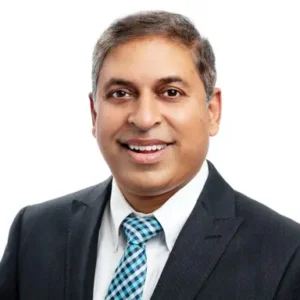 Arun Ramakumar is the Founder and CEO of Integrated Dental Partners, a regional dental service organization based in the San Francisco Bay Area. Before founding IDP, he spent eighteen years as CEO of Accu Dental & Orthodontics, growing it from a single practice into a multi-location Bay Area group. That experience, including watching a national DSO acquisition process up close, is what shaped his conviction that the regional stewardship model is the right path for independent Bay Area dentists. He writes on DSO consolidation, dental practice succession, and what community-based dental care actually looks like in practice.
[1] https://adanews.ada.org/ada-news/2022/march/main-types-of-dsos/
[2] https://www.privatepracticeresearch.org/reports/baseline-2026.pdf