

Sponsored Content
Full arch treatment is gaining momentum across the DSO landscape, driven by growing patient demand, advances in digital workflows, and increasingly predictable treatment protocols. As organizations expand these services throughout their networks, the conversation is evolving beyond simply offering full arch treatment to building programs that can be replicated with confidence.
While technology continues to play an important role, long-term success depends on a broader foundation. Organizations looking to scale full arch treatment must create provider confidence through education, establish alignment through standardized workflows, and build the infrastructure needed to foster growth through strategic partnerships. Together, these elements create a framework for delivering predictable outcomes throughout multiple locations.
Why Full Arch Is Gaining Momentum
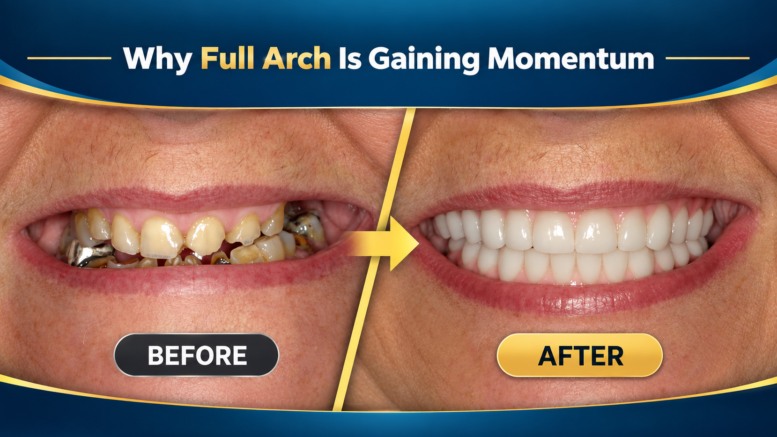
Full arch treatment has evolved from a niche implant offering into a significant growth opportunity for many dental organizations. As more patients seek fixed, long-term alternatives to traditional dentures, demand for full arch solutions continues to rise. Better awareness and advances in clinical and digital workflows have made treatment more accessible for both clinicians and patients.
For DSOs, full arch allows organizations to deliver transformative outcomes that can improve function, comfort, and quality of life for patients. However, improving access to treatment begins with ensuring providers have the knowledge and confidence to identify appropriate candidates, communicate treatment options, and manage complex cases.
As organizations invest in full arch programs, education often becomes the first step toward scalability. Ongoing training, clinical mentorship, and developing internal champions help build a foundation that supports growth while encouraging a more standardized approach to patient care.
Scaling Full Arch Across a DSO Network Isn’t Simple
While the opportunity surrounding full arch treatment is significant, driving adoption throughout a multi-location organization presents unique challenges. Success at a handful of practices does not automatically translate to dozens or hundreds of locations.
As providers gain confidence through education, organizations must determine how to create a predictable experience for different clinicians, teams, and markets. Variations in treatment planning, case coordination, and clinical workflows can create inefficiencies and make outcomes harder to predict.
The challenge is no longer simply teaching providers how to perform full arch procedures. It becomes establishing organizational processes that allow treatment to be delivered reliably regardless of location. This is where growing programs begin to shift from provider development to workflow development.
Why Workflow Standardization Matters
As full arch programs expand, standardization becomes the mechanism that transforms individual success into organizational success. Standardized workflows help ensure providers across multiple locations follow the same protocols, utilize standardized treatment planning processes, and work toward shared clinical objectives.
From diagnostics and treatment planning to case design and final delivery, digital workflows can streamline communication, reduce variability, and improve efficiency. When restorative doctors, surgeons, and laboratory teams operate within a shared framework, organizations are better positioned to achieve predictable outcomes regardless of where treatment takes place.
Just as important is creating alignment among all stakeholders involved in the case. Effective engagement between clinicians and laboratory teams helps reduce surprises, improve case execution, and ensures everyone is working toward the same restorative outcome.
However, even well-designed workflows require reinforcement to remain effective as programs grow. Their effectiveness is often strengthened by the partnerships behind the program.
The Evolving Role of the Laboratory Partner
As DSOs develop full arch programs, laboratory partnerships are increasingly being viewed as strategic assets rather than transactional vendor relationships. Effective outcomes rarely depend on a single clinician or technology. They are the result of coordinated planning, clear communication, and strong team integration.
For many organizations, the laboratory has become an extension of the clinical team, helping create a deeper connection between their providers. This need becomes especially important when organizations expand treatment into multiple markets. While local laboratory relationships may effectively serve individual practices, growing a program often requires broader infrastructure, specialized expertise, and standardized systems. National laboratory partners can help provide the resources needed to sustain organizational growth.
National Dentex Labs is among a select group of laboratory networks with dedicated full arch capabilities, specialized workflows, and nationwide resources designed for multi-location organizations. Through dedicated Full Arch Representatives, treatment planning guidance, chairside assistance, and solutions such as NDX nSequence®, organizations gain access to tools and expertise that help reinforce both educational and workflow initiatives throughout the network.
Clinical Insights: Joe Gregorich, DDS
There is no single blueprint for building a successful full arch program. Organizations are navigating different markets, clinical models, and growth objectives, yet many are working toward the same goal: creating a predictable experience for both providers and patients. For Joe Gregorich, DDS, of Gregorich & Matack Family Dental, a Dentive partner practice in Duluth, Minnesota, getting there has meant a defined workflow and a laboratory team that stays involved from planning through delivery.
“As we’ve incorporated more full arch cases into our practice, having consistent support and a proven workflow has helped us approach treatment with greater confidence and predictability. The NDX workflow gives us a clear, repeatable process from treatment planning through surgery and the final restoration, which is incredibly valuable with complex cases. Just as important, communication and collaboration with their team have been consistently excellent throughout the years we’ve worked together. Having a lab partner that understands our clinical goals, communicates well, and works alongside us throughout the process has become an important part of delivering predictable full arch outcomes for our patients,” said Joe Gregorich, DDS.
The workflow, the planning conversations, and the day-to-day communication between practice and laboratory are what make complex cases manageable. The same theme comes across practices and DSOs as they refine workflows, expand capabilities, and plan for long-term growth.
Looking Ahead
As DSOs seek to grow high-value services and improve patient outcomes, the most successful programs often follow a natural progression: they invest in their providers, establish repeatable workflows, and build partnerships that strengthen the model they have created.
Education creates provider confidence. Standardized workflows create alignment. Strategic partnerships provide the infrastructure needed to extend those efforts throughout the organization. Together, these pillars help organizations build full arch programs that are not only successful today but positioned for long-term growth.