
Ranked the #1 DSO Podcast!
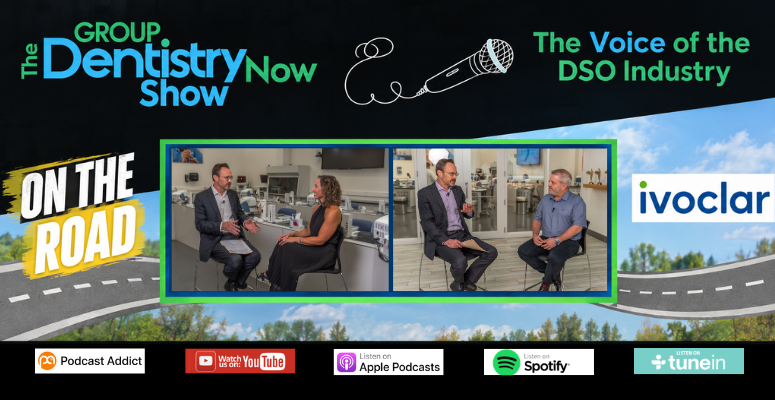
Welcome to The Group Dentistry Now Show: The Voice of the DSO Industry!
Inside Ivoclar HQ: How an Education-First Approach Transforms DSO Partnerships. Part 2
Join GDN as we go on the road with Ivoclar. Angela Severance, Training & Education Manager for Group Dentistry Solutions at Ivoclar and Dr. Rich Rosenblatt, Director of Community & Culture at Imagen Dental Partners share their thoughts on:
- The importance of onboarding & education
- Clinician feedback drives innovation
- Imagen Dental Partners’ clinical approach
- Much more
Visit Ivoclar’s Instagram page to learn more here: https://www.instagram.com/ivoclar.na/
Make sure you watch part one of Inside Ivoclar with guests, Chet Spivey, Chief Commercial Officer & President & Dr. Tom Hill, Manager of Scientific Services. You can find the video HERE.
Subscribe to our channel for more episodes and stay updated on the latest DSO news, insights, and events!
If you like our podcast, please give us a ⭐⭐⭐⭐⭐ review on iTunes https://apple.co/2Nejsfa and a Thumbs Up on YouTube.
Inside Ivoclar HQ: How an Education-First Approach Transforms DSO Partnerships. Part 2 Transcript:
Bill Neumann (00:00):
Welcome everyone to part two of the Ivaclar experience. This is the Group Dentistry Now show. We hope you enjoyed part one, where we featured Jett Spivey and Dr. Tom Hill. With part two, we actually have with us Angela Severance, who is the training and education manager for Group Dentistry Solutions at Ivaclar. And from Imagine Dental Partners, we have Dr. Rich Rosenblatt, who is the director of community and culture at Imagine Dental Partners. So we’ll kick things off with Angela, and then we’ll follow that interview up with Dr. Rosenblatt. Hi, we’re here at Ivoclar again, and we are in the Ivoclar Learning Academy. And this is a familiar face, Angela Severance. She’s the training and education manager, and it’s good to see you in person. We do so much of these. This is our third podcast, I think now and the first time in person doing it.
Angela Severance (01:02):
Yes.
Bill Neumann (01:03):
So it’s great to be here in Buffalo and excited for the next couple of days spending time with you and the team at Ivoclar and also the Imagine Dental team as well.
Angela Severance (01:15):
Well, we’re excited to have you here. We love showing off. We love showing off what we have to offer, just not only within education, but also within our team. You get to see the people behind the screen or the Wizard of Oz. You get to see all of the behind the scenes that goes into being able to create these education opportunities. So proud to have you here.
Bill Neumann (01:39):
Yeah, and I think it’s important to understand everything that goes into the products that clinicians use every single day. It’s just not as easy as just opening up a box and using something. I mean, there’s a lot of R&D, there’s the development, there’s the training and education, which is what we’re going to focus on. But a little bit about, I’m really curious to get to know you a little bit better. I hear you’re a world traveler, so I’d love to learn about that experience. I am not, but you did something pretty amazing. So talk a little bit about that. And then I’d also really, I think the audience would like to know how you became focused on training. What’s the passion behind training and education?
Angela Severance (02:26):
Yeah, I’ll start with that and then I’ll talk about the world travel. So because world travel was always a pipeline, a dream of mine for whatever reason when I was very, very little. And so I was a single parent, a very young parent, and dental assisting was my job. I wanted to be a dentist. So I was, I’m no longer a dentist want to be. I was a dentist want to be, but CAD/CAM came into my practice and that’s what really changed. It changed my life. Not only did it change the way we practiced and changed our patient experience, it gave me the opportunity to expand my skills and to create value. And so when I started seeing those things happening, I realized that without the education, dental assisting, I learned how to create a temporary. I don’t know anatomy or anything like that. So education was imperative for me to be a successful chairside dental assistant or a CDD, what we call now a chairside dental designer, which is an additional certification that you can have.
(03:38):
So all of that education I needed, well, it didn’t exist. And so I would borrow my dentist’s tooth morphology book and I would bring it home so that I could study at night. Yes, I’m a dental nerd. And so when I started doing those things, that’s when back then E4D technologies, now PlanMecca was like, “Hey, how are you doing that? And can you help us teach other dental assistants how to do that?” And so ta-da, that was my entry into education. So I was able to help create that CDD program, certified in digital dentistry, because I knew that assistants felt like me. They were intimidated by the technology. We weren’t taught about function in dental assisting school, and so we needed to have additional education to up our game, to be able to confidently deliver a final restoration that the dentist trusted that I understood what tooth anatomy was.
(04:39):
It’s because the computer can only give you a 90% their restoration, but then you need to make some adjustments to it and you can’t do that without the education.
Bill Neumann (04:49):
So instead of being fearful of the technology, you embraced it and then you decided to create this program to help other assistants really become more comfortable with it.
Angela Severance (04:58):
And
Bill Neumann (04:58):
Also the clinicians that they work with become more confident that their assistants could do more of the work so they could be freed up to do other things.
Angela Severance (05:04):
Well, exactly. And so I would tease and say that there are two types of dentists. You’ve got a DDS, so you’re a digital dental superstar. That’s the dentist that owns the technology, that runs the system, and the assistant doesn’t play a part in it. But then you also have the DDS, which is my preference, and it’s teasing, but the DDS doesn’t do squat. Okay, that dentist I want to work for because that dentist is going to delegate everything to me. But like you said, there has to be a confidence level. We have to trust each other that we’re providing the best quality care together as a team.
Bill Neumann (05:42):
So that’s the training and education side. Now let’s talk about the world traveler
Angela Severance (05:44):
Side. Okay. So the world traveler, which without moving into education, quite honestly, because it did change my life and it allowed me so many more opportunities so I could actually have a savings account and not be working two jobs. The travel bug has just been something that I’ve always had. And so I finally decided in 2022, in August of 2022, I packed up a suitcase and a backpack. I sold everything, including my car, and I joined a program and it was a year-long commitment. And in essence, I traded my rent for this program. So I lived in 12 countries. I started in Europe, and then I went to Africa, and then I went to Asia, which was very challenging working North American hours because I was working 10:0 PM until 6:00 AM in Asia, and then I ended in Latin America. So over the 12 months, I ended up hitting 22 countries.
(06:44):
It definitely is, I think, an experience that is life-changing, of course, but it really puts into perspective what’s important and just how other people live.
Bill Neumann (06:58):
So do you, out of those 22 countries, is there a favorite? Probably been asked this before.
Angela Severance (07:03):
I have, and I loved South Africa. I really, really did. Cape Town was just, it had mountains that was right on the water. The people were friendly, they spoke English, so all of those things.
Bill Neumann (07:16):
So let’s talk a little bit about the importance of education, clinical education when it comes to product implementation. So we talk about groups go through this long arduous process of creating a formulary, going through a lot of, or they’ve got their maybe board of clinical direct people that are making clinical decisions, they decide on a product, they’re all in, they want to use a certain solution, but they don’t always figure in that educational component. How do we onboard and train not one doctor, but 50 or 100 or 200 or whatever the number is. So one, can the company do that, which we know either Clark can, but maybe some can’t, but then also the commitment from the DSO to really commit to that training and implementation as well. So because it’s really important, and we talked about this off camera, that I think the educational component is as important as the product or the clinical solution.
Angela Severance (08:20):
Well, yeah, and it starts with why are we being added to the formulary? What’s going on, as you alluded to, within this DSO? Why are they changing up their formulary? And I think that it’s a huge challenge for DSOs is that change management. Everybody wants to say that we’re high autonomy, but yet they really ultimately want to work with two or three preferred vendors so that they can create consistency, decrease the variability. So why education is so important as far as implementation goes is because if you’ve got, let’s just say 50 practices and you’re using 10 different manufacturers and now you’re bringing it down to three, you’re really going to have to be able, there’s going to be some people that aren’t happy about it. And so how can we make that transition easier for them? It’s not just product training because everybody, if you’re a dentist, you know procedures.
(09:27):
If we’re going to do the blue stuff, we’re going to rinse it off, then we’re going to put on the bonding and then we’re going to. Everybody kind of understands that, but when you’re moving to using, let’s say one product line or that’s the goal to decrease that variability, then you really need to understand the science behind the products and why it’s important because it creates efficiency. All of our materials work together on purpose. So we’re going to make sure that they understand not only about the product, the science behind it, but that is super important because that’s the why I’m using this and the why I’m curing for so long or not so long, for less time because we can cure in three seconds, those things. And if you don’t have a strong education foundation to support the DSO, because your operations leaders, they don’t care about your product.
(10:28):
And I say that in a generalized statement, they don’t care about the product. They want to understand how are we going to show up to then ensure that us as a preferred vendor, because now we’ve got pricing on point and that part’s all kumbaya, but now how do we really make that impact so that we’re doing cost savings over multiple practices? And it’s not just about price then, it comes into how do we show up for that onboarding? And it’s doing the live webinar. So I think anybody can have a handshake and be like, “Yeah, great. Price is on point, good.” And then whether people order it or not, okay, and I’m sure that happens, but that’s not how we feel. We feel that if we’re going to shake your hand and we’re going to establish what I like to call a true partnership where we’ve got the DSO and we’ve got us as Ivaclar shaking hands going, “We’re here in this together for a win-win scenario because we’re going to support your goal, which is to reduce variability and create consistency.” And I feel that we’ve got the perfect infrastructure to do that.
Bill Neumann (11:40):
So what is Ivaclar’s role when it comes to the implementation and what is the DSO’s role? Because we talked about this as a partnership. If they’re not involved to the degree that they need to be, then it’s not going to work either.
Angela Severance (11:55):
It’s true.
Bill Neumann (11:56):
So tell us a little bit about implementation. What’s your responsibility?
Angela Severance (12:00):
So the responsibility on our part is to have a program in place. So we know that immediately when we’re going to be onboarding and implementing a new group, that we’ve established a go live date. This is when it’s going to be live on the formulary. This is when we want the products to be delivered in the practice, just depending on how we’re deciding to come in. So there could be a tradeout program or we’re going to come in and we’re going to trade out a different manufacturer with our product. We’re going to have onsite education with our local TSMs. So Ivaclar, we’ve got local support, we’ve got regional support, and then you’ve got us as a DSO team that has our own operations, our own marketing and our own education. So we’ve got all that in place and pre-established. So it’s their role, the DSO’s role is the announcement.
(12:58):
How are they communicating? Are they communicating to the group that we’ve brought on Ivoclar as a preferred vendor partner and this is our go live date and please join this webinar. Not please join, but you will join this webinar and learn about the product solution that Ivoclar is bringing to us. So their role is making sure that that communication stays consistent and then ours is delivering on what we’ve agreed upon. And it usually starts off with something like a webinar to announce it, to go over it with everyone, and then we dial it in and go down to the local level and make sure that we’re there to do lunch and learns to offer just that personalized touch. And then beyond that, after that, because you need several touchpoints. So these have all already been agreed upon and we’ve set dates because once you learn something, that three months, this is our make it or break it point because if they start using something and they’re struggling, which inevitably all relationships are good in the beginning, but it’s when you run into a bump where people are like, “I don’t know if I want to do this anymore,” and they put the product aside and pick up another one.
(14:06):
We need to be there. So we know at the three month point we need to have our next education event scheduled. So education strategy, because we’ve already got the event scheduled. So although we are holding an education event, the strategy behind it is to make sure that now they’re offered the hands-on opportunity to utilize the materials with one of our key opinion leaders that use our workflow on a day-to-day basis so they can really ask the questions and leave with those pearls of wisdom that they can implement on Monday to feel more confident because that’s the whole goal with education implementation is to create confidence. They have to be confident in the products that they’re using so that then they get comfortable enough to then create the consistency, which then creates a better patient experience and all of it works together. But if you miss those points and if you don’t have that set up ahead of time, yeah, I think it would be really challenging to successfully onboard and implement a new preferred partner without having those milestones already in place.
Bill Neumann (15:11):
Let’s talk about customization of educational programs. You see a lot of different DSOs out there. Everybody’s doing things a little bit differently, some good, probably some not so good, or maybe even non-existent education or training programs. But you kind of approach it, Ivaclar does, from a standpoint of really understanding the DSO and what their needs are and maybe some of their gaps in their education. But talk about the customization programs. How do you do that and how do you figure out what works best for a group? And again, you need the buy-in from the group too.
Angela Severance (15:49):
Right. So it’s a lot. It’s very relationship driven, Bill. You have to have the conversations with the group. They need to align with Ivaclar, with what Ivaclar’s visions are, our visions within innovation and educational excellence. And if that DSO feels the same way, that they’re innovative and they’re into striving for excellence, okay, so we’re speaking the same language. Well, now I need to understand what is your goal? Why are we having this conversation? Well, because I really want to enhance my hygiene program or I really want to be able to offer something to new dentists that are coming out of school. We need to have a package for them to make us look, what’s the word I’m looking for? Attractive. There are a lot of groups out there. So why this particular DSO? So you have those conversations to ask them, where do you need help?
(16:56):
And you identify those gaps and then offer solutions to those gaps. Now, if it’s creating a program for those new dentists, awesome, we have it. We have an online learning program. Quite interestingly enough, you’ve got a lot of groups that are hiring these doctors right out of school. Well, they don’t get their license for two months after they graduate. And so they’re like, well, what are they supposed to do for two months? They’ve signed on with us, but they can’t practice it. Oh, wonderful. I happen to have a 15-hour online CE program on, it’s called our learning pathways, on direct restorative, indirect restorative. There’s a hygiene pathway and there’s also a CAD/CAM pathway. So we’ve got all of that as a way to make the DSO look good. Look at who we partner with. We partner with people that are here and ready to start educating you before you can even legally have the drill in your hand.
Bill Neumann (17:54):
Right. Well, we’re in the Ivac Learning Academy here as you can kind of see. So this is where you spend a lot of your time educating and Imagine Dental Partners and some of the other groups, the partners that you work with will come through this academy to learn. So this is the hands-on. So maybe talk a little bit about what goes on here, maybe what Imagine is going to
Angela Severance (18:18):
Experience. Experience. Yeah. Well, and great segue. So Imagine Dental Partners is joining us Thursday and Friday for their two-day VIP headquarters experience. And the reason we call it that is because we’ve been working with Imagine Dental Partners for quite some time and they are one of our VIPs. And so what we like to do is to have them pick 12 of their clinicians that they really feel are innovative and leaders within the group, and then bring them up here so that they can really, really see what goes on behind the scenes. They get to visit the Applied Testing Center where they can test bond strength. They get to see how the materials not necessarily are made, but the science that goes behind how the materials are made. They get to work hands-on in the academy. And then of course we want to have some camaraderie as well.
(19:17):
So after we’ll leave our scientific session, then you’ll get to join us tomorrow and we’re going to head to Niagara Falls to spend some time together and to see the sites and to really continue to foster that relationship because it becomes and it increases trust, that kind of conversation, even like how we can have here. When you’re in person, you get to learn things about people that you didn’t know and they might talk to you a little bit differently and really allude to some pain points that they’re struggling with so you’re able to identify, this is how I can help them further. Because we talked about, or I guess off camera, we talked about how what do you do with a group after you’ve been working with them for three, four years or 10 years, but education doesn’t stop. It just continues to give us an opportunity to align with the group.
(20:13):
So this experience I think is. I actually came here, Bill, when I was a dental assistant back in the CAD/CAM day and it changed everything for me because I was so excited to get the opportunity to come here, but then the next step was I never understood why we were using one cement versus the other. I just used it because that’s what my doctor said. Well, then I came here and then I tested the two cements next to each other. This
Bill Neumann (20:42):
Indication, I should be using this and this is
Angela Severance (20:44):
The reason why. Yes. And then I tested the Ivoclar against the manufacturer I was using and Ivacar’s strength was so much stronger that I was like, oh, we’re doing a disservice to our patients. Actually, we need to switch cements. And we ended up doing that. So it gives them an opportunity to make that choice based off of actual science results and testing, and they’ll get that opportunity the next two days.
Bill Neumann (21:11):
So you talked about the VIP experience. So you have different types of educational opportunities. You talked about the Ivoclar Learning Academy online. You’ve got the VIP experience, which are for your best customers that come out here, bring their leadership, they get to do hands-on, they can bring that back to their teams and mentor them and teach them some new things. Exactly. What are some of the other. Some of it’s blended in some cases. So with Imagine, for example, they get to come out here, do hands-on, but then they also have access to the online learning academy as
Angela Severance (21:47):
Well.
(21:48):
And then additionally, what we offer is, of course, we host webinars. The webinars are usually very, very focused. So let’s say the DSO is doing an initiative on prevention and care and they really want to focus on Florida alternatives. That’s one of their growth initiatives for the year. So we’ll schedule a webinar that’s just solely focused on that. Now, if you’re getting into the direct restoratives and indirect restoratives, really ultimately getting that hands-on opportunity is where the rubber meets the road. That’s where they actually get to test the product. So we bring, and I don’t want to say we bring the VIP headquarters experience, but we bring that education on the road. So that’s also an opportunity. And where I’ve really seen the biggest impact and what is one of our initiatives for 2027 is to be part of these group symposiums. So you’ve got, let’s say, Imagine Dental Partners.
(22:49):
So this year we were at their leadership summit, and you can go to those and you can have a booth and wave to people as they walk by and you have your products. We’ve all been there. But with the real impact is being able to offer CE at their symposiums because now you’re on their turf with their doctors and they’re in their own camaraderie and they’re excited, and to be able to then bring that education to them on their turf. So that’s one of our initiatives for 2027 is to, as we’re already partnering with these groups, we’re already being part of their symposium, we want to bring the education to their symposium. So offering hands-on courses there or lectures that at Imagine Dental Partners, we had Dr. James Klim come in and it was just so exciting because we had people taking chairs from other rooms to bring them in to see James Klem, and they were sitting on the floor and it was sold out.
(23:51):
And when you get that kind of energy and people are walking by like, “What’s going on in there?” That’s a win. That’s a win for Ivaclar, but it’s also a win for Imagine Dental Partners. So that’s where I see that’s another example of true partnership. How can we show up to support your doctor as well while also supporting Ivaclare?
Bill Neumann (24:12):
Well, and that was my next question, which is how does education strengthen partnerships? But it sounds like that’s certainly one of the ways and any other ways you can think of.
Angela Severance (24:21):
There are so many ways that you can bring it into the group. You can bring it in as, okay, we’re here, we’re the new kids on the block, the onboarding and implementation, that’s going to help develop some level of trust. Okay, they’re here for us. They keep showing up, increasing their confidence. You’ve got the education for the standardization. So now we’re educating because we’ve got some people that are starting to use the Ivoclar products, but maybe not as much as let’s say the leadership would like to see. So then we come in to continue to foster that, to align with leadership and to help them achieve their goal, which is to have more clinicians using Ivaclare products. And then of course there’s the maintenance of it. And that’s like what I talked about earlier is just making sure that we continue to grow with them, that we continue to align on what their goals are.
(25:21):
So education is, I’ve said it before, education is not an event, it’s a strategy and it’s a strategy that I think Ivoclar does very, very well because our goal is not just to see our sales increase. Our goal is to see your clinician’s confidence increase their consistent results so that when their patients come in, whether I’m in Oklahoma or I’m in Texas, that if I go to a, we’ll just say Dental Depot is a new group of ours and I want to make sure that I’m having the same experience at either location regardless of what state I’m in. And that’s something that we strive to do is to help them be able to create that consistent experience, not only as the clinician, but for the patient as well.
Bill Neumann (26:10):
So our audience is made up of a lot of emerging dental groups and some established groups and their training and education programs run the gamut from here’s a stipend, get your CE wherever you get it, to very, very structured programs. So if anybody is looking to create a better training program or to start a training program –
Angela Severance (26:33):
Call me.
Bill Neumann (26:34):
Yes. What type of suggestions do you have?
Angela Severance (26:38):
When you’re looking at education with the group and maybe one group offers the stipend that says, okay, you join our group and we’ll give you $2,000 to do whatever CE you want to do – As long as you get your CE. Just to keep your license. Yep, and we’ll pay for it. That’s one way to do it. I, on the other hand, like to think of education as a strategy. And so what I would encourage groups to do is to look at those stipends and what you’re offering all of those clinicians and put that into a pool and look at what manufacturers, Ivoclar, has created to be able to support that. So we’re going to partner with you. We’re going to bring in this onboarding online program. We’re going to work with you to create a cohesive message across the groups. The thing with the stipend is that if I’ve got 50 clinicians going to 50 different courses – They’re going
Bill Neumann (27:35):
To go wherever they want and it’s all going to be different.
Angela Severance (27:37):
And the variability is high, which means to me, that’s backwards as to the way that the group is trying to think if they’re looking to streamline.
Bill Neumann (27:47):
You’re not creating value as a DSO that way either. I always think you look at the acronym and that S is for support and clinical support is in there too. The education is in there, that S. So what are you really doing if you’re just giving them a stipend because this is the way they would get their continuing ed if they weren’t partnered with you is they get it wherever they would get it.
Angela Severance (28:12):
Yeah. And really investing the dollars in a program that everyone’s learning the same information, hearing the same information may not all be at the same exact time, but I mean when everybody’s speaking the same language and using the same products, it just creates harmony.
Bill Neumann (28:33):
I think the other thing, especially here for the VIP event, I think what you’re also doing is you’re creating a group of mentors to go back and educate the rest of the team that weren’t able to come out. So I think that’s another great thing that you can build that mentorship base at your group.
Angela Severance (28:50):
Absolutely. Yep. And we even have, in this group particularly, we have a doctor that is bringing his associate up to this experience because he’s looking to kind of exit out and start practicing a little less and he wants her to feel confident. And so that’s just, again, it’s a perfect mentorship. They’re actually doing it together, learning together the same information. So it’s really pretty beautiful.
Bill Neumann (29:19):
That’s great. Well, thank you, Angela. It’s great to spend time with you in person. If anybody in the audience is interested in finding out more about the Learning Academy, whether it’s online or how do I become a VIP and get a chance to come to Buffalo and see Niagara Falls and learn and create a team of mentors to go back and train the younger clinicians, what’s the best way to get in touch with you and learn more about Ivoclar and the Learning Academy?
Angela Severance (29:51):
Absolutely. Email me. That’s what I would recommend is just to, and you’ll include that.
Bill Neumann (29:57):
What’s your email address?
Angela Severance (29:58):
It is angela. Ivaclar.com.
Bill Neumann (30:02):
Easy enough.
Angela Severance (30:03):
Thanks,
Bill Neumann (30:03):
Angela.
Angela Severance (30:04):
Thank you so much, Bill.
Bill Neumann (30:11):
Hi everyone. Welcome back. We of course are at Ivoclar here and we’re with Dr. Rich Rosenblatt. He is with Imagine Dental Partners. It’s great to see you, Rich.
Dr. Rich Rosenblatt (30:20):
Hey, great to be here.
Bill Neumann (30:21):
Yeah, this is going to be exciting. We’re really at the beginning of the HQ experience for you. You just got in, you got in late last night and they’re kicking things off behind us right now. You’re going to jump back in after this interview. But we’re talking a little bit about this off camera. You’re the director of community and culture, and I’d love to get a little bit of an idea of how you got that role and then talk a little bit about what that means because culture is a thing that is talked a lot about in the DSO space, and I think it means different things to different people, but I’d be hard pressed to find another group that has a director of community and culture. There might be somebody else out there, but I’ve never heard of it before.
Dr. Rich Rosenblatt (31:05):
Yeah, I don’t know how it sort of happened. I had a role which was, we used to call the clinical leader when I started at Imagine. By the way, thanks for having me on the podcast. It was great. And so myself and our chief dental officer, Sam Purry, this was kind of a big thing when we sort of changed roles and created these director roles for the. We had a group of nine of us that were our nine clinical leaders and didn’t really have a definition or a term. We were just there to help when partners had questions or things like that and we could go to offices or we teach a lot, we do classes and such, but Sam wanted something more specific and had this idea for a bunch of different. So we have directors of technology and different things that are all.
(31:51):
I’m a partner first and foremost. I’m the partner number two of Imagine, so I’m a founding partner in the group.
Bill Neumann (31:57):
And when did you join Imagine?
Dr. Rich Rosenblatt (31:59):
October 22nd, 2000. So right in the heart of COVID. It was a very interesting thing there. And for me, as somebody who’s been a faculty at CDOCs for 18 years, Sam and I, especially when he came on board was one of these things saying
(32:16):
Culture is huge. And the founding partners were the president of Sirona and the president of Spear Education. Both of them built on culture, CEREC and what we do. So it was just a normal progression to say we’re building this on partners that a lot of us knew each other. We were a digitally forward group and that a lot of them were CEREC based. So to be able to join a group, you see there’s a lot of obviously groups you know better than most in the DSO and DPO space. And to be able to have all these partners that knew each other coming in versus a lot of the other groups where you just spread out a wide net, you do a lot of advertising. Ours was all word of mouth talking to our friends about, “Hey, we’re trying to build something different.” So in order to do that, we decided that having somebody that could help plan, this was an idea I had last year to bring partners out so we could get together outside of our annual summit to speak with each other.
(33:08):
I started a community program where we have, I think you’re familiar with Microsoft Teams and the whole suite of all that. So one of the things they use is Veeva Engage. And so we use instead of spending money on a whole different social platform or a community platform, we just use Veeva Engage and create little sub-communities that all our partners can talk to and ask questions all day. We have admins and just a great way for partners to really know who each other are and post cases and we all help each other. So all those things I think between the fun and the academia of trying to raise the tide for all the boats has been kind of a fun thing and I think it all starts with culture.
Bill Neumann (33:48):
So maybe let’s start with, you talked about CEREC, you were involved with SEREC and CEREC Docs in the early days. So is that how you met Samir was through that?
Dr. Rich Rosenblatt (34:02):
Actually, I met Samir through where a lot of us met early on, which was Dentaltown.
Bill Neumann (34:06):
I
Dr. Rich Rosenblatt (34:07):
Think Dentaltown was the stepping stone for so many of the high level educators you see now and things like that. There was a way for, very similar to my Veeva Engage site and what we’re doing is getting these people online. I always say I’ve met some of my best friends on this planet the way I tell my children not to, go on social media, just talk to random people and then let’s all make a random trip to Las Vegas and meet each other for the first time. I mean, not the most normal way to do it, but that’s what ended up happening. I think dentists are pretty passionate people and so when people are sharing things and communicating, you just inherently want to meet them in person and get that. And that’s how a lot of these businesses like CDOCs and other things all started from ideas that happened on these websites.
(34:50):
So it was actually Dentaltown that started the whole thing for us.
Bill Neumann (34:53):
So talk a little bit about Imagine. So you were partner number two? Okay. So it was like-minded doctors that were using technology. So was it a lot of surrec docs at the beginning?
Dr. Rich Rosenblatt (35:06):
I think at the beginning, our focus has sort of changed as we have continued to scale.
(35:11):
And so initially it was, “Hey, we want a landing place for these high producing, high level dentists that are chairside and speak their own language and have their own subculture and what they do.” And getting those like-minded people together to have everyone be a Syracuse. And then we realized there’s some great partners out there that don’t want to do in-office milling or those kind of things, and we would like everybody to at least be scanning and doing that type of stuff. But yeah, so that was the initial idea. So I think it was really easy. It was myself and Michael Snyder and Mina Barsum, who were my two best friends in the whole dental realm. So the three of us were the founding three partners having no idea if this was going to work. I leaned everything onto me on the Resmanji, our CEO, and Michael Oggins, who is executive board member now, but also started it as the president of our company.
(36:10):
They launched me as a speaker and trusted me and they became great friends. And to be able to have founders of an idea like this and say, “I want you to be one of the founding faces of it,” I watched them grow their businesses and do all these things, and I’m like, “I want to be a part of something like that. I wish I had an opportunity.” So when they came knocking on my door, there was no way I wasn’t going to be like, “I’m in.” I was in 100% before they even finished the sentence with no proof of concept that this was even going to work.
Bill Neumann (36:38):
So personal note, we were talking again off camera and you go to a lot of concerts, you’re a big music fan. Talk a
Dr. Rich Rosenblatt (36:45):
Little bit about that. Huge music fan. Since I was young, I had these triplet friends of mine and there were two girls and a guy. So Stacy and Roxanne were my closest friend from home. We were concert junkies from the age of 14, 15. Our parents would take us to concerts. We’d be scalping tickets, reselling the other ones, made a little mini business out of stuff. And so that’s always been my thing. I love music, love live music. 18 years ago, I started getting to this lecturing thing, and now I’m on the road 35 to 40 weekends a year for the last 10, 15 years. The only thing I love more than this aspect of it is being a dad. When you’re gone that much and you’re a kid, you don’t get to see them and you start to really have this anxiety and feelings of my kids are going to not even know who I am.
(37:31):
Try to find connection. So I just decided I need to connect with them. I asked them when they were 13 and 11, my oldest two, “What do you guys want to do? Dad wants to spend more time. What kind of things can we do that you love?” And they’re like, “Can we go to a. They both play piano and love music. Can we go to a concert? I want to see a vibe.” I said, “Yeah.” So that year I bought a four-day pass for all of us to Lollapalooza. We’ve been going every year for the last 13 years, and they’re now moved on. They’re older and married or getting married. And so now my little one and I have carried on that tradition. She’s 18, and that’s how we connect. We do that. We’ve gone all over the place, seeing all kinds of bands. I’ve probably seen well over a hundred shows with my kids.
(38:06):
We’ll have to
Bill Neumann (38:06):
Compare notes.
Dr. Rich Rosenblatt (38:08):
I just saw Foo Fighters last week and not with. Well, my little one was with me, so it’s great.
Bill Neumann (38:12):
I appreciate good music too. Let’s talk about the partnership with Ivoclar. Can you talk about how that really started out? Again, you go back, you’ve been in the industry for a while, really tech forward. Did it start out with that connection to Sirak and the materials that were used or when did you –
Dr. Rich Rosenblatt (38:30):
I’m sure it was using those materials beforehand. I graduated in 1997, so when I moved to Chicago in 99, I joined a very progressive, for 99, a very tech-forward practice. He had intraoral cameras in every room. He had digital x-rays in every room. He was paperless already. And in 99, not a lot of people were doing that back then, so he was way ahead of the time. And so we used Ivoclar products, composites and things like that, I’m sure, but no major connection to the company. Really, the CEREC world did it. I mean, back then there was Vita porcelain and at that time ProCAD. We didn’t even have Empress yet. It was ProCAD from you guys. I realized I have to learn about the cement. When you bought your kid or you got your box of multilink and you had to learn how to use all that stuff.
(39:23):
It started there with my deep connection with Ivoclar. Then as I started lecturing, you guys are such an education forward company. I mean, just being here next to the lab and seeing what you. I’ve been to this open house so many times and seeing how you train people and teach people. And even though you’re talking about your products, you’re talking about just executing dentistry at a high level regardless of really what you use. I’ve always admired that about the company. When they started these symposium programs, it was initially the first ones I originally did were with Mike Scramsed and Samir, but then they built this program. It was myself and Darren O’Brien and Dave Giuliani and Pete Gardell. We went all over the country on a road show with you guys for years between the US and traveling coast to coast in Canada and putting on these symposiums that were huge and big.
(40:14):
I always enjoy the fact that Don Bell, who’s one of my closer friends here with the company, he was always about, “We love the fact that you use some of our products. We’d love you to use all of them. But if I wasn’t using products, Don would dig in on me of like,” Well, what is it about the product you don’t like? “And then go back to the drawing board, bring it to these are what our KOLs and these are what people aren’t happy with about Multilink is a prime example for me. I hated MultiLink, absolutely hated it. And I will never forget, they were doing a symposium in Chicago and that’s my home base. I ran the biggest CEREC study club in the country at the time, and they didn’t ask me to be on the floor with everyone or being in one of the lectures.
(40:57):
And I got mad. I was like,” What the hell? This is my place. “And Don’s like,” Yeah, the rep who’s running it says you’re talking crap about MultiLink, and so he doesn’t want you speaking at it. “I’m like,” Well, what am I saying? “He’s like,” I don’t know. “I said,” Well, I just said it’s a really good cement, but it sticks to everything and you can’t clean it up. “And I would make jokes of. I had a long hallway. I was at the end and my hygienist, Judy, was at the other end. And then when I would lecture, I would say when I would go to cement in multilink, I have to yell on the hall,” Hey, Judy, turn off your overhead light. I’m about to bond in multilink because it was so sensitive to light. “Brandon got mad at some of that stuff, and we ended up talking it out.
(41:34):
Don said to him, he’s like,” Listen, Rich is just telling us feedback that every person in the trenches is going to be telling us. It’s not his responsibility to use our products. It’s our responsibility to give them a product that they want to use.
(41:50):
“I will never forget when he said that, and it was one of those things that cemented, no pun intended, my relationship with Ivaclar in that it’s not just about because you do a lecture for us that you have to use all our products. We want you to use. And he would let me talk about other products on the stage while doing Ivaclar events, because it was almost in a way to encourage the Ivoclar team to be like,” We need to build something that he wants to use with our name on it rather than this because we’re not offering that. “That’s one of the things for me that has made me admire your company for so many years.
Bill Neumann (42:26):
And Dr. Hill actually, we talked to him yesterday and he mentioned that they really lean on, because he’s in the testing lab, lean on KOLs and clinicians to get feedback and not just assume based on the testing and the people at Ivoclar that the material is going to work in everybody’s hands or there aren’t things that can be improved upon. So it’s great to get feedback and then –
Dr. Rich Rosenblatt (42:51):
I mean, here’s a classic story of when we talked about community, Samir had this idea that,” Hey, this IDS meeting is the biggest dental meeting in the world. Let’s get 50, 60 mentors and the faculty and some of the team, and let’s rent a couple of buses. We’ll fly out there, we’ll go to the IDS, and then we’ll do some headquarter tours of some of our partners at their global headquarters. “So a great idea. So Ivoclar brought up to Lichtenstein after the IDS, and we’re walking through the amazing facility there, and he was talking to the Tom Hills of those people out there, and it was right when you guys had launched your implant block, and we were like,” Why don’t you make a temporary block with a hole in it? “And they’re like,” Would anybody use that? “And they all of a sudden had an impromptu meeting.
(43:35):
Next thing you know, less than a year later, there we are with a temp block with a hole in it. And just from you guys listening, we just happened to be there on an educational day and took our feedback and made a product out of it within a year, which was just nuts.
Bill Neumann (43:48):
So you’ve personally had a really strong relationship with Ivoclar since your early days as a clinician. You move over to Imagine and you’re like,” Hey, I want to get more of our doctors involved, right? Culture side of things, the community side of things. So what does that relationship look like with Ivoclar now? And I’d love to talk to you about when you think about the clinicians behind us that are here learning right now, what do you want them to get out of this event?
Dr. Rich Rosenblatt (44:19):
For anyone who hasn’t been to the open house that they have here, I’m here so often for these kind of things. We brought our CDOCs group last year, this group, and I’ve been here multiple times, and you always pick up something. I mean, Tom, I’ve known Tom for years, and just he’s such an insanely knowledgeable guy and so humble and humorous in the way he does things. So it’s really easy to consume information from him and just bringing them here. I mean, we have such a mix of really experienced doctors here with some of their young associates are here just starting out and just kind of level sets everybody to give them this is the actual knowledge from people who test it and know how to maximize the longevity and the success of this stuff. And so I think these kind of things are huge with that.
(45:10):
I mean, you guys do it pretty much better than anybody. There really aren’t a lot of companies that come in and do it this way.
Bill Neumann (45:19):
We talked a lot about education and training during some of the other interviews that we’ve done over the past couple days, and I’d love to get an overview from you. This is one component to your education and training for sure, your partnership with Ivoclar. The
Dr. Rich Rosenblatt (45:35):
Education part for me, we as a DPO versus a DSO, though I think there’s such a significant difference in that I’m still a owner of my practice. I still own 40% of my practice. So that means that my decision-making, the autonomy is all there. We don’t tell people to use Ivoclar products. What we do is use the knowledge base and the education that we do to educate them on the things that we’re utilizing in our practices. And a lot of us that are CEREC users for so long that do a lot of the education have been users of the IVACLAR products for so long that the foundation of us is on autonomy. Everybody makes their own clinical judgments. They don’t tell us as a company, you have to do X amount of crowns. They just want high level dentistry. And so we use education for growth rather than metrics to say you have to do X amount of scaling.
(46:32):
That is just not a way that anybody wants to work.
Bill Neumann (46:35):
So is it a combination of. Do you have a structured educational solution?
Dr. Rich Rosenblatt (46:39):
Insanely structured. What does that
Bill Neumann (46:41):
Look like?
Dr. Rich Rosenblatt (46:42):
So one of our director of education is Shivy Gupta, who is a faculty member with me at CDOCS, and she’s also the clinical chair at CDOCS too. So she’s got a good knowledge base on building courses. And so we have these foundational courses, which is intro to aligners, intro to CAD/CAM. We have a core course, which is kind of similar to any of these courses that you would take with a cois or a spear that gives them an overview on. Well, some of it’s just about communication with patients and being better communicators so you can do bigger cases and things like that. Some of it is more complex treatment planning. So we have all of these different things, endo, aligners, implants. So we have a course curriculum. I mean, it would take doctors years to go through what we do in-house because we have a lot of CDOCS instructors are members of our group.
(47:37):
We have people who have lectured all over the place that are part of a group. So we’ve utilized our internal resources to go ahead and disseminate that information out. So I think it’s one thing to be lectured to, but when it’s a partner, it’s got a little bit more gravitas, I feel. It’s like you’re learning from people that are part of your tribe, and so why wouldn’t I want to learn more to grow more? As we grow as a company, every partner benefits from a multitude of reasons.
Bill Neumann (48:06):
And so it’s a combination of your docs mentoring or teaching maybe some of the younger clinicians or clinicians that are looking to expand their skill set, maybe do
Dr. Rich Rosenblatt (48:17):
Younger, older? I’ll use CEREC as an example. I mean, I teach the CEREC courses for some of the CEREC courses for our group, and we’ve had people that have had a CEREC machine for 15 years, and I’ve seen this on the CDOC side forever, but when we come in and some of these docs are coming in and saying, “Well, they told me I should take this one first, and I’m already doing crowns and some anterior,” and then all of a sudden they take. I’m like, “I didn’t know all these shortcuts and tricks, and God, I feel so much more excited to turn on the machine on Monday.” I think that that’s what ends up happening is that a lot of us has such a knowledge base that even if these other doctors have been using it as long, they haven’t really attacked the machine or a lot of the different things that we do the way we have.
(48:57):
So I’m pretty proud of this stable of educators that we have within our group that we don’t have to necessarily go outside for a lot of stuff, and there’s a lot of pride in that, I feel.
Bill Neumann (49:10):
So this really, I think training and education ties into one of the Cs, the culture side of things, both the Cs, really, the community that you’re building as well. But feedback from the doctors that you have, how important is that education to them? I mean, is that something when they join Imagine that they’re like, “That’s a key reason,” because you just look at that as something that I see missing with a lot of other groups,
Dr. Rich Rosenblatt (49:36):
Unfortunately. So we have a process when we interview, I’ll say, new potential partners, and it’s a way for both people to sort of vet each other. We do this event once a month called Imagine the Future, and so any doctor who has expressed interest, we go through you need a certain production level and EBITDA level to even be able to come through. We don’t take just any office. It’s kind of higher. I think our average office is probably up in close to $2 million a practice.
(50:06):
And so with that, they usually come on board and you would come in, they do an educational day at this Imagine the Future event to talk about the company and what we offer and what life as a partner would be like. And the things you hear most from them are, “I feel like I’ve grown my practice as much as I can and I don’t know how to do anymore. We are tooth mechanics by trade, not business people.” So I use the phrase that dentists for the vast majority are successful in spite of themselves because we haven’t been taught. I’ve been taught to drill a hole in your face and fill it in and try to not make it hurt before or after. Other than that, that’s my training. I’ve never learned how to build a culture and a practice, what a P&L was, all those kind of things.
(50:50):
And so they complain that that is one. They talk about wanting to grow in education, and I think a lot of our docs are very hungry to continue to be better, so I love that aspect about them. And the third, and the biggest one that I hear is, “I feel like I’m an island to myself, and I have all these practices around me. We don’t communicate with each other. They view them as more of a competitor than an ally. And with us, I have multiple partners that are within a couple of miles, and I don’t care if I have every practice near me as a partner because we all practice individually and as a partner, just raise the bar. I think that community part that we pair into education here, this is an education community event that we’re doing, and I think we really pride ourselves on that aspect of it more than anything else, which is why that role of mine is something so special to me.
(51:42):
I think I’m a collector of souls. I love people. I love helping people out. Our company was built on that kind of philosophy of being great at what we do and having fun while we’re doing it, and so it’s an important aspect of it, and I think we do it pretty well.
Bill Neumann (52:00):
We’ve got a lot of audience members that are emerging dental groups, groups that maybe aren’t quite the size of Imagine, maybe are a little bit younger as an organization goes anyway. Maybe some tips and some ideas on finding really good industry partners. If you had a long-term relationship with Ivaclar, but just in general, if I’m scaling up a group and I’m looking for really good partners in the industry, what should they look for in a solid partner?
Dr. Rich Rosenblatt (52:37):
I think you want a partner, if we’re talking vendor partners and things like that, you want a partner that’s really going to work with you. You guys have been great. I mean, I think about you guys have your Ivoclar 100 series. I think Ivoclar is the Ivoclar 100 series, and so I didn’t even know what that was. I think a lot of
Bill Neumann (52:59):
People in the audience
Dr. Rich Rosenblatt (53:00):
Might not know. Yeah. One of the things that we have full autonomy to be able to order anything we want. We don’t have a formulary or anything like that. We have the Patterson catalog because we’re partnered with them as our distributor, and they have amazing partnerships and a huge catalog, and we get a discount on everything off of everything in significant ones. I’ve been a Multilink and Ivoclar user for so many products for so many years, and all of a sudden one day I see this Ivaclar 100, I’m like, “What happened to Multilink?” And they’re like, “No, it’s still MultiLink. My lead assistant was ordering.” I’m like, “What?” When I was talking to Angela, she’s like, “Do you know what the 100 stands for?” I’m like, “No.” I said, “It’s 100% the same as the label. It’s just this is what we use for our larger groups to be able to give them an off-label brand with a label still on it, which I love, at a nice robust discount.” So I think having partnerships like that is tremendous.
(53:58):
I’ll throw out another random group. We do a lot. We use AI a lot in our practices. We have a partnership with a company called Overjet, which allows us to see decay and periodontal disease, and they have something called Overjet Voice and Overjet Perio. And so working with companies that we’re like, “Hey, we’d like to test this before we just jump in as a company and buy something. Can we get a focus group and you can do a little demo?” So I run it as community and culture. That’s part of some of the things that I run. I head up these programs for all of these testing. I get a bunch of our community. We have clinical advisory board. We have 28 members on it that spans the country, spans different practices, different ideals and ideas, put them all together, and they all test out these things.
(54:40):
And then we start a chat with all of the people in Overjet, for instance, and it’s live interaction between them, and they’re making changes on the fly. And those are the partners that you want, that they realize you’re scaling, you’re bringing in more people, you’re bringing them more business. We have to figure out what they need to continue to want to stay with us, and I love companies that do that. You guys are one of the strongest at it.
Bill Neumann (55:07):
Excellent. Thanks, Dr. Rosenblatt. Great conversation.
Dr. Rich Rosenblatt (55:09):
I really appreciate it. Yeah, my pleasure. Thank you.
Bill Neumann (55:17):
If you’d like to learn more about Ivoclar’s Group Dentistry Solutions, head over to Ivoclar’s website and explore their new Group Dentistry Solutions page by scanning the QR code you see here. You can learn more about Ivaclar’s approach to partnering with group practices, hear directly from their customers, and explore resources like the Advantage program, the 100 series, training and education opportunities, and a lot more. And again, thank you for watching and listening to the Group Dentistry Now Show. Until next time, I’m Bill Neumann.